





Anthropic is rolling out new age and identity verification measures for some Claude users as part of a broader privacy policy update that takes effect on July 8, 2026.
Quick Summary – TLDR:
- Anthropic will require some Claude users to verify their age or identity.
- Users may need to submit a government issued ID and a live selfie for verification.
- Age verification will be handled through Yoti, while identity checks will be processed by Persona.
- The changes apply to Claude Free, Pro, and Max users and are aimed at improving platform safety and compliance.
What Happened?
Anthropic has updated its privacy policy to formally introduce age and identity verification requirements for certain users of its Claude AI assistant. The changes will take effect on July 8, 2026, and apply to consumer accounts on Claude Free, Pro, and Max plans.
The company says the new measures are designed to help keep its services safe and secure as Claude gains more advanced capabilities and takes on increasingly complex tasks.
🚨 Anthropic just updated its privacy policy.
— Kai (@hqmank) June 15, 2026
Claude Free, Pro, and Max users may soon be asked for age or identity checks.
Verification data can include government ID, face photos/videos, and facial geometry templates.
Individual developers are the first group in scope for… pic.twitter.com/U9XaHglvJE
Anthropic Expands Verification Requirements for Claude
Under the revised policy, Anthropic can now request age verification from existing users if there are indications they may be younger than 18. The company already requires users to be at least 18 years old and asks new users to confirm their age when creating an account.
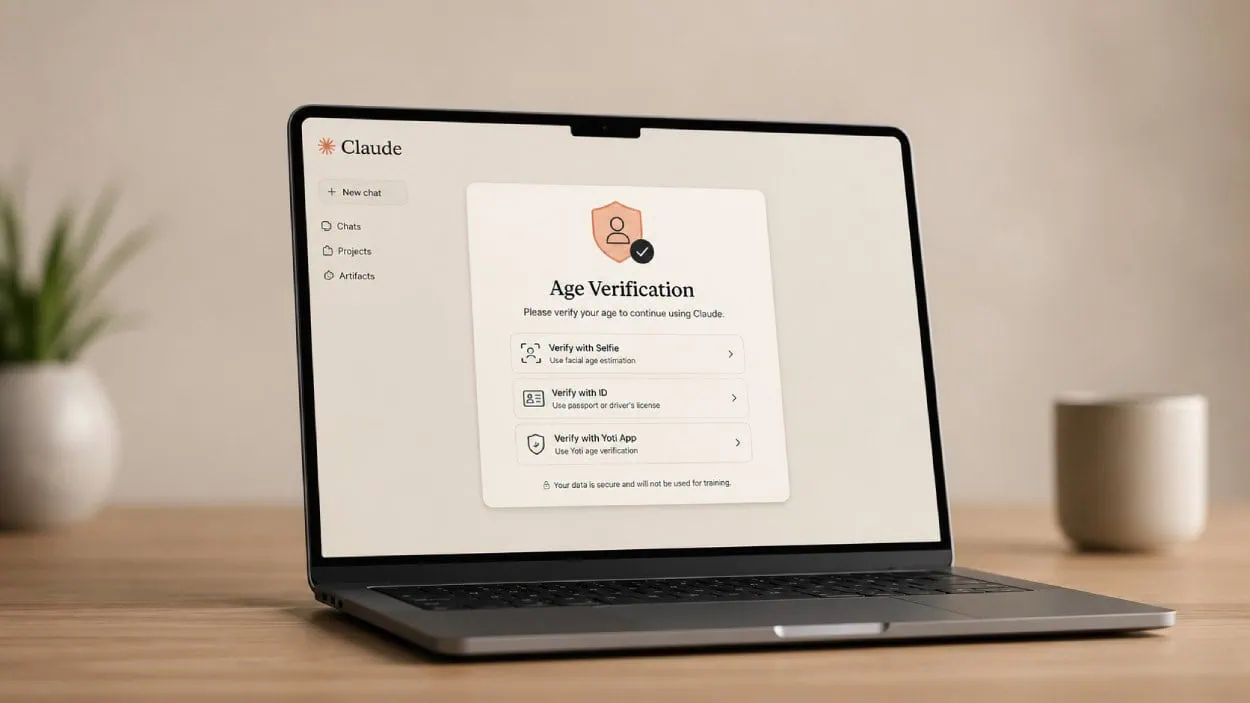
To support this process, Anthropic has partnered with Yoti, a third party-age verification provider. Users can verify their age through several methods, including:
- A selfie-based age estimate.
- A scan of a passport or driver’s license.
- An over 18 credential from the Yoti app.
Users who successfully complete the verification process can regain access to their accounts if they were previously restricted because of age concerns.
Government IDs and Facial Verification May Be Required
Anthropic is also introducing identity verification for select users and specific use cases. Depending on the situation, users may be asked to submit a government issued photo ID and provide a live selfie through a phone or webcam.
Accepted documents include:
- Passports
- Driver’s licenses
- National identity cards
- State or provincial ID cards
The company says photocopies, screenshots, digital IDs, and temporary paper documents will not be accepted.
Identity verification is managed by Persona, a third-party verification provider. As part of the process, Persona may analyze photos and create a facial geometry template to confirm that the person matches the identification document provided.
Anthropic says the information collected during verification is used to confirm identity, prevent abuse, and meet legal or regulatory obligations.

How Anthropic Says Verification Data Will Be Handled?
A new section in the privacy policy called Verification Data explains how information collected during these checks is processed.
According to Anthropic, ID images are not stored on its own servers. The company says verification data is encrypted during transmission and storage, and access is limited to situations involving account reviews or appeals.
Anthropic also states that verification information will not be used for advertising, marketing, or training its AI models.
The company keeps records of verification outcomes, such as whether a user meets the requirements to access certain features. This may reduce the need for repeated verification in the future.
Privacy Policy Update Goes Beyond Identity Checks
The latest privacy update also expands disclosures around how Claude interacts with connected services and third party applications.
Anthropic now provides more details about how user inputs and outputs can be shared with connected tools through connectors, plugins, webhooks, and APIs. Once data is sent to an external service, it becomes subject to that provider’s own privacy policies.
The policy also introduces new guidelines for users who participate in surveys, interviews, and research studies conducted by Anthropic. Responses from these programs may be combined with account information for analysis purposes.
Additionally, the company has published more detailed information about the legal basis it relies on when processing user data across different scenarios.
Growing Focus on Trust and Compliance
The move reflects a broader trend across the AI industry as companies introduce stronger safeguards around access to advanced AI systems.
Anthropic says users will still be able to opt out of having conversations used for model training, although content submitted through feedback channels or flagged for safety reviews may still be used to improve its systems.
While the company describes the verification framework as a proactive safety measure rather than a legal requirement, privacy advocates are expected to closely watch how biometric and identity related information is handled, especially as regulations surrounding facial data continue to evolve worldwide.
SQ Magazine Takeaway
I think this is one of the clearest signs that AI companies are moving toward stronger identity controls as their models become more powerful. While Anthropic is trying to reassure users that verification data will not be used for advertising or AI training, asking for government IDs and facial scans will inevitably raise privacy concerns. The bigger story here is that access to advanced AI tools is starting to look more like access to financial or regulated online services, where proving who you are becomes part of the experience.