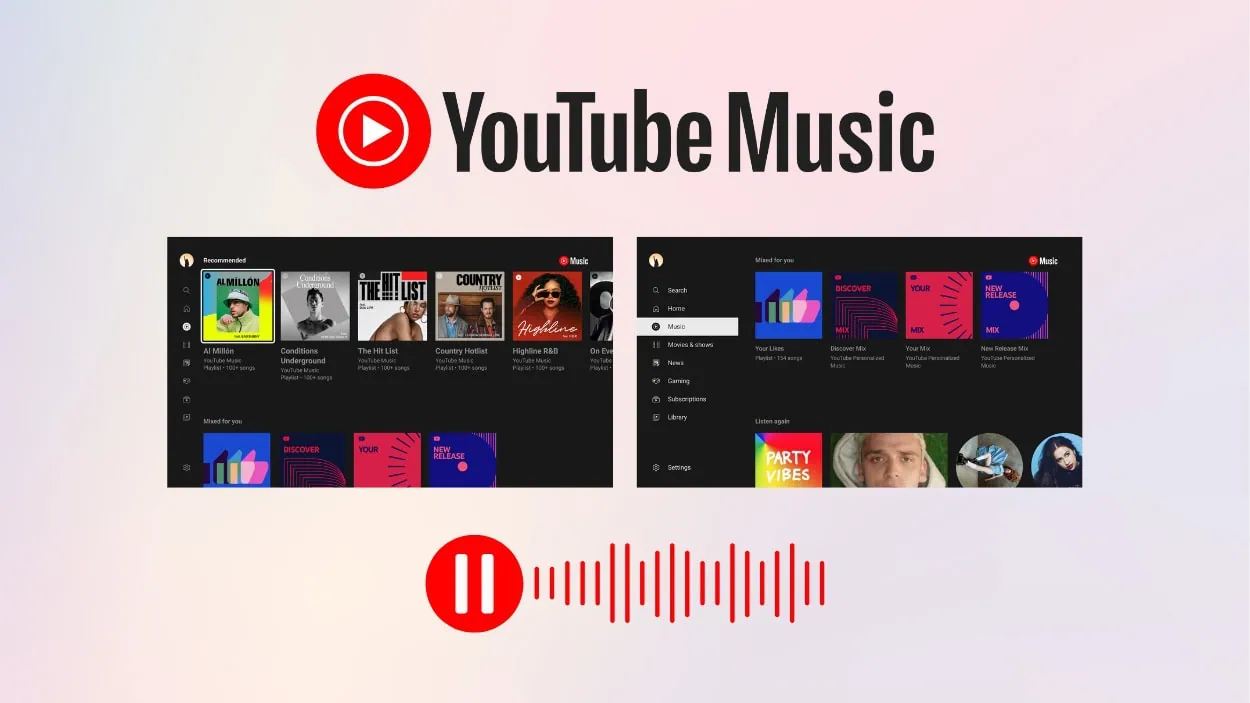






YouTube Music and YouTube Premium reached 125 million combined subscribers, including trials, as of March 5, 2025, according to Lyor Cohen, Global Head of Music at YouTube. The figure is up from 100 million on February 1, 2024, and Alphabet CEO Sundar Pichai later told investors that the first quarter delivered the largest quarterly increase in the total number of non-trial subscribers since YouTube Premium launched in June 2018, both globally and in the U.S.
The data below covers subscriber counts, geographic reach, pricing changes through the current year, library scale, royalty payouts, podcast adoption, and the Dream Track and Lyria 3 AI music tools. Every figure traces to Alphabet earnings, official YouTube blog posts, or the IFPI Global Music Report.
Key Takeaways
- YouTube Music and Premium hit 125 million combined subscribers, including trials, as of March 5, 2025, up from the prior milestone twelve months earlier.
- Alphabet’s total paid-subscription base reached 350 million in the first quarter, with YouTube and Google One named as the lead drivers.
- YouTube generated more than $60 billion in 2025 revenue across both advertising and subscriptions, larger than Netflix’s $45.18 billion in full-year revenue.
- The platform paid the music industry $8 billion during the 12-month period from July 2024 to June 2025, up from $6 billion for July 2021 to June 2022.
- YouTube Music is the top DSP in several Global South markets, including India, within a global paid-music market of 818 million subscribers, where mobile-first YouTube usage outpaces other streaming services.
- The U.S. YouTube Music individual plan rose from $10.99 to $11.99 per month effective April 10, 2026, with the family plan moving from $16.99 to $18.99 per month.
- YouTube reached more than 1 billion monthly active viewers of podcast content, announced February 26, 2025.
Editor’s Choice
- YouTube Music + Premium combined: 125 million subscribers, including trials, as of March 5, 2025.
- YouTube full-year 2025 revenue: more than $60 billion.
- YouTube subscription business: approximately $20 billion annually.
- YouTube ad revenue, first quarter: $9.88 billion, up 11% year-on-year.
- Music-industry payout (July 2024 to June 2025): $8 billion.
- YouTube Music catalog: 100 million tracks plus user uploads.
- Geographic footprint: 119 countries and territories as of March 2024, in 80 languages.
Recent Developments
- April 10, 2026: YouTube, the music product owned by Alphabet’s Google division, raised U.S. subscription prices, lifting YouTube Music individual from $10.99 to $11.99 per month and family from $16.99 to $18.99 per month, per Variety’s reporting on the price-change communication.
- April 24, 2026: Sundar Pichai of Alphabet told investors that the first quarter saw the largest quarterly increase in non-trial Music and Premium subscribers since the product launched in June 2018, both globally and in the U.S., while YouTube ad revenue hit $9.88 billion for the quarter, up 11% year-on-year, according to Alphabet’s earnings call.
- March 18, 2026: The IFPI Global Music Report 2026, published by the International Federation of the Phonographic Industry, reported paid streaming users worldwide reached 837 million, with paid subscription revenues up 8.8% year-on-year and accounting for 52.4% of global recorded music revenues.
- February 18, 2026: Google launched Lyria 3 in the Gemini chatbot app and integrated it into YouTube’s Dream Track tool, its third-generation AI music model.
- February 4, 2026: Alphabet’s Q4 2025 earnings disclosed more than $60 billion in 2025 YouTube revenue and over 325 million paid subscriptions across consumer services.
YouTube Music Subscriber Count
- YouTube Music and YouTube Premium combined had reached 125 million subscribers globally, including trials, as of March 5, 2025, announced by Lyor Cohen across more than 100 countries and 80 languages, and reported widely by Music Business Worldwide and Variety.
- The previous public milestone was 100 million subscribers, including trials, as of February 1, 2024, announced by YouTube product VP Adam Smith and corroborated by IFPI’s industry tracking.
- Alphabet does not report a standalone YouTube Music subscriber line; the public figure is the combined Music + Premium count, including trials.
- Q1 2026 produced the largest quarterly increase in non-trial Music and Premium subscribers since YouTube Premium launched in June 2018, both globally and in the U.S., per Sundar Pichai on the Alphabet earnings call.
- Alphabet’s total paid subscription base across all consumer services reached 350 million in Q1 2026, up from 325 million in Q4 2025.
- YouTube and Google One were named as the key drivers of Alphabet’s subscription growth in Q1 2026.
- YouTube Music averaged approximately 2 million subscribers added per month over the prior 12 months heading into 2026, based on disclosed milestones.
| Metric | Value | Reporting period | Source type |
|---|---|---|---|
| YouTube Music plus Premium subscribers including trials | 125 million | March 5, 2025 | Company announcement |
| YouTube Music plus Premium subscribers including trials | 100 million | February 1, 2024 | Company announcement |
| Alphabet total paid subscriptions | 350 million | Q1 2026 | Earnings call |
| Alphabet total paid subscriptions | 325 million | Q4 2025 | Earnings release |
| Average monthly subscriber additions (rolling 12 months) | ~2 million | FY2025 | Analyst calculation |
Sources: YouTube official blog, Alphabet Q1 2026 earnings call, Music Business Worldwide.

YouTube Music Subscriber Growth Timeline
- The service crossed 50 million Music and Premium subscribers, including trialers, in September 2021, having grown by 20 million in less than a year, announced by Lyor Cohen.
- The next disclosed milestone was 100 million subscribers, including trials, in February 2024, a doubling in roughly 28 months.
- The platform then added another 25 million subscribers between the 100 million milestone and the 125 million milestone, reaching the 125 million figure roughly 13 months later.
- Earlier reporting cited by YouTube noted the service grew by 20 million subscribers in less than a year, reaching the 50 million mark in 2021, an early signal of bundle-driven momentum.
- MIDiA Research described YouTube Music as the fastest-growing music subscription service at the September 2021 milestone.
- In 2024, MIDiA again ranked YouTube Music the fastest growing service in percentage terms among major DSPs and noted it nearly overtook Apple Music for third place.
| Milestone | Subscribers including trials | Date | Months since prior milestone |
|---|---|---|---|
| 50 million | 50 million | September 2021 | N/A |
| 80 million | 80 million | November 2022 | 14 |
| 100 million | 100 million | February 2024 | 15 |
| 125 million | 125 million | March 2025 | 13 |
Sources: YouTube official blog, Music Business Worldwide, Billboard.
By the numbers: YouTube grew the Music and Premium base from 50 million in September 2021 to 125 million in March 2025, an increase that came in less than four years, according to YouTube’s own announcements, in roughly three and a half years. The pace tracks an industry where the IFPI counted 54 million net new paid music subscription accounts in 2025 alone.
YouTube Music vs YouTube Premium: The Bundle Question
The 125 million figure is one of the most-cited numbers in music streaming, yet it almost never gets the asterisk it deserves: it counts everyone paying for YouTube Music or YouTube Premium. Premium subscribers get YouTube Music free as part of the bundle, so a viewer who signed up purely to remove video ads is counted exactly the same as a listener who came for the music. The contrast with Spotify’s standalone subscriber tracking is direct: Spotify’s headline number reflects only paid music demand, not bundled video ad-removal.
- YouTube reports the combined Music and Premium count, not standalone YouTube Music subscribers, in every public milestone announcement.
- On the same day Lyor Cohen announced 125 million subscribers, YouTube launched Premium Lite at $7.99 per month, which excludes music, music videos, offline downloads, and background playback, in the U.S., Thailand, Germany, and Australia.
- Premium Lite’s positioning separates ad-free YouTube viewing from the music product for the first time, isolating bundle-only customers from music demand.
- Jack Greenberg, YouTube’s Product Director, said Premium Lite is the latest step in that evolution of subscriber-tier options.
- Alphabet CBO Philipp Schindler told investors: When a user shifts from being an ad-supported user to a YouTube Music and Premium customer, it has a slightly negative impact on YouTube ads revenues, but a positive impact on our business.
- Sundar Pichai also framed the dynamic as strong subscription revenue growth across YouTube, particularly YouTube Music Premium, naming the bundle product rather than YouTube Music alone.
- YouTube’s announcement reports the combined YouTube Music and Premium paying base, including trials, rather than a standalone YouTube Music subscriber count, leaving the bundle metric as the primary public datapoint.
The Premium Lite launch is the strongest signal of how YouTube itself sees the funnel. By carving out a music-free, video-only product at a lower price, YouTube can capture viewers who never wanted music but were converting through the bundle anyway, while leaving the higher-priced Music and Premium tiers as the upgrade path. The implication for outside analysts is direct: the 125 million headline is a maximum, not a music-demand floor.
| Plan | Includes ad-free music | Includes YouTube Music app and library | Counted in 125 million figure |
|---|---|---|---|
| YouTube Music | Yes | Yes | Yes |
| YouTube Premium | Yes (Music bundled) | Yes | Yes |
| YouTube Premium Lite | No | No | No |
| Free YouTube (ad-supported) | No | Limited | No |
Sources: YouTube official blog, Variety, Music Business Worldwide.
YouTube Music Pricing in the United States
- The U.S. YouTube Music individual plan rose from $10.99 to $11.99 per month effective April 10, 2026, part of a broader U.S. price-increase event Variety described as the first since 2023.
- The U.S. family plan rose from $16.99 to $18.99 per month on the same date.
- YouTube Premium individual went from $13.99 to $15.99 per month, and Premium family from $22.99 to $26.99 per month.
- Premium Lite, the music-free tier, went from $7.99 to $8.99 per month.
- New customers see the new pricing immediately, while existing subscribers see the change in their next billing cycle in June, with at least 30 days of email notice.
- The family plan supports up to six household members under one subscription.
- A discounted student plan was available as of the March 2024 Wikipedia entry.
- The pre-increase YouTube Music price of $10.99 per month at the time of the March 5, 2025 announcement, before the April 2026 increase, with YouTube Premium at $13.99 per month at the time of the 125 million announcement.

Worth noting: The April 2026 increase applies to the United States only; pricing in other markets follows separate cadences. Family tiers moved from $16.99 to $18.99 per month for YouTube Music family and from $22.99 to $26.99 per month for YouTube Premium family, aimed at the highest-revenue household tier.
YouTube Music Catalog Size and Library Composition
- YouTube Music’s catalog reached 100 million tracks by October 2022, matching the 100 million song catalog Apple Music had announced, and the library has continued to grow since.
- The 100 million figure includes official tracks, music videos, live performances, remixes, and covers, alongside millions of community uploads.
- YouTube Music launched on November 12, 2015, following its October 2015 announcement.
- In April 2023, the service added support for podcasts in the U.S. initially, expanding the format mix beyond music.
- Google Podcasts was shut down in June 2024, with YouTube Music becoming its replacement, consolidating Google’s audio strategy into the YouTube Music app.
- Recent product enhancements documented at the 100 million subscriber milestone include cross-device playback, 1080p HD quality, generative AI features, a new Samples discovery tab, customized radio building, and podcast integration.
- YouTube Music’s catalog is uniquely positioned among major DSPs because it inherits YouTube’s 20-year archive of fan uploads, live performance footage, and unofficial remixes that no licensed-only catalog can match.
| Library element | Detail |
|---|---|
| Official track catalog | 100 million+ tracks (matched Apple Music as of Oct 2022) |
| Music videos and live performances | Inherited from YouTube parent platform |
| Community uploads | Millions of fan-uploaded tracks alongside official catalog |
| Podcasts | Added April 2023; full integration after Google Podcasts shutdown June 2024 |
| HD streaming | 1080p HD quality available to Premium subscribers |
Sources: Hypebot, Wikipedia (citing primary YouTube announcements), YouTube official blog.
YouTube Music Geographic Availability and Growth Markets
- YouTube Music operates in 119 countries and territories as of March 2024, primarily across the Americas, Europe, and Oceania, with partial coverage in Africa and Asia.
- Lyor Cohen’s 125 million subscriber announcement covered more than 100 countries in 80 languages.
- Russia’s access was suspended in March 2022 following the start of the war in Ukraine.
- High-growth markets explicitly named by YouTube include Korea, India, Japan, and Brazil, where music is a top passion among consumers.
- MIDiA Research found YouTube Music is the top DSP in several Global South markets, including India, where mobile-first YouTube use overshadows Spotify adoption.
- The available country count of 119 places YouTube Music roughly on par with Apple Music’s published global footprint and ahead of Spotify’s available-market list, though paid penetration in many of these markets is still a single-digit percentage of internet users.
| Region | Notable markets | Status |
|---|---|---|
| North America | United States, Canada, Mexico | Available; United States is the first market with the latest pricing change |
| Latin America | Brazil, Argentina, Chile | Available; Brazil cited as top growth market |
| Europe | United Kingdom, Germany, France | Available; Premium Lite in Germany since 2025 |
| Asia | India, Japan, Korea, Indonesia | Available; India is YouTube Music’s top DSP position globally |
| Sub-Saharan Africa | Nigeria, South Africa | Partial coverage per Wikipedia rollout summary |
| Middle East and North Africa | UAE, Saudi Arabia, Egypt | Partial; tracks IFPI’s 15.2% YoY regional growth |
Sources: Wikipedia (citing YouTube official rollout posts), YouTube blog, MIDiA Research, IFPI Global Music Report 2026.
Why it matters: YouTube Music’s strength in India and other Global South markets, where it is the top DSP, aligns with where the IFPI’s recorded music industry grew fastest in 2025. Latin America at 17.1% year on year, Middle East and North Africa and Sub-Saharan Africa each at 15.2% year on year. Mobile-first regions favor a service that already owns the music-video viewing habit.
YouTube Music Market Share in Global Streaming
- Spotify held 32% of global paid music streaming subscribers in 2024, the largest single-platform share.
- Tencent Music Entertainment ranked second with 120 million paid subscribers in 2024, slightly increasing its global market share.
- Apple Music ranked third in 2024 with what MIDiA described as an underwhelming 2024, adding minimal subscribers alongside Amazon Music.
- YouTube Music was the fastest-growing service in percentage terms and nearly surpassed Apple for third place in MIDiA’s 2024 ranking.
- Total paid music subscribers worldwide reached 818 million by the end of 2024, with 85 million net new subscribers added that year.
- The IFPI Global Music Report 2026 raised the count to 837 million paid streaming subscription users globally in 2025, up 54 million net new accounts year-on-year.
- Paid subscription streaming revenues grew 8.8% year-on-year and accounted for 52.4% of global recorded music revenues in 2025.
- Total streaming, including ad-supported tiers, surpassed $22 billion and represented 69.6% of total recorded music revenues.

YouTube Subscription Revenue and Music Industry Payouts
- YouTube generated more than $60 billion in 2025 revenue across both advertising and subscriptions, according to Alphabet’s Q4 2025 earnings disclosure.
- YouTube’s subscription business runs at approximately $20 billion annually, calculated from combined ad and subscription revenues exceeding $60 billion in 2025, with ads at $40.37 billion.
- YouTube ad revenue in Q1 2026 reached $9.88 billion, up 11% year-on-year.
- YouTube ad revenue in Q4 2025 reached $11.38 billion, up 8.7% year-on-year.
- YouTube paid the music industry $8 billion during the 12-month period from July 2024 to June 2025, up from $6 billion for the equivalent July 2021 to June 2022 window.
- The IFPI Global Music Report 2026 put global recorded music revenues at $31.7 billion in 2025, growing 6.4% year-on-year, the eleventh consecutive year of growth.
- For comparison, Netflix reported $45.18 billion in full-year revenue, placing total YouTube revenue ahead of the streaming-video leader.
- Alphabet finished 2025 with over 325 million paid subscriptions across YouTube Premium, YouTube TV, and Google One, rising to 350 million by Q1 2026.

The takeaway: The $8 billion music-industry payout for the 12-month period from July 2024 to June 2025 is structurally larger than what a similar-size standalone music service can generate, because it sums two distinct royalty pools, subscription play-share for Music and Premium subscribers, plus ad-supported royalties from the much larger free YouTube viewing base. Competitors with cleaner subscription models compete on per-stream rate; YouTube competes on total payout to rights-holders.
YouTube Music Per-Stream Royalty Rates
- YouTube Music’s per-stream subscription payout sits in the range of $0.001 to $0.002 per stream by industry estimates aggregated across royalty calculator services and streaming royalty index sites, among the lowest of major platforms.
- The platform’s volume-weighted average rate, when ad-supported and subscription pools are blended, lands closer to roughly $0.007 per stream by analyst calculation; figures vary by report and contract.
- The structural reason is that the bulk of music consumption on YouTube remains ad-supported rather than subscription, pulling the per-stream blended rate down.
- Despite the low subscription per-stream rate, total payouts grew from $6 billion for the July 2021 to June 2022 window to $8 billion for the July 2024 to June 2025 window, a roughly 33% increase over three years.
- Industry-standard per-stream comparisons place Spotify at $0.003 to $0.005, Apple Music at $0.007 to $0.010, and Tidal at $0.013 to $0.015 by industry-estimate aggregations; no platform publishes a fixed per-stream rate, so treat the figures as directional rather than precise.
- Philipp Schindler told investors that a user shifting from ad-supported to YouTube Music and Premium has a slightly negative impact on YouTube ads revenue but a positive impact on the overall business, reflecting how the two pools trade off internally.
The dual-pool dynamic is the under-reported story. Articles that compare YouTube Music’s $0.001 per-stream rate against Spotify’s $0.003 to $0.005 implicitly treat the platforms as alike, but YouTube collects ad royalties on every music video play by every free viewer, a revenue source Spotify and Apple do not have at remotely the same scale. The $8 billion FY2025 payout is the proof.

YouTube Music Podcast Adoption
- YouTube reached more than 1 billion monthly active viewers of podcast content, announced February 26, 2025.
- The platform is the most frequently used service for listening to podcasts in the U.S., according to Edison Research, a position that surfaces in YouTube’s blog, citing the same dataset.
- YouTube viewers consumed over 400 million hours of podcast content monthly on living-room TV devices in the previous year.
- YouTube Music added podcast support in April 2023 in the U.S. initially, extending listeners’ subscription benefits to spoken-word formats.
- Google Podcasts was shut down in June 2024, with YouTube Music becoming its replacement and inheriting the migrating user base.
- Featured podcast shows highlighted by YouTube include Club Shay Shay, New Heights, Rotten Mango, and Murder, Mystery and Make Up, spanning sports, true-crime, and entertainment categories.
| Podcast metric | Value | Period |
|---|---|---|
| Monthly active podcast viewers (YouTube) | 1+ billion | January 2025 |
| Monthly podcast hours on living-room TVs | 400+ million | 2024 |
| YouTube Music podcast launch (US) | April 2023 | N/A |
| Google Podcasts shutdown (migration to YouTube Music) | June 2024 | N/A |
Sources: YouTube official blog, Wikipedia citing primary YouTube product announcements.
YouTube Music AI Tools: Dream Track and Lyria 3
- YouTube Music’s first major AI music tool, Dream Track, launched on November 16, 2023, initially available to a select group of US creators testing the technology with YouTube Shorts.
- Dream Track shipped with nine artists who consented to have their voices synthesized: T-Pain, Alec Benjamin, Charlie Puth, Charli XCX, Demi Lovato, John Legend, Papoose, Sia, and Troye Sivan.
- The model behind Dream Track is Lyria, Google DeepMind’s most advanced music generation model at launch, producing 30-second tracks from text prompts plus an artist selection.
- Charlie Puth said YouTube has been a great partner in outlining their approach to AI in the launch announcement, expressing support for the experiment.
- Google launched Lyria 3 on February 18, 2026, in the Gemini chatbot app and integrated it into the YouTube Dream Track tool for Shorts creators.
- Lyria 3 generates 30-second tracks from text prompts or images, with automatically generated vocals and lyrics for users aged 18 and over.
- The model supports eight languages: English, German, Spanish, French, Hindi, Japanese, Korean, and Portuguese at launch.
- All Lyria 3 outputs include SynthID watermarking technology to identify AI-generated content.
- The earlier Lyria 2 powered YouTube’s “Speech to Song” tool for converting dialogue into musical soundtracks.
| AI tool | Launch | Capability | Notes |
|---|---|---|---|
| Dream Track | November 16, 2023 | 30-second AI tracks using 9 artist voices | US YouTube Shorts creators initially |
| Lyria | November 2023 | Text-to-music generation model | Powered Dream Track first version |
| Lyria 2 | 2024 | Speech-to-Song conversion | Powered YouTube product feature |
| Lyria 3 | February 18, 2026 | 30-second tracks with auto-lyrics, 8 languages | SynthID watermarking; in Gemini app + Dream Track |
Sources: YouTube official blog, Music Business Worldwide, Google DeepMind announcements.
Frequently Asked Questions (FAQs)
The most recent disclosed milestone is 125 million combined YouTube Music and YouTube Premium subscribers, including trials, as of March 5, 2025, announced by Lyor Cohen as a combined Music + Premium paying base rather than a standalone YouTube Music figure. Sundar Pichai then said the first quarter delivered the largest quarterly increase in non-trial subscribers since the Premium product launched in June 2018, both globally and in the U.S.
After the April 10, 2026, increase, YouTube Music individual costs $11.99 per month in the U.S., up from $10.99, and the family plan is $18.99 per month, up from $16.99. The family plan supports up to six household members, and a discounted student plan remains available with periodic verification required. New customers pay the new rate immediately, while existing subscribers see the change in their next billing cycle in June, with at least 30 days of email notice.
By the publicly disclosed bundle figure of 125 million combined Music and Premium subscribers, including trials, the combined YouTube product sits ahead of Apple Music’s estimated subscriber range. MIDiA Research ranked Apple Music third globally in 2024 and called YouTube Music the fastest-growing service in percentage terms, nearly overtaking Apple for third place. Standalone YouTube Music subscriber numbers are not separately disclosed.
YouTube Music’s catalog reached 100 million tracks as of October 2022, matching the 100 million song catalog Apple Music had announced, and the library has continued to grow since. The catalog includes official tracks, music videos, live performances, remixes, and covers alongside millions of community uploads inherited from the parent platform.
YouTube paid the music industry $8 billion during the 12-month period from July 2024 to June 2025, up from $6 billion for July 2021 to June 2022. The figure combines two royalty pools: subscription play-share for Music and Premium subscribers, plus ad-supported royalties from free YouTube viewers, which together exceed what most standalone music services pay.
YouTube Music operates in 119 countries and territories as of March 2024, primarily across the Americas, Europe, and Oceania, with partial coverage in Africa and Asia. Lyor Cohen’s 125 million subscriber announcement noted reach across more than 100 countries in 80 languages. Russia’s access was suspended in March 2022.
Conclusion
YouTube Music and YouTube Premium passed 125 million combined subscribers, including trials, in March 2025, doubling in just over three years from the 50 million Music and Premium milestone announced in September 2021, which the service reached after adding 20 million subscribers in less than a year. The first quarter then delivered the largest quarterly increase in non-trial subscribers since the product launched in June 2018, suggesting the trajectory has not normalised even at scale.
The catch buried under the headline number is the bundle: Premium Lite’s separate launch shows YouTube itself is starting to isolate music demand from ad-free video demand, which means the 125 million figure should be read as a maximum.
The dual-revenue dynamic matters most for the music industry. YouTube’s per-stream subscription rate is among the lowest in the category, yet its $8 billion music industry payout for the 12-month period from July 2024 to June 2025 outweighs comparable standalone services because the ad-supported tier produces a separate royalty pool that competitors do not match at scale. Subscribers, advertisers, label partners, and policymakers each read a different signal from the same set of numbers. The current year’s pricing changes, AI music tooling, and podcast scale will keep the platform in active discussion among streaming analysts.