





WhatsApp began rolling out audio and video calling on WhatsApp Web on July 28, 2026, letting users join one-on-one and group calls without downloading an app. The update also adds call transfer between devices, a waiting room for group calls, and noise suppression.
Quick Summary – TLDR:
- WhatsApp rolled out audio and video calling on WhatsApp Web on July 28, 2026, ending the need to install a separate app.
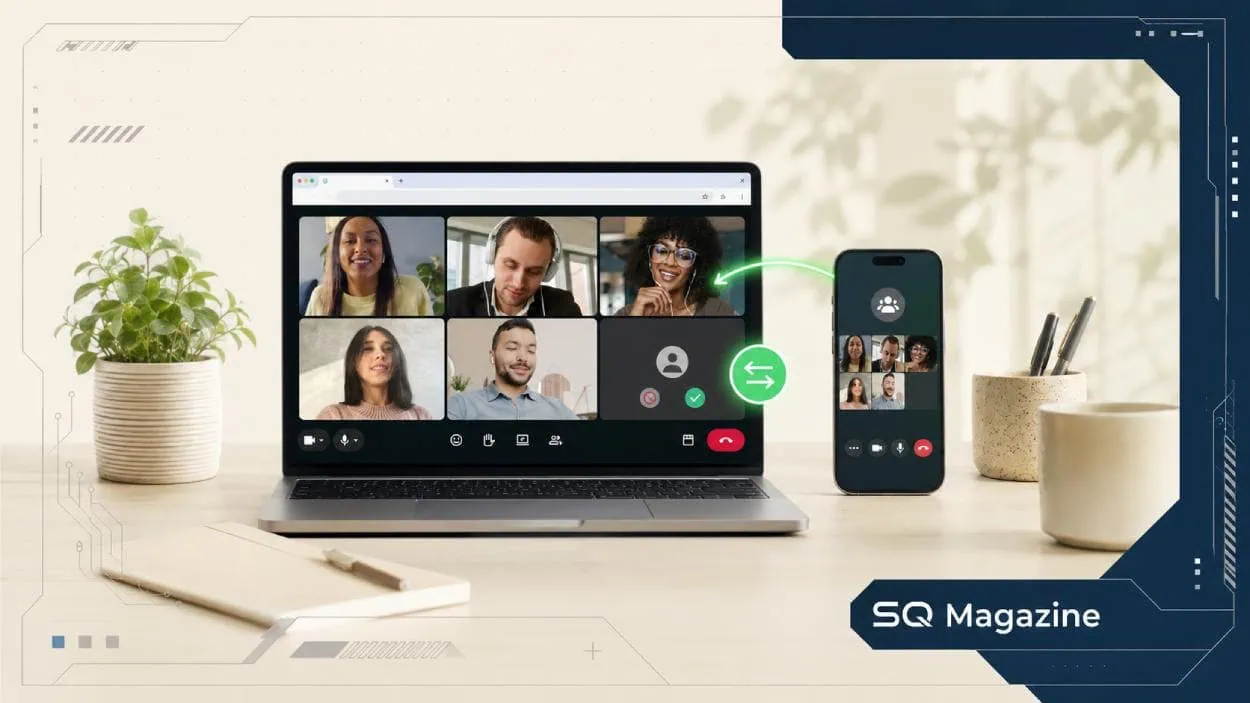
- Call Transfer lets a user move an active group call from a phone to WhatsApp Web or Desktop without hanging up.
- Waiting Room holds participants until a host approves entry, turned on through a call link’s Require Approval to Join setting.
- QuickHD delivers high-definition video within the first few seconds of a call, addressing a common early-call quality lag.
- Noise Suppression strips background sound from a caller’s audio and can be toggled anytime from in call settings.
WhatsApp Web Gains Audio and Video Calling
WhatsApp said in a blog post that calling on the web now matches the experience on its phone and desktop apps. “Whether you’re on your phone, at your desk, or switching between the two, calling on WhatsApp just works, privately and simply,” the company said.
The browser version carries screen sharing, reactions, and a dedicated Calls tab with call history and favorites, features already available on WhatsApp’s other apps. WhatsApp said calls placed on the web are “end-to-end encrypted, with no time limits and at no cost.“
WHATSAPP BRINGS AUDIO AND VIDEO CALLING DIRECTLY TO WEB BROWSERS$META‘s WhatsApp now lets users make and receive one-on-one and group audio or video calls directly through WhatsApp Web. No app download is required. Calls remain end-to-end encrypted, have no time limits, and are… pic.twitter.com/9EHjb4LisP
— Wall St Engine (@wallstengine) July 28, 2026
From Limited Beta to Full Rollout
According to 9to5Mac, WhatsApp began testing voice and video calls on the web earlier this year, then expanded the trial to group chats last month. WhatsApp told the outlet the broader rollout, which started today, would soon reach all users, matching the calling features already on its iPhone, iPad, and desktop apps.
Call Transfer, Waiting Rooms, and Clearer Audio
Call Transfer moves an active group call between a mobile device and WhatsApp Web or Desktop without dropping the connection, useful for a call that starts on the go and continues once a user reaches a bigger screen.
Waiting Room arrives a year after WhatsApp patched CVE-2025-55177, a zero-click flaw a spyware campaign exploited against fewer than 200 users before Meta Platforms disclosed it in September 2025. Waiting Room targets a different problem than a patched code flaw: it helps reduce the risk of an uninvited participant joining a group call through a shared link.
Existing WhatsApp Web users who want that approval gate should turn on Require Approval to Join before sharing a call link, once the feature reaches their account. QuickHD and Noise Suppression apply automatically once a device receives the update, with Noise Suppression adjustable anytime from in-call settings.

What This Means for Callers and the Messaging Market?
WhatsApp Web’s expansion follows Meta’s own Messenger Rooms video conferencing, which already supports up to 50 participants directly in the browser. The update also lands inside a mobile messaging market estimated at 7.3 billion users worldwide, a base Messenger alone reaches with 1.3 billion monthly active users sending 20 billion messages a day. Bringing full calling parity to WhatsApp Web could keep browser-bound users, students on shared lab computers, employees on locked-down work laptops, from opening a separate video tool for a quick group call.
The rollout also arrives as major platforms extend end-to-end encryption to more entry points. Google rolled out end-to-end encryption for Gmail on mobile in April 2026, initially limited to Google Workspace Enterprise Plus customers. WhatsApp’s own encryption claims have drawn public pushback: Telegram CEO Pavel Durov said in April 2026 that WhatsApp’s “E2E encryption by default” claim amounts to “a giant consumer fraud,” pointing to what he said is about 95% of WhatsApp messages ending up in plain-text backups on Apple and Google servers rather than under end-to-end encryption.
WhatsApp’s web calling announcement addresses only the calls themselves. Whether its backup encryption has changed since Durov’s claim is a separate question the July 28 announcement does not answer.
SQ Magazine’s Takeaway
The update closes the last major gap between WhatsApp’s browser experience and its native apps, removing the app install requirement that kept some shared or locked down computers out of full featured calling entirely. Call Transfer addresses a narrower but real friction point. Starting a call on a phone and finishing it on a bigger screen without restarting the conversation. For IT-managed environments where app installs need approval, that gap mattered more than the marketing suggested.
Because the rollout is gradual, not every account will see Web Calling, Call Transfer, Waiting Room, QuickHD, or Noise Suppression on July 28, 2026. Users who want the group call approval gate should turn on Require Approval to Join before sharing a call link, and organizations weighing browser-based calling for shared or locked-down machines should watch for the fuller rollout WhatsApp has told reporters it expects to complete soon.