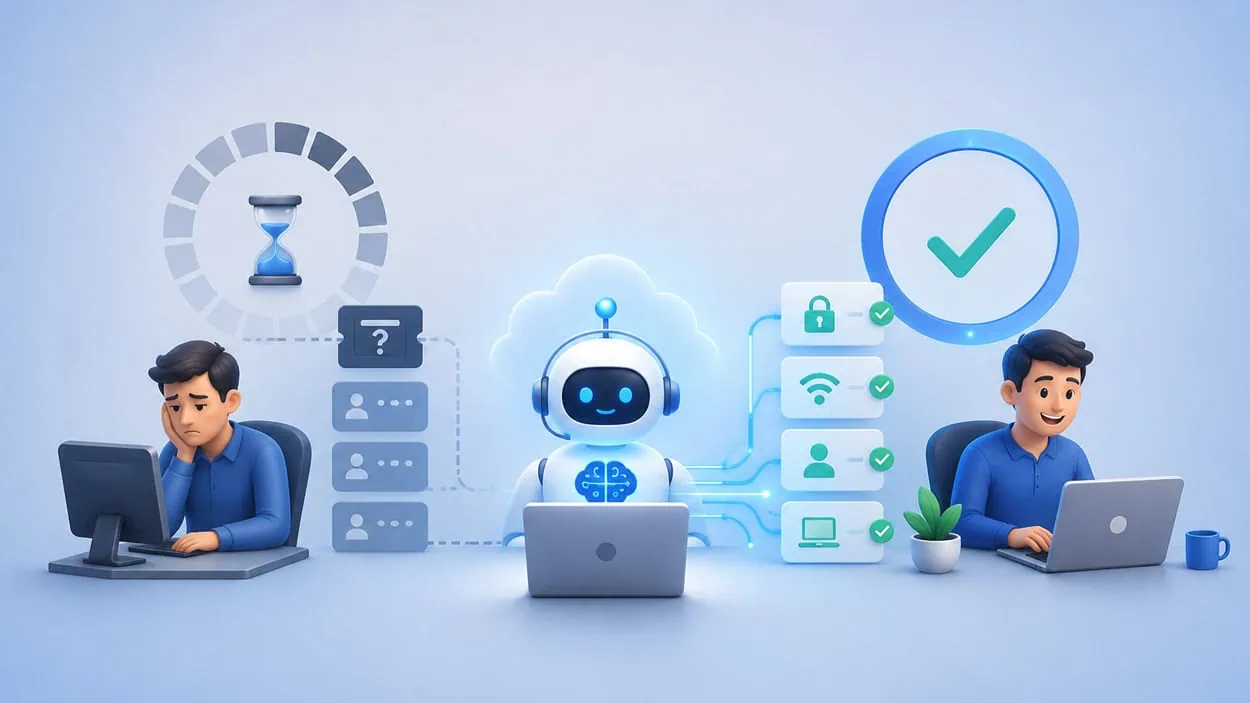






There is a particular kind of frustration that comes with logging an IT ticket. You submit the request, receive an automated acknowledgment, and then wait, sometimes for hours.
The issue sitting between you and your work gets resolved eventually, but by the time it does, the momentum you lost is gone, and the confidence that it will go faster next time is not much higher. Most people who work in office environments know this experience well enough that they have stopped expecting anything different.
The slowness is not usually the result of IT teams being indifferent or incompetent. It is the result of a structural mismatch between how IT support has traditionally been organized and the volume and variety of requests that modern workplaces generate.
Understanding that a mismatch is useful because it explains both why the problem has persisted and why 2026 is shaping up to be a meaningful inflection point in how organizations address it.
The Structural Problem Behind Slow Tickets
Traditional IT support operates on a triage model. Requests come in, get categorized, get assigned, and move through a queue. The model was designed for environments where IT issues were less frequent, less varied, and more predictable than they are today. It was also designed on the assumption that a human engineer needed to be involved at every stage of the resolution process.
That assumption made sense when the alternative was nothing. It makes considerably less sense when a significant proportion of incoming tickets involve issues that follow predictable patterns with well-established resolutions.
Password resets, software access requests, connectivity troubleshooting, and application errors that have been resolved dozens of times before do not require a skilled engineer’s judgment. They require fast, reliable execution of a known fix.
Helpdesk software built around AI-driven automation handles this category of ticket without the queue delay that human triage introduces. The request is received, diagnosed, and resolved autonomously, often before the person who submitted it has moved on to something else. That is not a marginal improvement in the existing model. It is a different model.
Why IT Teams Have Been Slow to Automate
The gap between available automation technology and its adoption in IT support is wider than it should be, and there are several explanations for this. Legacy ticketing systems are deeply embedded in organizational workflows and difficult to migrate away from. IT decision-makers often work with constrained budgets, making new tooling investments difficult to justify against more visible priorities. And there is a reasonable concern that automation without adequate oversight creates new problems while solving old ones.
Forbes’ analysis of IT outsourcing decisions identifies cost pressure and access to specialized capabilities as the primary drivers of structural changes in how IT support is delivered. Automation is increasingly part of that picture because it addresses both simultaneously, reducing the per-ticket cost of resolution while handling a broader range of issue types than most in-house teams can cover at equivalent speed.
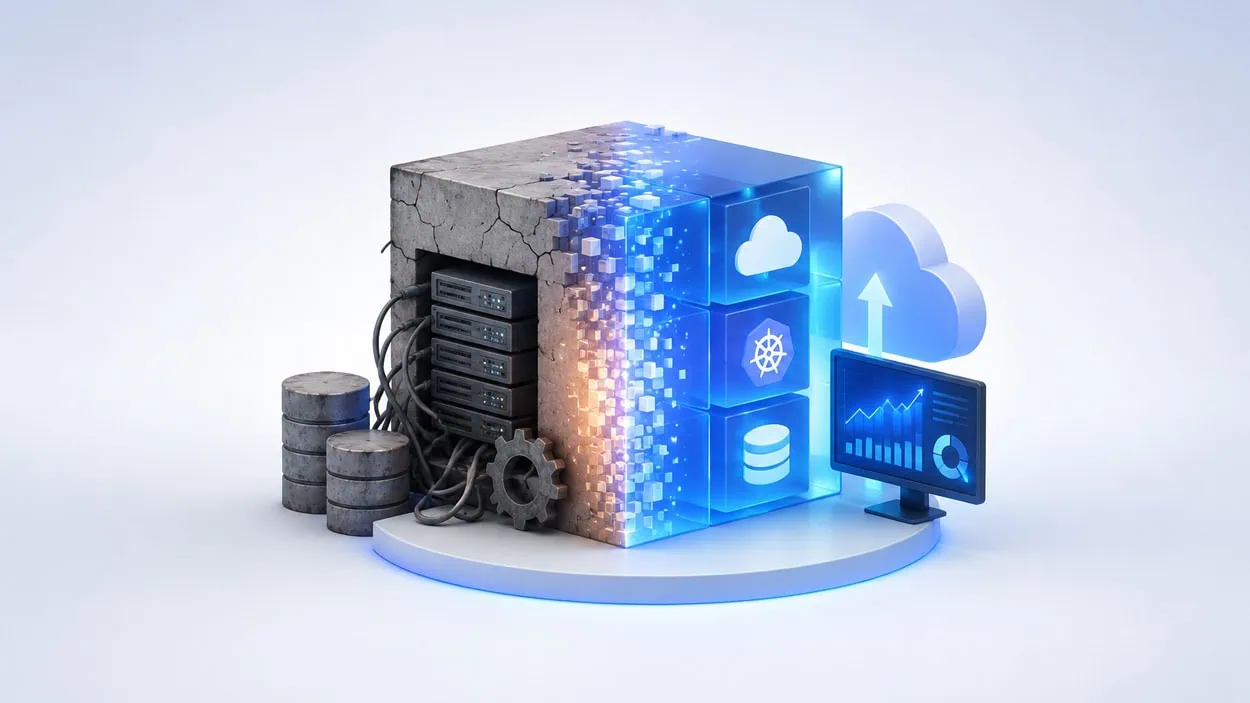
The modernization of IT infrastructure through AI is shifting that calculus for a growing number of organizations. What was previously positioned as a future capability is now demonstrably operational in production environments.
The Productivity Connection
Slow IT support is not just an inconvenience. It has measurable effects on output. Employee productivity statistics consistently show that unresolved technical issues rank among the most commonly cited barriers to effective work. Every hour an employee spends waiting for a ticket to be resolved, working around a broken tool, or attempting their own fix for something outside their expertise is an hour not spent on what they were hired to do.
At an organizational scale, that adds up quickly. A company with two hundred employees experiencing even a modest average of thirty minutes of IT-related disruption per week is absorbing significant lost output across the year, most of which never appears in any budget line or performance review.
What On-Device AI Changes About the Support Model
The development of more capable on-device AI, including recent advances in lightweight models designed for local execution, points toward a support model in which initial diagnosis occurs at the endpoint rather than in a remote queue.
For smaller organizations that rely on AI to stay competitive, that shift has practical implications for how quickly common issues are resolved without any human involvement.
IT support has felt slow for a long time because the underlying model was built for a different era and has been slow to change.
The tools to change it now exist and are being deployed at scale. Whether organizations move quickly enough to close the gap between what their employees experience and what is currently possible is largely a matter of prioritization rather than technical limitation.