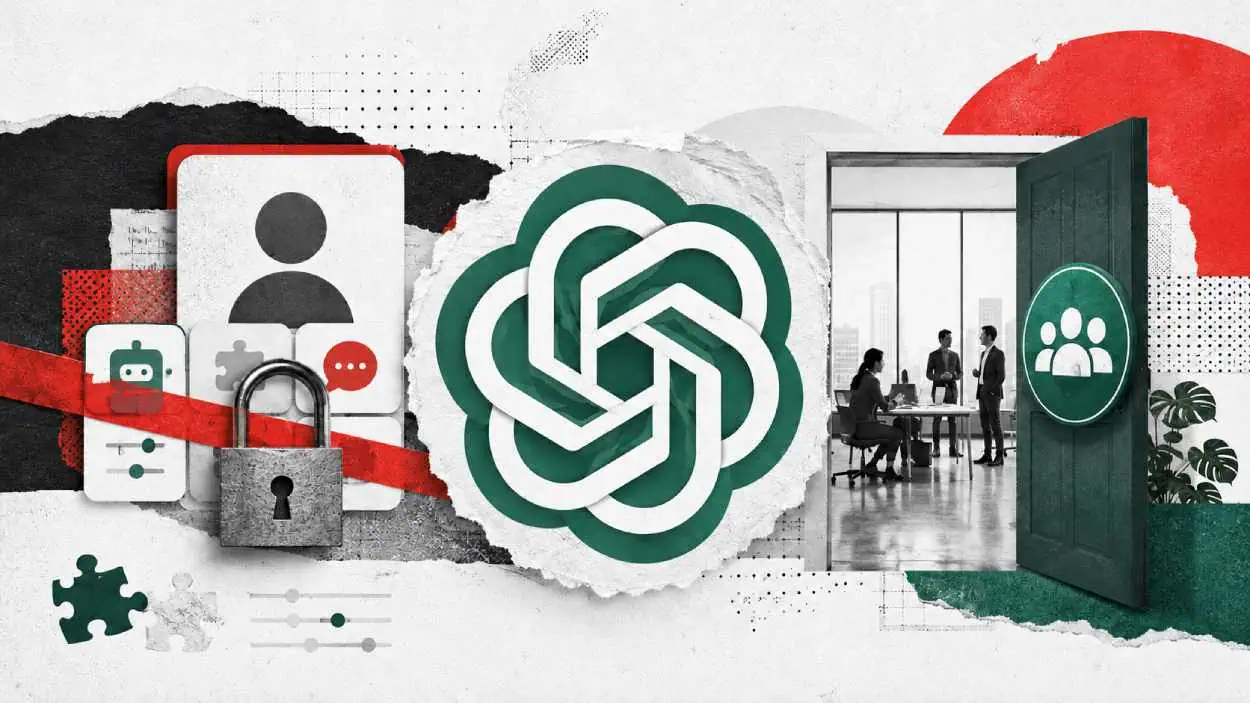






OpenAI has stopped Free, Go, Plus, and Pro ChatGPT accounts from creating new custom GPTs as of August 16, 2026, according to updated help center documentation. Existing GPTs still work, but new builds and GPT Store submissions now require a Business, Enterprise, or Edu workspace.
Key Takeaways
- OpenAI’s help center confirms personal accounts across every tier lost the ability to create or publish new custom GPTs on August 16, 2026.
- Existing custom GPTs remain usable and editable for personal account holders who still meet the relevant plan and permission requirements.
- Business, Enterprise, and Edu workspaces keep full GPT creation and GPT Store publishing rights, governed by each workspace’s admin settings.
- OpenAI launched Workspace Agents, a Codex-powered suite built for enterprise team automation, months before this restriction landed.
- Anthropic, Google, and Microsoft are each pushing separate enterprise AI products, intensifying competition for the business contracts OpenAI now appears to prioritize.
What We Know?
OpenAI’s support article on creating and editing GPTs now states plainly that new GPT creation and publishing are not available on personal ChatGPT accounts, covering Free, Go, Plus, and Pro tiers alike. The same page confirms that users in Business, Enterprise, and Edu workspaces can still create, edit, and publish GPTs when their workspace settings and permissions allow it. Anyone who already built a GPT under the old rules keeps access to it and can edit it, provided their plan and permissions still qualify.
The GPT Store, OpenAI’s marketplace for user-built chatbots, is now closed to new submissions from individual accounts. That marketplace opened alongside custom GPTs in late 2023, when OpenAI pitched no-code bot building as a way for non-programmers to extend ChatGPT. Only a workspace administrator’s account can publish there now.
Creating and publishing new custom GPTs is no longer available on personal ChatGPT accounts (including Free, Go, Plus, and Pro plans)
— Tibor Blaho (@btibor91) August 17, 2026
OpenAI also appears to be working on a way to convert existing GPTs into Skills pic.twitter.com/8Xj694lyl3
The Enterprise Pivot Behind the Timing
OpenAI rolled out Workspace Agents on April 22, 2026, a set of Codex-powered tools built for team automation inside Business and Enterprise accounts. That earlier launch reads, in hindsight, as the first sign OpenAI wanted its most capable building tools to live inside paid organizational accounts. Custom GPTs, by contrast, were built for hobbyists and small builders working alone; four months later, that door closed to them.
What We Don’t Know?
OpenAI has not published a detailed explanation for the timing or the reasoning behind the restriction. The company hasn’t said whether personal accounts will regain GPT creation later, whether the change is permanent, or how many existing personal GPTs are affected. Users who rely on a personal GPT for client work or a side project have no public guidance yet on what happens if OpenAI tightens editing rights next.

Rivals Are Chasing the Same Enterprise Contracts
Every major AI lab wants the enterprise budgets OpenAI just prioritized.
- Anthropic markets Claude for Enterprise to security conscious business buyers building on its API.
- Google has folded Gemini directly into Workspace subscriptions used by millions of business customers.
- Microsoft, OpenAI’s own primary financial backer, keeps expanding Copilot across its enterprise software suite, giving OpenAI’s technology a second distribution channel it doesn’t fully control.
SQ Magazine’s Takeaway
This restriction reads as OpenAI narrowing its most flexible building tool to accounts it can bill at enterprise rates. Locking GPT creation behind Business, Enterprise, and Edu workspaces pushes solo builders and small teams toward a paid organizational tier they may not need for anything else, while OpenAI captures workspace revenue instead of free-tier goodwill. Google’s Gemini push into Workspace follows the identical logic: AI building tools increasingly live inside a business software bundle rather than a personal chat window.
Individuals who depend on a personal GPT should check whether it still meets their needs, since OpenAI has not committed to restoring creation rights for Free, Go, Plus, or Pro tiers. Builders who need to publish something new have one practical path now: move the work into a Business, Enterprise, or Edu workspace, where admin permissions decide who can build and publish.