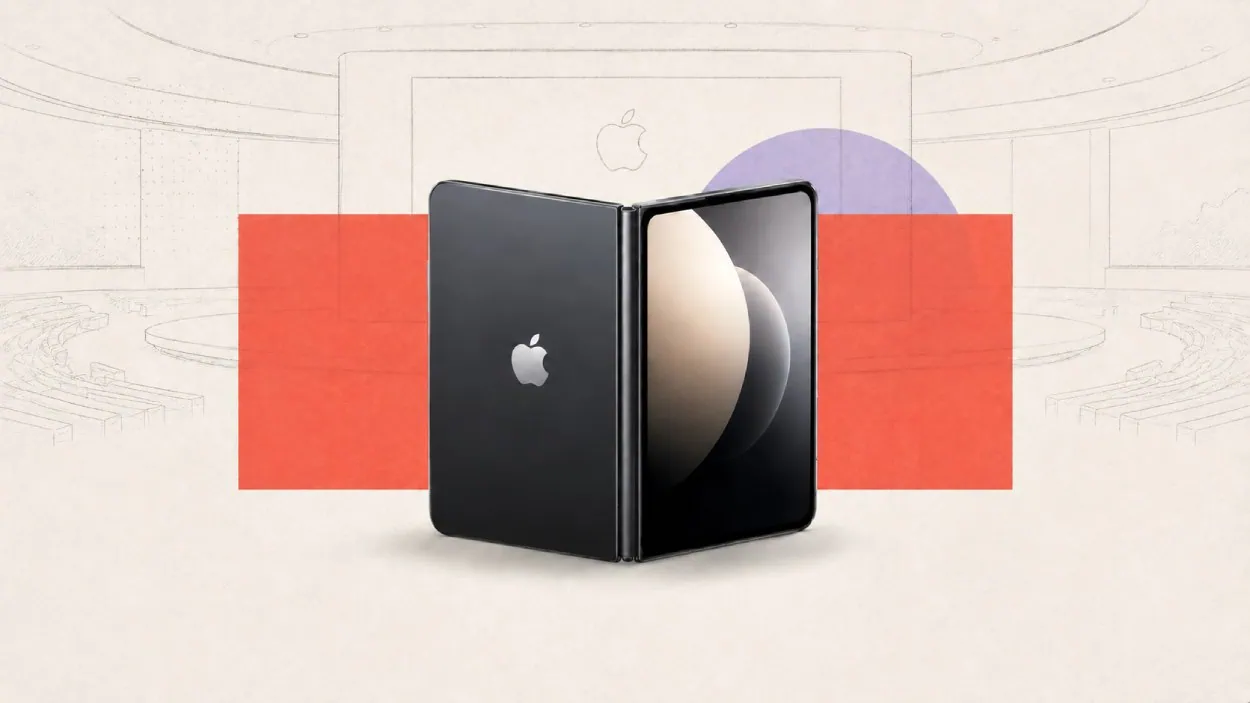






Apple will open its September 9 event with a foldable iPhone priced above $2,000, according to a Bloomberg report published Friday that maps the company’s phone lineup through 2028.
The Big Picture
- Apple plans a foldable iPhone Ultra priced above $2,000, roughly the size of a passport when folded.
- A second foldable is already well into testing for 2027, putting the new line on a yearly refresh.
- A third foldable due in 2028 gets a slightly larger display on the front and inside.
- The iPhone 18 Pro and Pro Max arrive next week with a mechanical aperture camera and the A20 Pro chip.
- The base iPhone 18 leaves the fall lineup and moves to a springtime launch in 2027.
Apple puts foldables on a yearly cycle
The roadmap published by Bloomberg reporter Mark Gurman covers three foldable iPhones in three consecutive years. The 2026 model, called iPhone Ultra, folds to “about the size of a passport when folded” and ships in light and dark color options, with Touch ID and an “advanced hinge.“
A second-generation foldable is already well into testing for a 2027 debut, and the only feature Gurman names for it is a new chip. A third-generation model follows in 2028 with a slightly larger display on the front and inside than the two before it.
That is the detail worth sitting with. A first foldable is a bet. Three of them, on an annual clock, with the third already sized up, is a product line Apple has committed to build before the first one has sold a single unit.
NEW: Apple to Kick Off Ternus Era With Its Biggest-Ever Slate of New Products — From the foldable iPhone to a touch-screen MacBook, here’s what to expect on Sept. 9 and beyond. https://t.co/gAt1zr8bPP
— Mark Gurman (@markgurman) September 4, 2026
The price puts the Ultra outside the rest of the lineup
A phone above $2,000 does not sit at the top of the iPhone ladder so much as it stands beside it. Apple has spent a decade widening its phone range downward with the SE and the e models, and the iPhone ecosystem has grown on volume rather than on ceiling price. The Ultra runs the other way.
Touch ID is the tell. Apple removed the fingerprint sensor from its flagship phones years ago, and bringing it back on a folding device suggests Face ID does not work reliably across two screen states. That is an engineering compromise sitting on the most expensive device in the reported lineup.
The 2027 overhaul lands mid-rollout
Apple’s 2027 lineup reshuffles almost everything at once. The base iPhone 18 and 18e move to a springtime launch, pulling the entry model out of the fall slot it has held for years. The iPhone Air 2 picks up three upgrades: an Ultra Wide camera, a faster chip, and longer battery life.
The Pro models get the larger change. Gurman describes a 20th anniversary design with “curved glass around all corners and edges, with thinner bezels,” and calls it “the biggest overhaul to what is now the iPhone Pro line since the iPhone X.” Apple would therefore redesign the Pro line in the same year it ships a second foldable and splits the lineup across two seasons. Schedules that crowded tend to slip.

What the roadmap does not say?
The report describes plans, and plans are what Apple has confirmed nothing about. Apple has not announced the iPhone Ultra, its price, or any 2027 or 2028 product. Gurman has a long record on Apple’s pipeline, and the roadmap still comes from sourcing inside a company that cancels hardware late. The M5 MacBook and iPad roadmap published last October sits in the same category.
Four things stay open:
- What the Ultra actually costs, given “over $2,000” is a floor?
- Whether the display crease and hinge durability hold up outside Apple’s testing?
- How many units Apple has built, which decides whether this is a volume product or a halo?
- What happens to the fall lineup in 2027 once the base iPhone leaves it?
Anyone holding an upgrade decision through next week should check one thing today: if the plan was to buy a base iPhone 18 this fall, the reported schedule does not include one. The fall choice is a Pro, the Air, or the current lineup.
SQ Magazine’s Takeaway
This roadmap reads as a company reorganizing its calendar around a device it has not shipped yet. Splitting the iPhone into a spring release and a fall release solves a real problem, because a single September launch has to carry every model and every price point at once. The foldable gives Apple a reason to make that split now, and the 2027 Pro redesign gives the fall event something to lead with once the entry phones move out.
What’s next is short and dated. Ternus takes the stage on September 9, and the price, the hinge, and the passport comparison stop being reported details that morning. Watch the 2027 Air 2 spec list after that. If the Air keeps thinning while the Ultra folds, Apple is running two different answers to the same question about what a phone should be, and one of them will lose.