





Apple’s first foldable iPhone is facing engineering challenges that could delay its launch timeline and impact its market debut.
Quick Summary – TLDR:
- Apple is encountering unexpected engineering issues during early testing of its foldable iPhone.
- Delays could push shipments by months and possibly into 2027.
- Trial production has started, but mass production depends on resolving current issues.
- Apple is exploring new display technology to reduce screen crease problems.
What Happened?
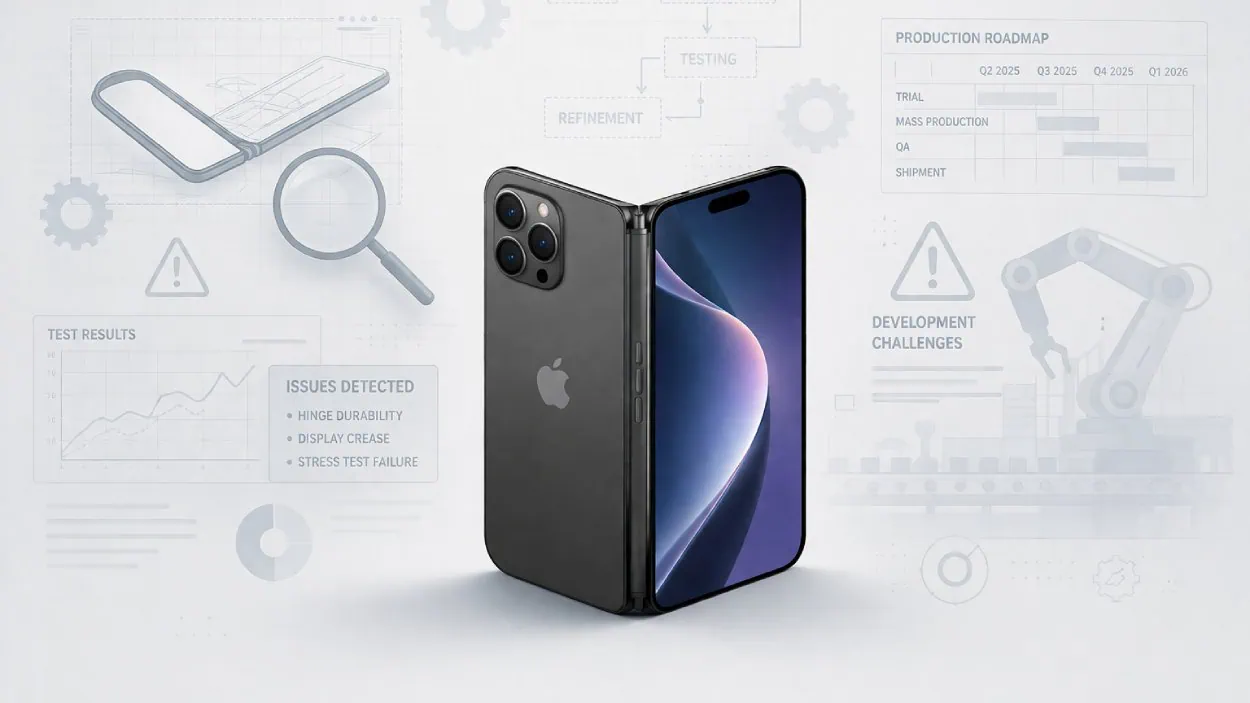
Apple is reportedly facing multiple engineering hurdles in developing its first foldable iPhone. These issues have surfaced during early test production and could delay both manufacturing and shipment timelines. While trial production has begun, the company may need more time to refine the device before mass production.
$AAPL is down over 4% today as engineering issues with its first foldable iPhone could delay mass production. pic.twitter.com/YChxp4R7dL
— Shay Boloor (@StockSavvyShay) April 7, 2026
Engineering Challenges Slow Progress
Apple’s long awaited entry into the foldable smartphone market is proving to be more complex than expected. Reports indicate that early test production has revealed more issues than anticipated, forcing the company to spend additional time on adjustments and refinements.
Sources familiar with the matter suggest that these engineering concerns could delay initial shipments by several months in a worst case scenario. Suppliers have also reportedly been notified that component production schedules may be pushed back, signaling ripple effects across Apple’s supply chain.
The complexity of foldable devices is a known industry challenge. Unlike traditional smartphones, foldable designs must balance durability, flexibility, and display quality. Apple appears to be encountering these tradeoffs firsthand.
Conflicting Signals Around Launch Timeline
There are mixed reports about when the iPhone Fold could actually reach consumers. Earlier expectations pointed to a late 2026 launch, possibly following the release of the iPhone 18 Pro models.
Some analysts and sources suggested a December rollout, following a staggered launch strategy similar to previous iPhone releases. However, with the latest engineering setbacks, there is growing speculation that the device could slip further, potentially into 2027 if issues are not resolved quickly.
At the same time, there are signs of progress. Trial production has reportedly begun at Foxconn, Apple’s key manufacturing partner in China. If this phase goes smoothly, mass production could still start around mid 2026, keeping hopes alive for a late year release.

Apple Experiments With New Display Technology
One of the biggest challenges for foldable phones is the visible crease on the screen. Apple is said to be working on a new dual layer glass system to address this issue.
This approach may include:
- A combination of ultra thin glass and flexible glass.
- A redesigned internal display structure.
- A display layer positioned between materials instead of directly on the hinge.
If successful, this design could significantly improve durability and visual quality. However, developing such technology adds to the complexity and may be contributing to the current delays.
Market Pressure and Consumer Demand
Apple is entering a market where demand for foldable phones is still evolving. While competitors have already released multiple foldable models, the category remains relatively niche due to high costs and durability concerns.
This puts Apple in a delicate position. The company must deliver a product that not only matches but exceeds existing offerings, all while ensuring reliability at scale.
Delaying the launch could give Apple more time to perfect the device, but it also risks losing momentum in a competitive segment.
SQ Magazine’s Takeaway
I think Apple is doing the right thing by slowing down instead of rushing this product. Foldable phones are still not perfect, and if Apple launches one, people will expect it to be the best in the market. Right now, it looks like the company is struggling to meet its own high standards. If that means waiting until 2027, it might actually be worth it. A flawed foldable iPhone would do more damage than a delayed one.