





Google is rolling out a new Android security feature that can detect when scammers use AI generated voices and spoofed phone numbers to impersonate trusted contacts.
Quick Summary – TLDR:
- Google has introduced Fake Call Detection for Android devices running Android 12 and later.
- The feature helps identify AI voice cloning and caller impersonation scams by verifying whether a call is actually coming from a contact’s device.
- It works automatically through an encrypted RCS-based verification system and is enabled by default.
- The rollout starts with Pixel devices and will expand globally this month.
What Happened?
Google has announced Fake Call Detection, a new Android security feature designed to combat the growing threat of AI-powered impersonation scams. The tool can detect when a caller is pretending to be someone from a user’s contact list by combining caller ID spoofing with AI generated voice cloning.
The feature is being rolled out globally on Android 12 and newer devices, starting with Pixel phones, and aims to provide users with an additional layer of protection against increasingly sophisticated fraud attempts.
Imagine receiving a call from your mother. Her name appears on the screen, the phone number matches the one saved in your contacts, and the voice sounds exactly like hers. She tells you there is an emergency and urgently needs money.
— IndiaToday (@IndiaToday) June 3, 2026
But what if the caller is not your mother at… pic.twitter.com/51pyuxJYie
How AI Impersonation Scams Are Evolving?
For years, people have trusted caller ID to determine who is calling them. That trust is now being challenged by modern scam tactics that make fraudulent calls appear legitimate.
Many scammers have shifted away from calling from unknown numbers because people are less likely to answer them. Instead, they are now impersonating family members, friends, employers, and other trusted contacts.
These attacks typically rely on two techniques:
- Phone number spoofing, which makes a call appear as though it is coming from a known contact.
- AI voice cloning, which can replicate a person’s voice using only a few seconds of audio collected from videos, social media posts, or other publicly available sources.
Security experts have warned that AI generated voices have become so realistic that many people struggle to distinguish them from genuine human speech.
While these scams initially focused on individuals and older adults, cybercriminals are increasingly using them against businesses in social engineering and fraud campaigns.
How Android Fake Call Detection Works?
Google’s new feature functions as a silent verification system operating in the background whenever two people use Phone by Google.
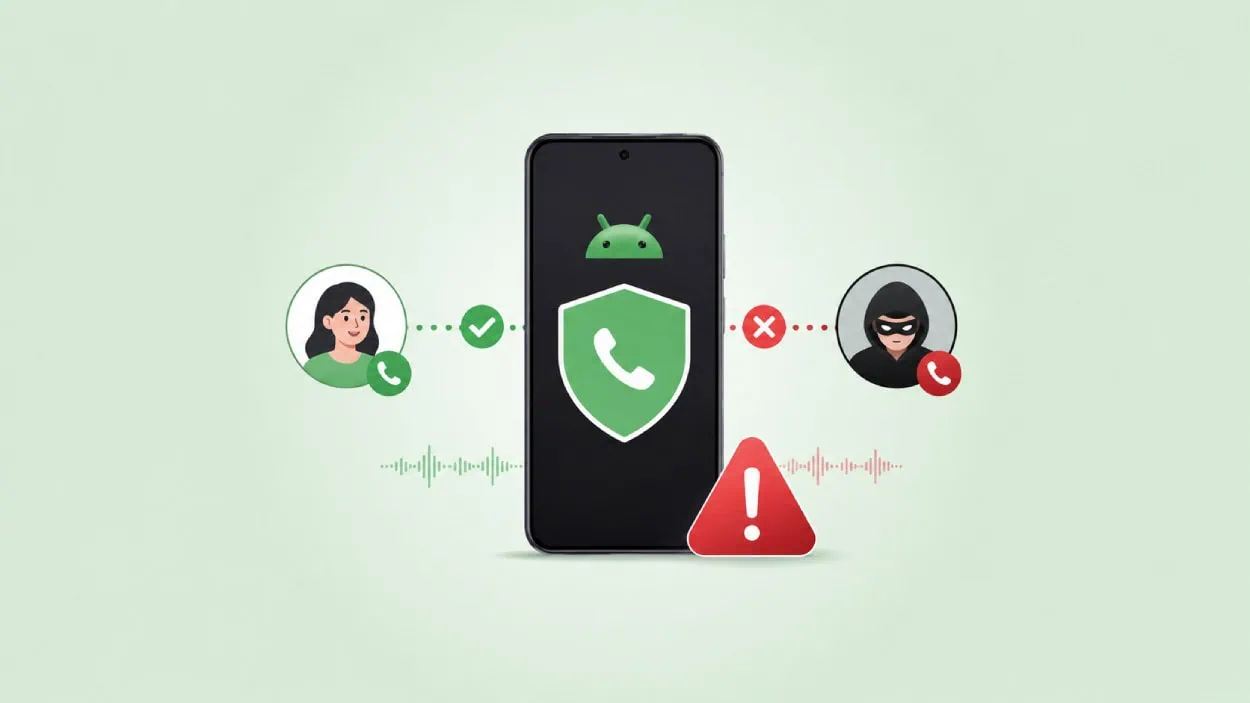
When a legitimate contact places a call, their Android device sends a secure confirmation signal to the recipient’s device in real time. This process uses end-to-end encrypted Rich Communication Services (RCS) technology.
Google describes the process as a digital handshake between devices.
If a scammer attempts to spoof a contact’s phone number, that confirmation signal will not be present. In response, the recipient’s device automatically checks with the contact’s actual phone to verify whether a call is being made.
If the contact’s device confirms that no call is taking place, Android displays a warning message alerting the user that someone may be pretending to be their contact and advises them to hang up immediately.
The feature works automatically and is enabled by default, although users can disable it through the Phone by Google settings menu if they choose.

Why Google Is Introducing This Feature?
The move comes as impersonation fraud continues to grow worldwide.
According to the Federal Trade Commission, reported losses from impersonation scams reached $2.95 billion in 2024. Meanwhile, INTERPOL’s Global Financial Fraud Threat Assessment released in March 2026 identified impersonation fraud as one of the leading contributors to more than $400 billion in global losses.
Google believes traditional caller ID systems are no longer enough to protect users from these increasingly advanced attacks.
By verifying whether a call is actually coming from a trusted contact’s device, the company hopes to stop scams before victims have a chance to engage with fraudsters.
Built on an Open Standard
One of the most notable aspects of Fake Call Detection is that it is built on the RCS open standard rather than a proprietary system.
Google says this approach could allow other device manufacturers and app developers to adopt similar protections in the future, potentially expanding the technology across a broader range of devices and communication platforms.
The feature requires compatible Android devices and support from Phone by Google, Google Contacts, and Google Messages with RCS enabled.
Google’s Broader Fight Against Scams
Fake Call Detection is the latest addition to Google’s growing portfolio of anti scam tools.
The company already offers:
- AI-powered Scam Detection in Google Messages.
- Scam call alerts within Phone by Google.
- Verified financial calls to help users identify legitimate banking communications.
- Business verification through RCS for Business.
- Support for STIR/SHAKEN authentication to combat caller ID spoofing.
Google also expanded Android’s in call scam protection capabilities last year to support several major financial institutions and payment platforms in the United States.
SQ Magazine Takeaway
I think this is one of the most practical AI security features Google has introduced in recent years. AI voice cloning tools are becoming cheaper, easier to access, and much harder to detect. A scammer no longer needs sophisticated equipment to sound like a family member or colleague.
By verifying the device behind the call rather than relying solely on a voice or caller ID, Google is addressing the problem at its source. If the technology works as promised, it could become an important defense against a new generation of AI-powered scams that are already causing billions of dollars in losses worldwide.