





Google says its Gemini powered systems blocked billions of harmful ads in 2025 while introducing stronger privacy controls for Android users.
Quick Summary – TLDR:
- Google blocked or removed 8.3 billion ads and suspended 24.9 million accounts in 2025.
- Gemini AI detected over 99% of harmful ads before they reached users.
- Shift from banning accounts to blocking ads more precisely at scale.
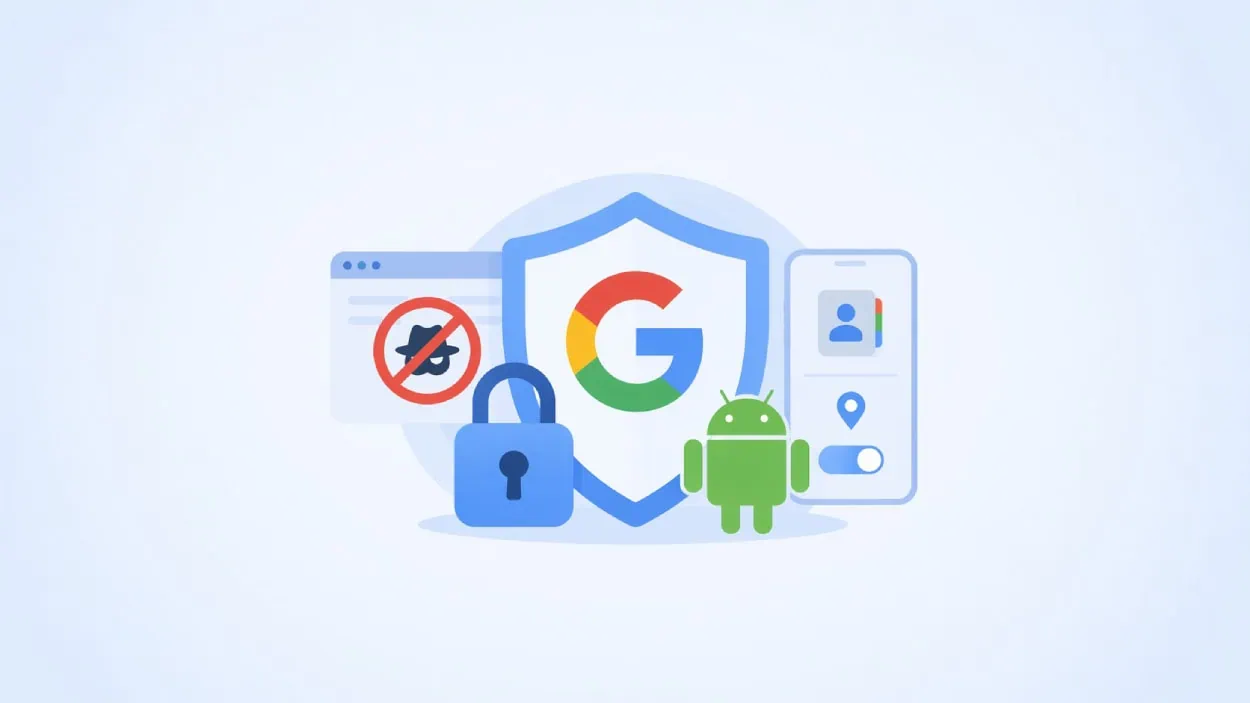
- Android 17 introduces new privacy features for contacts and location access.
What Happened?
Google has released new details about its 2025 ad safety efforts and upcoming Android policy updates. The company says its Gemini AI models are now central to detecting harmful ads while new Android 17 features aim to give users more control over their data.
Google’s clampdown on bad ads is serious: 8.3 billion policy-violating ads were blocked, and Android 17 steps up privacy controls. Malicious ads have a tougher time than ever. 🔒 #cybersecurity #privacy
— EFANI Secure Cellphone Service (@efani) April 17, 2026
Source: The Hacker News pic.twitter.com/n4Rg0dMhpT
Gemini AI Powers Massive Ad Safety Push
Google’s latest numbers highlight the sheer scale of harmful content online and how AI is now central to stopping it. In 2025 alone, the company blocked or removed over 8.3 billion ads globally, marking a sharp rise from previous years.
The company also suspended 24.9 million advertiser accounts, although this number is lower compared to earlier periods. This reflects a clear shift in strategy.
Instead of relying heavily on account bans, Google is now focusing on blocking individual ads with greater precision.
- 602 million ads and 4 million accounts were linked to scams.
- More than 99% of policy violating ads were stopped before being shown.
- 4.8 billion ads were restricted across sensitive categories.
This shift is powered by Gemini, which analyzes hundreds of billions of signals, including behavior patterns, account history, and campaign activity. Unlike older systems, the AI understands intent, allowing it to catch even cleverly disguised scams.
A Shift From Bad Actors to Bad Ads
One of the most important changes in Google’s approach is how it handles enforcement. The company is moving away from broad penalties like account suspensions and instead focusing on granular ad level detection.
This change is partly driven by the rise of generative AI scams, where bad actors can quickly create thousands of misleading ads.
Google says this new approach has several benefits:
- Faster detection and blocking of harmful ads.
- Reduced incorrect suspensions by 80%.
- Better support for legitimate businesses.
According to company executives, this allows teams to focus on more complex threats while AI handles large scale detection in real time.

Real Time Detection and Faster Response
Gemini is also improving how quickly Google responds to threats. Many ads are now reviewed instantly at submission, especially in formats like responsive search ads.
The system also processes user feedback faster, enabling Google to act on four times more user reports compared to the previous year.
This speed is critical as scammers increasingly use automation tools to scale their operations.
Android 17 Brings Stronger Privacy Controls
Alongside ad safety updates, Google is rolling out new privacy focused features in Android 17.
The updates focus on giving users more control over contacts and location data.
Contact Access Gets a Major Overhaul
A new Contact Picker allows users to choose specific contacts to share with apps instead of granting full access.
- Apps can request only specific data fields like email or phone number.
- Broad permissions like READ_CONTACTS will be limited.
- Developers must justify full access through formal declarations.
This change reduces unnecessary data exposure and aligns with a broader push toward minimal permissions.
Location Sharing Becomes More Transparent
Google is also introducing a location button for one time precise location access.
- Users can grant temporary location access for specific actions.
- A persistent indicator shows when apps access location.
- Developers must justify continuous tracking if required.
These updates aim to make privacy decisions clearer and more transparent for users.
Stronger Protections for Developers and Businesses
Google is also addressing fraud risks for developers by introducing a secure app ownership transfer system within the Play Console.
This feature is designed to prevent unsafe practices like sharing login credentials or selling accounts through third party platforms.
Developers will be encouraged to use this system starting May 2026, with stricter enforcement expected later.
SQ Magazine’s Takeaway
I think this is one of the clearest signs that AI is now running the internet’s safety layer. Google is no longer just reacting to threats, it is predicting and blocking them before they even appear. What stands out to me is the shift from punishing accounts to stopping harmful content itself. That feels smarter and more scalable.
At the same time, the Android 17 privacy updates show that user control is finally becoming more practical, not just a checkbox. If Google continues in this direction, both users and honest businesses stand to benefit in a big way.