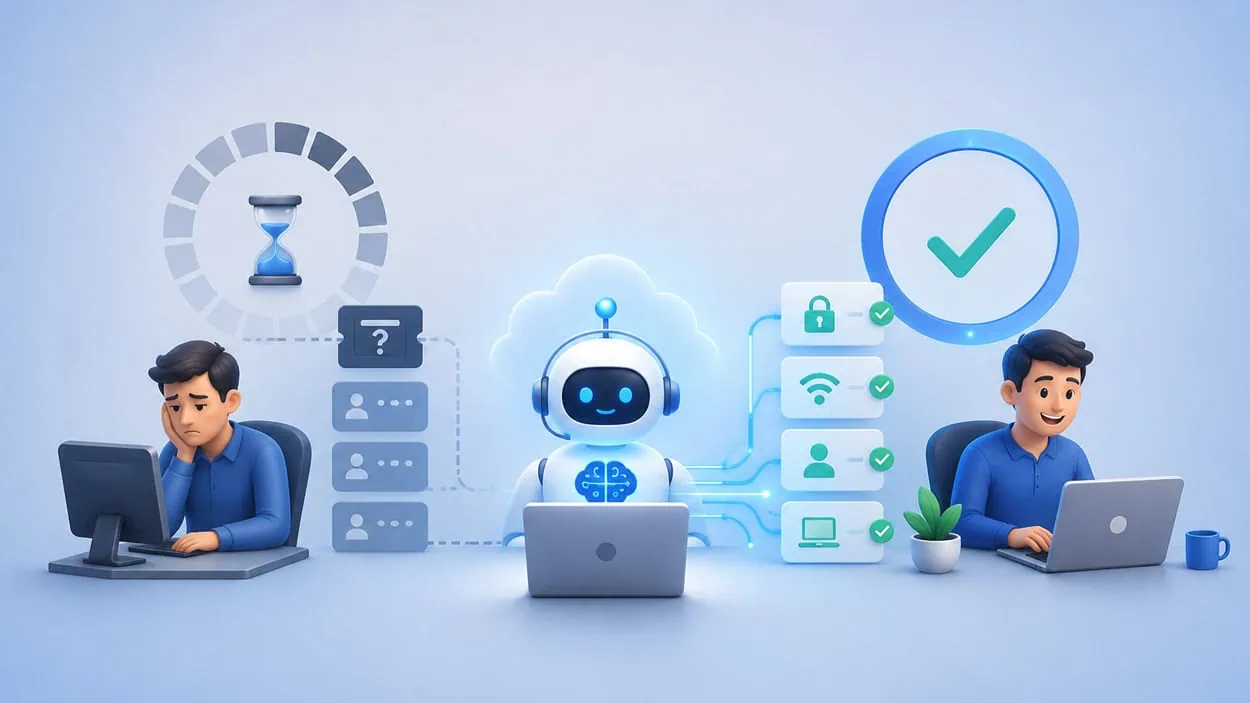






Not long ago, a website that loaded quickly felt like a small victory. Now, if it takes more than a second, people leave. That says everything about where we are and how quietly the rules changed while nobody was really watching.
When Convenience Becomes the Baseline
Users no longer celebrate a smooth experience; they punish its absence. This shift has changed what digital products and services must deliver.
The mechanics behind this change are straightforward. Each time a company raises the bar, a faster load time here, a frictionless payment flow there, users recalibrate their baseline. What was impressive last year becomes ordinary this year. The digital environment trains people continuously, and expectations rise in direct proportion to how often those expectations are met.
This has serious implications for how products are designed and how companies compete. It is no longer enough to offer a feature that works. It must work instantly, intuitively, and without interruption. The margin between a satisfying experience and an abandoned one has narrowed considerably.
How Industries Have Responded to This Change
Across sectors, businesses have had to rethink what it means to serve a user well. Consumer expectations shaped by one part of the digital world bleed into others.
Someone accustomed to one-click purchasing on a major e-commerce platform will carry that standard into their banking app, their travel booking experience, and everywhere else they interact with a screen.
E-commerce was one of the first industries to internalize this reality at scale. Early online retailers competed on product selection and price. Then speed entered the picture, and two-day delivery became standard. Now the expectation includes real-time inventory visibility, seamless returns, personalized recommendations, and checkout processes that take seconds.
Retailers who have not invested in removing friction at every stage of the purchase journey are losing customers, not because their prices are wrong, but because the experience feels slow or clunky by comparison.
This is also clear in the online entertainment industry, and online casino platforms are a strong example. In the Finnish market, pikakasinot, which translates roughly to fast casinos, have built their entire value proposition around eliminating friction. These platforms use a bank-based verification system that removes the need for lengthy registration processes. Players can deposit funds and begin playing within minutes of arriving on the site, and withdrawals are processed with similar speed.
Streaming services offer another clear example of this dynamic. Platforms delivering video and audio content have had to go beyond simply making content available online. Buffering, even for a brief moment, drives users away. Interfaces must surface the right content quickly, because users will not spend time searching. Personalization algorithms now carry significant business weight; if a platform fails to predict what a user wants within a few seconds of opening the app, that user may leave.
The Design Pressure Behind Seamless Experiences
Building for elevated expectations requires more than good intentions. It demands a shift in how teams prioritize their work. Features that reduce steps, eliminate wait times, and surface information without requiring the user to ask for it sit at the top of the product backlog now.
This was not always the case. Historically, design teams were often tasked with adding functionality. Today, the highest-value work is frequently subtraction: finding what to remove from a user’s path entirely.
Infrastructure investment has followed this logic as well. Companies operating digital services have poured resources into backend systems not because users see them, but because users feel them.
A payment that clears in seconds instead of minutes, a form that pre-fills based on known data, a confirmation that arrives before the user has closed the tab; these moments build trust. They signal that a company understands its users and has made choices that respect their time.
This pressure has also changed hiring and organizational structure in the technology industry. Product managers, UX researchers, and performance engineers now wield influence once reserved for those building visible features. The work of reducing latency, improving accessibility, and smoothing edge cases has become central rather than supplementary.
Companies that treat these roles as support functions tend to fall behind those that treat them as core to the product.
What This Means for Users
The relationship between convenience and expectation is self-reinforcing and shows no signs of slowing. Each smooth experience adds to a mental model of what is possible, and that model becomes the standard applied everywhere else.
For businesses, this means the work of meeting expectations has no finish line. What satisfies users today will be taken for granted tomorrow.
Staying competitive requires continuous investment in experience quality, not periodic upgrades. The companies that thrive will be those that build listening mechanisms into their operations, tracking where users hesitate, drop off, or express frustration, and respond with speed and precision.
For users, the net effect is a higher quality of life in practical terms. Transactions that once required time, paperwork, or multiple steps are now resolved in moments. But this ease carries a subtle cost: tolerance for friction decreases alongside it. The more seamless things become, the more jarring even minor obstacles feel. Understanding this dynamic (on both sides of the screen) is what separates companies that lead from those that simply follow.