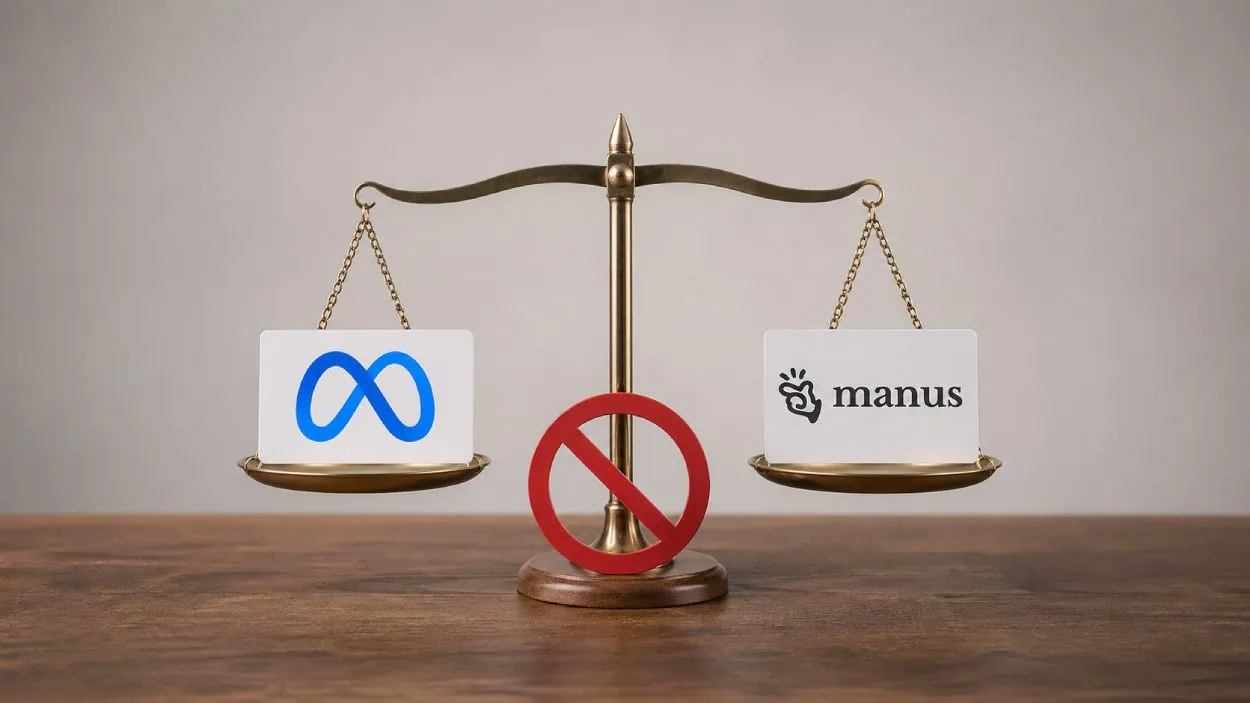






China has ordered Meta to unwind its $2 billion acquisition of AI startup Manus, signaling tighter control over foreign access to its advanced technology sector.
Quick Summary – TLDR:
- China has blocked Meta’s $2 billion acquisition of AI startup Manus.
- Regulators cited national security and restrictions on foreign investment.
- Manus had shifted operations to Singapore to bypass regulatory hurdles.
- The move highlights growing US China rivalry in artificial intelligence.
What Happened?
China’s top economic planner has ordered Meta to cancel its acquisition of AI startup Manus and withdraw from the deal. The decision comes after months of regulatory scrutiny and reflects Beijing’s stronger stance on protecting domestic AI assets.
🚨 BREAKING: CHINA BLOCKS META’S $2B AI DEAL
— Coin Bureau (@coinbureau) April 27, 2026
China has ordered Meta to unwind its $2B acquisition of Manus, citing foreign investment rules.
The deal had faced pressure from both Beijing and Washington, as the U.S. restricts funding into Chinese AI firms.
Manus, a… pic.twitter.com/WCacwbJui2
China Steps In to Block the Deal
China’s National Development and Reform Commission directed all parties involved to unwind the acquisition, effectively nullifying Meta’s plan to take over Manus. The deal, valued at over $2 billion, had already been completed in December but was later reviewed under foreign investment rules.
This kind of reversal is rare and shows how serious China has become about controlling who can access its AI talent and intellectual property. Officials are increasingly wary of foreign companies gaining influence in sectors considered critical to national security.
The move also comes just weeks before a planned high level meeting between leaders from the United States and China, adding another layer of tension to an already strained relationship.
Manus Tried to Shift Operations Abroad
Before the deal came under pressure, Manus had already begun restructuring. The company shut down its China offices and moved its base to Singapore after securing funding from US investors.
This relocation allowed Manus to operate outside China’s strict rules while still tapping into foreign capital. Its parent entity was re registered in Singapore, and employees even moved into Meta’s offices there.
However, Chinese regulators did not approve this shift. Authorities made it clear that simply moving operations abroad would not shield companies from oversight, especially when sensitive technologies are involved.

Executives Face Restrictions During Probe
As part of the investigation, Manus CEO Xiao Hong and Chief Scientist Ji Yichao were called in for questioning by regulators. They were later barred from leaving China during the review process.
Despite these restrictions, some of Manus’s projects reportedly continued under Meta’s direction in Singapore, showing how far the integration had already progressed before the order to reverse the deal.
AI Becomes Central to US China Rivalry
The blocked acquisition highlights how artificial intelligence is now at the center of global competition. What started as restrictions on semiconductor exports has now expanded into broader control over AI development and talent.
Experts say China is sending a clear message that it will not allow foreign companies to acquire assets it considers strategically important.
At the same time, the United States has been tightening its own controls, including limiting China’s access to advanced chips and raising concerns about intellectual property.
Chinese regulators are also reportedly instructing major tech firms and startups to avoid accepting US investments without prior approval. Companies like ByteDance and other AI startups are facing similar scrutiny.
Why Meta Wanted Manus?
Meta saw Manus as a valuable addition to its growing AI portfolio. The startup had gained attention for developing advanced AI agents capable of performing complex tasks like coding, research, and data analysis.
Unlike traditional chatbots, these systems can act more independently, making them a key focus area for future AI applications.
Meta planned to use Manus’s technology to strengthen its own AI tools, including its assistant and enterprise solutions, as it competes with other global tech giants.
SQ Magazine Takeaway
From my perspective, this is not just about one deal falling apart. This is a clear sign that AI is now treated like a strategic asset similar to energy or defense. China is drawing a firm line and saying its top AI innovations are not for sale.
For companies like Meta, this raises a bigger challenge. Expanding globally in AI is no longer just about money or talent. It is about navigating politics, regulations, and national interests. I believe we will see more deals like this getting blocked as the AI race heats up.