





Connected safety hardware rarely makes tech headlines. Yet it is one of the quietest growth stories in the Internet of Things. Devices that once sat in a corner of the home now travel with their owners, streaming location and health signals over cellular networks. For a data-focused reader, the numbers are the interesting part.

That growth also reshapes how the hardware is paid for. Alongside the usual monthly monitoring plans, some vendors now sell the unit outright. A Canadian option like the Life Assure no-monthly-fee medical alert shows the appeal. A one-time purchase can suit buyers on either side of the Atlantic. The rest of this piece looks at the market data behind that shift.
How Big Is the Connected Safety Device Market?
It is bigger than most people assume, and it rides the wider IoT wave. The global IoT market reached about $862.75 billion in 2026, according to published IoT statistics. Connections are set to hit 21.9 billion the same year.
Personal safety hardware is a small but steady slice of that total. Analysts expect the broader IoT market to grow at a 10.9% compound rate through 2030. Aging-focused devices benefit from that momentum. They rely on the same cellular and cloud infrastructure as any other smart product.
North America and Europe lead early adoption. Buyers there already trust connected doorbells, watches, and home hubs. A monitored alert pendant feels familiar rather than strange. Trust in one connected device tends to carry over to the next. That habit is quietly widening the market for safety hardware.
How Do Monitored Medical Alert Devices Actually Work?
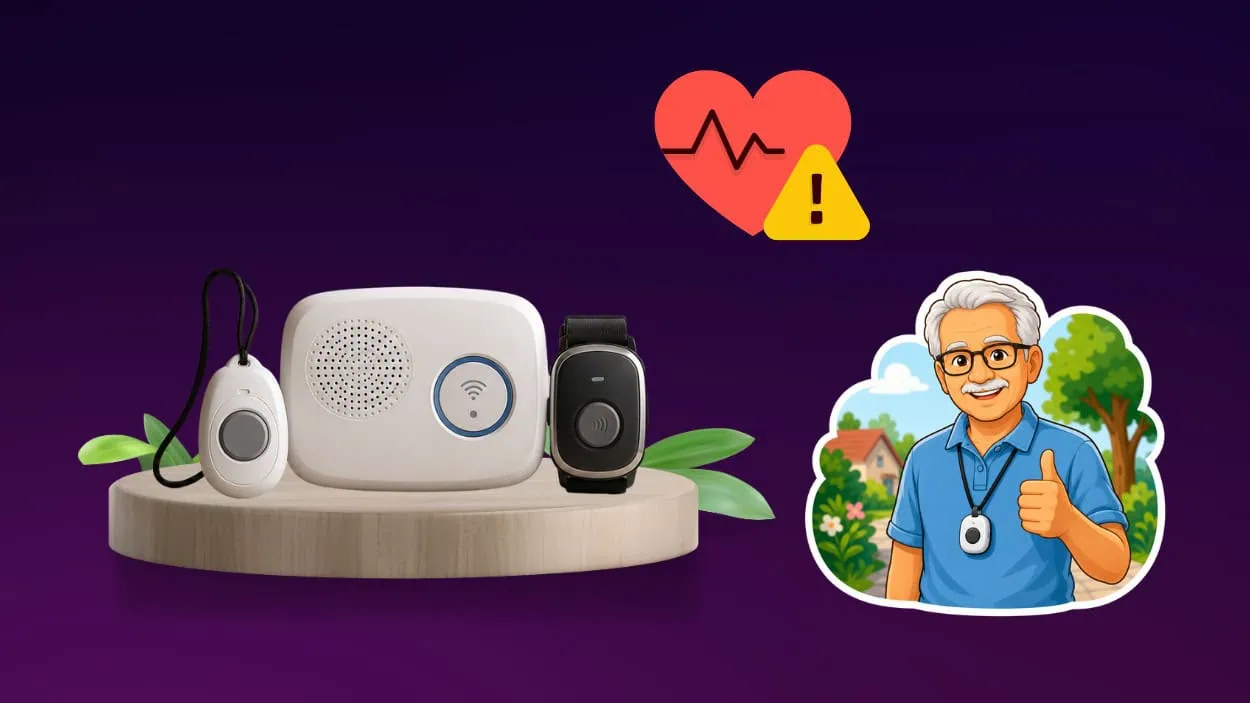
They pair a wearable sensor with a monitoring centre reached over a mobile network. The flow is simple once you break it into steps.
- A button press or a fall sensor triggers the device.
- The unit connects to a monitoring centre using a cellular or Wi-Fi signal.
- GPS or Wi-Fi positioning shares the wearer’s location within 30 seconds.
- A trained agent speaks through the built-in speaker to assess the situation.
- The agent alerts family, neighbours or emergency services as needed.
Older home units stay tied to one location. Newer mobile models add GPS, so the same protection follows a user to the shops or a walking trail. Battery design differs too. Home units draw mains power, while mobile units rely on a rechargeable cell that lasts a day or more.
Why Does the Aging Population Drive Demand?
Demand tracks demographics, and the demographics are striking. By 2030, 1 in 6 people worldwide will be aged 60 or over.

That older group will reach 1.4 billion people, on the way to 2.1 billion by 2050. These projections come from the World Health Organization and its global ageing population statistics. This shift touches wealthy and developing countries alike.
Older adults also face real safety risks at home. Research from the National Institute on Aging shows falls in older adults are a leading cause of injury. Roughly 1 in 3 people over 65 falls each year. Many never call for help in time.
Connected alert devices answer that gap directly. A monitored pendant turns a private fall into a fast response. That is why families across the UK, the US and Canada keep buying them.
Subscription or No-Monthly-Fee: Which Model Costs Less?
It depends on how long you keep the device. A quick cost comparison makes the trade-off clear.
| Model | Typical upfront cost | Ongoing monthly fee | Best for |
| Standard subscription | $0 to $50 | $20 to $60 | Short-term or trial use |
| Hybrid plan | $100 to $200 | $10 to $25 | Medium-term users |
| No-monthly-fee purchase | $200 to $400 | $0 | Long-term, budget-focused users |
Over three years, a $30 monthly plan costs more than $1,000. A one-time purchase near $300 can pay for itself within a year. For fixed-income households, that predictability often matters more than any feature list.

What Should Buyers Check Before Choosing a Device?
Focus on coverage, battery, and monitoring quality rather than gadget count. The smart-home boom has trained buyers to expect easy setup. Household penetration of smart devices reached 82.1% in some markets, according to published smart home data. Buyers now expect plug-and-play hardware, not a printed manual. An alert device should meet that same low bar for effort.
A useful shortlist keeps the decision practical:
- Cellular coverage across the areas the wearer visits
- Battery life of at least 24 hours per charge
- A monitoring centre staffed by trained agents
- Water resistance for bathroom and shower use
The Numbers That Matter
- The global IoT market hit about $862.75 billion in 2026.
- Worldwide IoT connections are set to reach 21.9 billion this year.
- 1 in 6 people will be aged 60 or over by 2030.
- Falls remain a leading injury cause for adults over 65.
- A no-monthly-fee device can beat a subscription within 12 months.
Where the Market Goes Next
Connected safety hardware will keep growing as populations age and networks improve. The clearest choice for many buyers is not a brand but a payment model. A no-monthly-fee device offers steady value in a market built on recurring charges. For fixed budgets, that simple math often decides the purchase.
Frequently Asked Questions
Not always. Many modern units run on cellular networks, so they work without home broadband. Home-based models may still use a landline or a Wi-Fi connection.
You pay once for the hardware and avoid recurring monitoring bills. Some no-fee models rely on programmed emergency contacts instead of a paid centre. That option suits users who want lower long-term costs.
Yes. Mobile models add GPS and cellular links, so help can find a user on a walk or an errand. Older home-only units cover a fixed range around the base station.
The core hardware is similar across regions. Cellular bands and monitoring rules differ, so buyers should confirm local coverage. A device sold in Canada may need a regional version for UK networks.