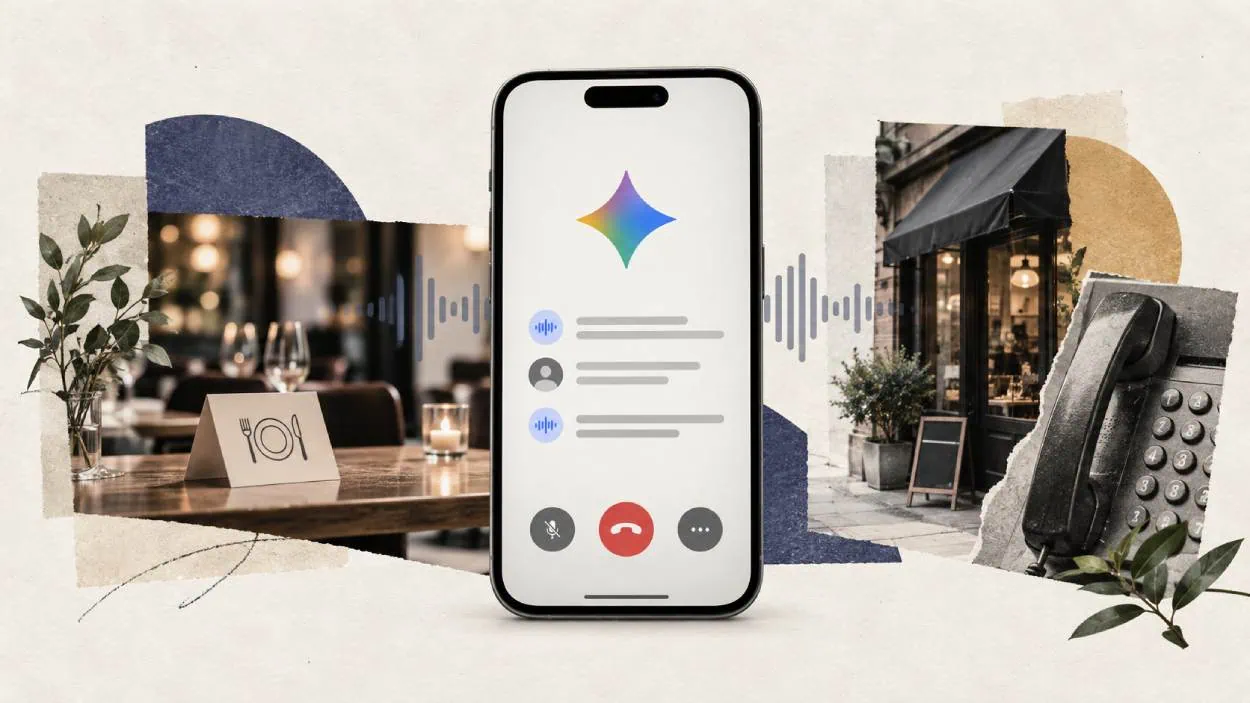






Google added agentic food ordering, hotel discovery and event ticketing to Ask Maps on August 6, 2026, letting the assistant assemble a restaurant cart on a partner platform before the user pays.
Quick Summary – TLDR:
- Google Maps can now order takeout through Ask Maps, adding requested dishes to a cart on Square or Toast.
- Uber Eats support is not live at launch. Google’s announcement lists the delivery platform as coming soon.
- Ask Maps compares real-time hotel prices and checks availability, then links out to a partner site to book.
- Personal Intelligence connects Ask Maps to Gmail for trip context. That connection is off by default.
- Ask Maps is expanding to Australia, Brazil, Canada, Indonesia, Japan and Mexico, plus over 150 countries in English.
What Happened?
Miriam Daniel, VP and GM of Google Maps, set out the update in a company blog post, writing that “Ask Maps can now handle complex, multi-step tasks for you using new agentic capabilities.” The feature set covers takeout ordering, hotel search and local event discovery.
The ordering flow works from a spoken or typed craving. Ask Maps finds open restaurants along the user’s route that serve the dish, weighing saved places and stated dietary needs, then adds the item directly to a cart on the restaurant’s ordering platform. The user reviews that cart and completes payment on the partner platform, not inside Maps.
The rollout splits by feature. Food ordering, hotel and event discovery and conversational map edits are US-only for now, while the live transit widget, Personal Intelligence and conversation memory reach every market where Ask Maps runs. Ask Maps itself is arriving in Australia, Brazil, Canada, Indonesia, Japan and Mexico, alongside over 150 countries and territories in English.
Ask Maps is getting an upgrade. 🔍✨
— Google Maps (@googlemaps) August 6, 2026
Now powered by agentic capabilities, real-time information, and Personal Intelligence, Ask Maps is transforming how you plan and move through the world. pic.twitter.com/XadDCw44uu
Ask Maps Moves Upstream of the Delivery Apps
The launch partners matter more than the feature list. Square and Toast sell ordering and payment software to restaurants directly, so Google is wiring its assistant into the merchant’s own stack at the moment a diner decides what to eat. Uber Eats, the aggregator most people associate with that transaction, arrives later.
Google is also standardizing the plumbing. The announcement commits to co-developing a Universal Commerce Protocol for Food with partners, an open specification for how an AI agent talks to a restaurant’s menu and cart. A shared protocol lowers the cost for any assistant to place orders, and it puts Google in the room where the rules get written.
The commerce push follows the same pattern as Gemini-powered agent workflows in Chrome and the Search Live global rollout. Google is attaching action to surfaces that previously only returned answers.
What Google Has Not Explained?
Google’s post shows the assistant assembling a cart. It does not show Maps taking payment, processing a refund, or handling a wrong order, and the company has not said who owns those steps. Several commercial questions are also unanswered:
- Whether restaurants or hotels pay for placement in agentic results?
- How Ask Maps ranks which venue surfaces for a given dish query?
- When Uber Eats ordering actually ships?
- Whether Google takes a cut of orders routed through Square or Toast?

Personal Intelligence Stays Off Until You Turn It On
Anyone already using Ask Maps should check two settings today. The Gmail connection that powers Personal Intelligence is off by default, and Google describes Calendar support as coming later rather than live now. Conversation memory only works when Google history settings are switched on.
Turning the Gmail connection off helps reduce what the assistant can read about a user’s travel plans, though it does not stop other Maps data collection. Agents that read a mailbox and then act on its contents also widen the surface that prompt injection research has been documenting across assistant products.
SQ Magazine’s Takeaway
This update reads as a distribution play rather than a convenience feature. Maps already knows where a user is, what is open along the route and how busy it is, and adding cart assembly at that point captures demand before it reaches a delivery app’s search box. Square and Toast get an extra funnel into merchant owned ordering, which is the outcome restaurants have wanted since commission rates became a public fight.
What’s next depends on the protocol work and the missing partner. If the Universal Commerce Protocol for Food gains adoption beyond the launch group, ordering becomes a capability any assistant can offer, and the advantage shifts back to whoever owns the map data. Uber Eats support and Calendar access are the two dates worth watching, and US users should expect the agentic features to reach other markets only after Google settles local payment and consumer protection questions.