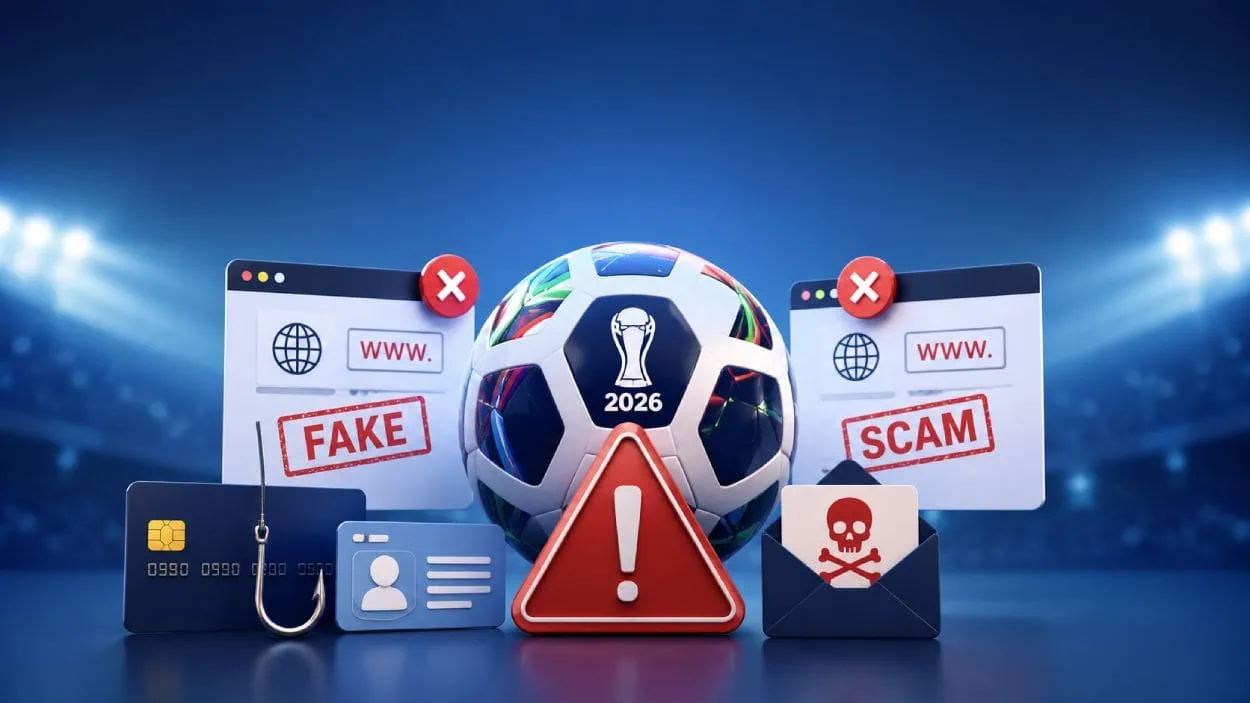






Football fans searching for FIFA World Cup 2026 tickets, merchandise, and streaming services are increasingly being targeted by fake websites, phishing campaigns, and social media scams.
Quick Summary – TLDR:
- The FBI has warned about a growing number of fake FIFA themed websites ahead of the 2026 FIFA World Cup.
- Cybercriminals are using phishing pages, fake ticket stores, and fraudulent merchandise ads to steal money and personal data.
- Researchers uncovered more than 55 football related scam campaigns operating across Facebook, Instagram, email, and fake streaming platforms.
- Security experts advise fans to visit only the official FIFA website and avoid suspicious links or sponsored ads.
What Happened?
The FBI and cybersecurity researchers are warning football fans worldwide about a surge in online scams exploiting excitement around the upcoming FIFA World Cup 2026. Threat actors are creating fake FIFA themed websites, phishing campaigns, counterfeit merchandise stores, and fraudulent streaming services to target unsuspecting users.
The campaigns have already spread across social media platforms, email promotions, and spoofed domains designed to look nearly identical to the official FIFA website. Researchers believe the number of scams will continue to rise as the tournament gets closer.
‼️ The FBI is providing a Public Service Announcement (PSA) warning that cyber criminals are creating fake versions of FIFA’s website ahead of the 2026 World Cup to steal personal information, sell counterfeit tickets and hospitality packages, and enable further fraud such as… pic.twitter.com/k79M6EDARg
— Dark Web Informer (@DarkWebInformer) May 27, 2026
Fake FIFA Websites Are Spreading Fast
According to the FBI’s Internet Crime Complaint Center, cybercriminals are actively registering fake domains that mimic the official FIFA website at www.fifa.com. These websites often promote fake World Cup tickets, hospitality packages, football merchandise, and even job openings connected to the tournament.
Many of these domains rely on typo squatting techniques where scammers use slight spelling changes or alternative domain endings to fool users. Some examples identified by authorities include domains such as fifa-ticket.live, fifa-com.com, filfa.org, and worldcup26ticket.com.
Other domains specifically target people searching for FIFA related jobs. Websites like jobs-fifa.com and fifa-careerhub.com imitate recruitment portals and attempt to collect sensitive information from applicants.
The FBI warned that users may unknowingly land on these fake websites through sponsored search results, phishing emails, or social media advertisements.
Social Media Platforms Become Major Scam Channels
Researchers at Bitdefender Labs uncovered more than 55 football related scam campaigns operating primarily through Meta owned platforms such as Facebook and Instagram.
The scam ads promoted fake football kits, counterfeit FIFA merchandise, fake Panini sticker albums, streaming services, and fraudulent giveaways. The campaigns heavily targeted users in the United Kingdom, Portugal, Spain, Brazil, the United States, Canada, and several other countries.
Many ads used realistic football imagery, countdown timers, and urgent messages such as “Limited stock” and “Selling out fast” to pressure users into making quick purchases.
Researchers also discovered fake campaigns targeting supporters of England, Scotland, Hearts FC, and the Tartan Army. Some operations even used AI generated or AI enhanced promotional images to make fake products appear more legitimate.

Fake Lottery Emails and Streaming Scams Also Emerging
Apart from fake websites and merchandise stores, cybercriminals are also spreading FIFA themed lottery and giveaway scams through email.
Some messages falsely claim recipients have won millions of dollars through FIFA promotional programs or World Cup draws. Victims are then asked to provide personal information including passport details, addresses, phone numbers, and banking information.
Researchers said these scams closely resemble traditional advance fee fraud schemes but use FIFA branding to appear more trustworthy.
At the same time, investigators uncovered illegal IPTV and fake football streaming app campaigns targeting fans searching for live match coverage online. Some of these operations reportedly used coordinated infrastructure and spoofing techniques to avoid detection.
Security Experts Urge Fans to Stay Alert
The FBI recommends that users manually type the official FIFA website address directly into their browser instead of clicking links from ads or search results.
Experts also advise fans to avoid suspicious football promotions on social media, verify website URLs carefully, and never share sensitive information on unfamiliar platforms.
Additional recommendations include:
- Use bookmarks for trusted websites
- Avoid sponsored search results related to FIFA tickets or merchandise.
- Be cautious of websites with poor design or unusual redirects.
- Monitor bank accounts if payment details were shared.
- Report suspicious websites and scams to authorities immediately.
Victims are encouraged to file complaints with the FBI’s Internet Crime Complaint Center and include information about fraudulent domains, transactions, and communications connected to the scam.
SQ Magazine Takeaway
I think this is only the beginning of what could become one of the biggest sports related scam waves we have seen online. Cybercriminals know the FIFA World Cup creates massive global excitement, and they are aggressively exploiting that emotional connection to trick fans into lowering their guard.
The worrying part is how polished and convincing many of these fake websites and ads have become. Some users may not even realize they were scammed until their payment details or personal information are already compromised.