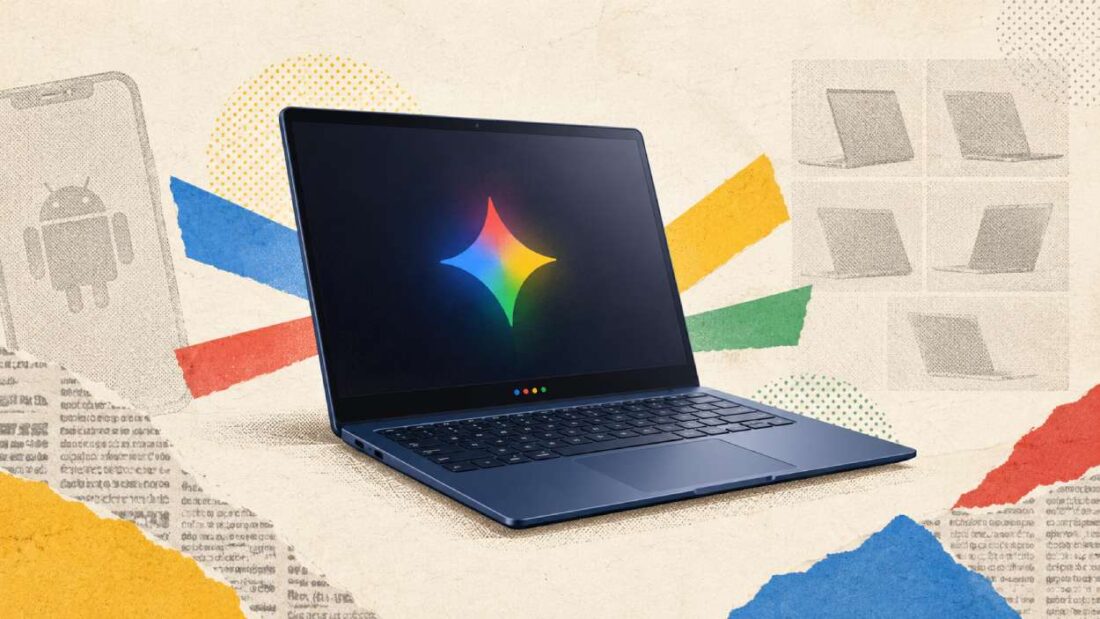






Google officially launched its first Googlebook laptops on September 21, 2026, opening US pre-orders for five launch-partner models starting at $899, according to AndroidPure. Devices reach US shelves October 4.
The Brief
- Per AndroidPure, five launch partners: Acer, ASUS, Dell, HP, and Lenovo, anchor the US Googlebook lineup at that same entry price.
- Per AndroidPure, the UK, Canada, Ireland, France, Germany, and Australia get devices on October 5, one day after the US.
- Every model pairs an NPU rated above 45 TOPS with an Intel or Qualcomm chip, per Google.
- Buyers get a bundle including 12 months of Google AI Pro and a year of GeForce NOW, per AndroidPure’s report.
The installed base Google is selling into is enormous. Android’s active smartphone base has passed four billion users, per our Android statistics. The Gemini app has crossed three-quarters of a billion monthly users, per our Gemini usage tracker. Googlebook is built to convert both bases at once.
Introducing Googlebook, a new category of laptop, available for preorder today.
— Google (@Google) September 21, 2026
💪 Crafted with 2.8K OLED touchscreen displays, 14 hour battery life and all the performance needed to power your ideas
📳 Engineered to sync effortlessly with your @Android phone, so you can jump… pic.twitter.com/13mV40KUDi
US pricing undercuts the Australian launch
Google’s own Australia-edition post sets the local range at $2,299 RRP across four models: ASUS, Dell, HP, and Lenovo. AndroidPure’s US coverage puts the entry-level Acer Googlebook 14 at the same US starting price already noted above, well below the Australian figure. Acer does not appear in Google’s own Australian model list.
Google’s own post pitches the four AU models by niche, not spec sheet. ASUS’s model, at 1.25kg, is the travel-focused option. Lenovo’s model, with a 15-inch display, is pitched as the productivity workhorse.
That gap sits alongside another mismatch. Google’s post names Intel Core Ultra Series 3 as the on-launch chip option.
AndroidPure’s specs table instead lists Intel Core Ultra 5th/7th-gen options, and for the Lenovo model specifically, Intel Core Ultra 5 (3rd gen). That points to a labeling error on one side, not different silicon per market. The two labels do not reconcile.
Phone-to-laptop features anchor the pitch
Google is leaning on Android integration, not raw specs, to set Googlebook apart. designed for Gemini Intelligence and engineered to work with your Android phone right out of the box, John Solomon, Google’s VP and General Manager for Laptops, Tablets & Android Enterprise, wrote in the launch post. Pre-orders are open now through the Google Store, Best Buy, and select other retailers.
The feature set includes:
- Continue On, which resumes a task started on an Android phone directly on the laptop’s taskbar.
- Magic Pointer, which summons Gemini by wiggling the cursor.
- Rambler, which turns spoken notes into formatted text.
- Create My Widget, which builds desktop widgets from a plain-language description.
Google is also promising regular feature drops and updates for up to 10 years for Googlebook OS.
Away from the software, the hardware specs are shared across the portfolio rather than tiered by price:
- Built from aluminium, magnesium alloy, or carbon fibre, with touchscreens bright enough to view outdoors in direct sunlight without a glare.
- RAM starts at 16GB, with some models going up to 32GB.
- Battery is rated for up to 14 hours of local video playback and 16 hours of web browsing.
- Audio runs up to six speakers with Dolby Atmos surround sound, paired with background noise-cancelling microphones.
Those figures put Googlebook closer to premium Windows ultrabooks than to budget Chromebooks.
One detail is worth flagging for anyone eyeing the cheapest configuration. Chinese outlet IT之家 cites Acer executive Kelly Odle’s comments to The Verge here. Acer’s starting price is a limited launch price that may be revised upward as memory component costs rise industry-wide. That is a third-hand chain, not a confirmed price change.