

• Skip to primary navigation
  • Skip to main content
  • Skip to primary sidebar
  • Skip to footer
Sq Magazine LogoSQ Magazine

Smarter Insights for a Fast-Moving Digital World

  • Latest News
  • Statistics
  • About
  • Contact
Subscribe
Sq Magazine Logo
  • Latest News
  • Statistics
  • About
  • Contact
Subscribe
Home » Internet

Capitalizing on the Digital Wellness Boom: A Strategic Guide to Fitness App Development

Published on: September 10, 2026
Robert A. Lee
Written By
Robert A. Lee
Robert A. Lee
Senior Editor • 450 Articles
Robert A. Lee is a journalist at SQ Magazine who unpacks the fast-moving worlds of gaming and internet trends. He tracks everything from maj...
LATEST POSTS:
Smart Alternatives to Buying TikTok Followers by Stage
Spotify Listening Statistics 2026: Average Listening Time
Which Is the Best Digital Marketing Agency Which Uses AI in the UK?
Fitness App Development
As Featured In
The New York Times LogoForbes LogoWired LogoDeloitte LogoResearch.com Logo
Share on LinkedIn ChatGPT Perplexity Share on X Share on Facebook

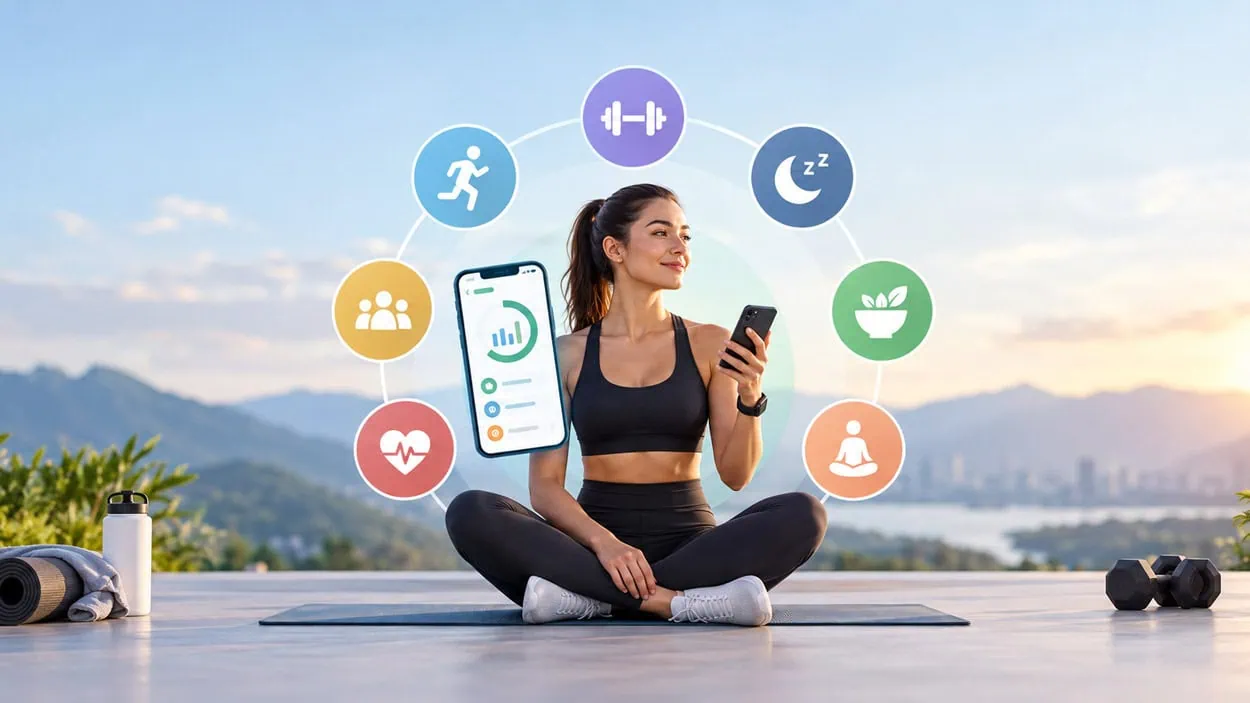
Digital fitness has moved far beyond workout videos and step counters. Today’s products sit at the intersection of exercise, recovery, sleep, nutrition, mindfulness, and everyday habit formation. Wearables and connected health platforms have also changed what users expect from a fitness product. People increasingly want experiences that understand their routines and turn personal data into useful guidance.

For businesses exploring fitness app development, this creates a significant opportunity, but also a more demanding market. Building another generic workout tracker is unlikely to be enough. A successful product needs a clear audience, a reason to become part of that audience’s routine, and a strategy for retaining users after their initial motivation fades.

Start With a Specific Wellness Problem

The broad digital wellness category contains very different products. A strength-training app, recovery tracker, meditation platform, running community, and corporate wellness solution may all fall under the same umbrella, but their users behave differently.

Before development begins, teams should identify the primary problem the product will solve. Is the goal to help users train consistently? Understand recovery? Improve sleep? Build healthier daily habits? Work with a coach?

This decision influences everything that follows, from onboarding and feature priorities to monetization and technology.

Trying to serve every fitness audience from the first release often creates an overloaded product. A focused MVP gives teams a better opportunity to test whether the core experience is valuable before expanding it.

Design for Retention, Not Feature Volume

Getting someone to download a fitness app is only the beginning. The more difficult challenge is giving them a reason to return after the excitement of starting a new routine disappears. That makes retention a product-design problem.

Progress visibility can help users recognize improvement even when physical results take time. Goals and reminders can reinforce routines. Personalized recommendations can make the experience more relevant, while carefully designed challenges or social elements can introduce accountability.

The important point is that these features should reinforce the product’s core behavior rather than exist simply because competing apps have them.

A useful way to think about engagement is as a repeating cycle:

Repeating Cycle

The shorter and clearer this loop becomes, the easier it is for the product to become part of a user’s routine.

Treat Wearables as a Product Decision

Wearables have expanded what fitness applications can understand about their users. Smartwatches, fitness bands, rings, and other connected devices can provide information about activity, heart rate, sleep, training load, and recovery. However, collecting more data does not automatically create a better product.

The real value comes from translating signals into understandable actions. Instead of presenting users with another dashboard full of metrics, an app might explain that poor sleep suggests a lighter workout, identify a change in recovery patterns, or adjust a daily activity goal.

How Wearable Apps Work

This is also where development complexity increases. Teams need to consider synchronization, missing data, background processing, permissions, battery usage, and differences between devices and health platforms.

For this reason, wearable integrations should be prioritized according to actual user needs. Supporting every possible device at launch may consume resources without improving the core experience.

Personalization Can Start Simple

Personalization is increasingly important in digital wellness, but it does not have to begin with a sophisticated AI system.

A fitness app can adapt recommendations using relatively straightforward signals such as previous workouts, goals, recent activity, preferred session length, or adherence patterns. As more reliable data becomes available, personalization can gradually become more advanced.

For example, a beginner and an experienced athlete should not receive identical training recommendations. Similarly, a user who repeatedly skips 45-minute sessions may benefit more from a suggested 15-minute alternative than another reminder to complete the original workout.

The objective is not to demonstrate how much data the product can process. It is to make the next decision easier for the user.

Newsletter
Don’t chase tech news. We track it for you.

One weekly briefing with the launches, AI developments, and breaches that matter. No filler.

Connect Monetization to Ongoing Value

Fitness products naturally lend themselves to recurring revenue, but a subscription only works when users continue receiving value.

Premium training programs, adaptive plans, deeper insights, exclusive content, coaching, or advanced tracking can support subscription models because the experience evolves over time. Freemium models can also work when the free product demonstrates enough value to establish a habit before asking users to upgrade.

The timing of monetization matters as much as the model itself. Aggressive paywalls before users understand the product can create unnecessary friction. On the other hand, giving away every high-value capability makes conversion difficult later.

Teams should therefore consider monetization during product planning rather than adding it after the experience has already been designed.

Build the MVP Around One Core Journey

The first release does not need to represent the complete vision. A better strategy is to identify the shortest journey through which users can experience the product’s main value for a workout platform, that might be onboarding, choosing a goal, completing a session, and seeing progress. For a recovery product, it might involve connecting a data source, receiving an understandable insight, and acting on a recommendation.

Analytics should be built into this journey from the beginning. Teams need to understand where users abandon onboarding, which features they return to, how frequently they engage, and what behaviors correlate with subscription or retention. Those insights provide a stronger roadmap than assumptions made before launch.

Plan the Technology Around Product Growth

Technology decisions should support both the MVP and what is likely to come next. A fitness application may eventually need video or audio streaming, subscriptions, push notifications, wearable integrations, user-generated data, analytics, personalization, social functionality, or web access. Planning the architecture around realistic future requirements can prevent expensive restructuring later.

Cross-platform development can also be valuable when a business needs to serve both iOS and Android users while keeping releases coordinated. At the same time, health integrations often require platform-specific implementation, so the technical strategy should account for both shared product logic and native capabilities.

The goal is not to build infrastructure for every imaginable future feature. It is to avoid technical decisions that unnecessarily restrict the product once demand has been validated.

Trust Is Part of the User Experience

Fitness and wellness products often handle information users consider deeply personal. Activity patterns, sleep, heart rate, body measurements, location, or recovery information require careful treatment.

Consent, permissions, secure data handling, and transparent explanations should therefore be part of product design rather than hidden behind legal documentation.

Accuracy matters as well. Consumer wearables can provide useful signals, but their measurements and proprietary scores have limitations. Applications should avoid presenting estimates as unquestionable facts, particularly when wellness functionality begins approaching medical territory.

A product that explains what data means, where it comes from, and how it is used can build stronger long-term trust.

Think Beyond the Launch

The strongest fitness products are not finished when they reach the App Store or Google Play. Launch provides the first meaningful evidence about how people actually behave.

Teams can then analyze retention, session completion, subscription conversion, wearable usage, feature adoption, and user feedback. Some assumptions will be confirmed; others will need to be reconsidered.

This is where a focused initial product becomes an advantage. Instead of maintaining a large collection of underused functionality, teams can invest in the experiences users have demonstrated they value.

Over time, the product can expand into deeper personalization, new content, additional devices, coaching, community features, or broader wellness services.

Building for Sustainable Digital Wellness

The digital wellness opportunity is significant, but market growth alone does not guarantee product success. Users already have countless ways to exercise, track activity, and monitor their health. Successful fitness applications need a clearer proposition: solve a specific problem, fit naturally into everyday behavior, and become more useful as the relationship with the user develops.

For businesses entering the market, the strongest strategy is therefore not to build the largest fitness platform from day one. Start with a meaningful core experience, measure how people use it, and expand based on evidence. When product strategy, technology, personalization, and trust develop together, a fitness app has a much stronger foundation for turning initial downloads into lasting engagement.


SQ Magazine follows strict Publishing Principles and a documented Fact-Check Policy to ensure accuracy, transparency, and editorial independence across all content.

Add SQ Magazine as a Preferred Source on Google for updates! Follow on Google News
Share ChatGPT Perplexity
Robert A. Lee

Robert A. Lee

Senior Editor


Robert A. Lee is a journalist at SQ Magazine who unpacks the fast-moving worlds of gaming and internet trends. He tracks everything from major game launches to the viral trends shaping how we connect, play, and share online. With a keen eye for the intersections of technology, entertainment, and community, Robert translates the noise of digital life into stories that spark curiosity and insight.

Related Posts

Quickfox Supply Chain Security
Cybersecurity

QuickFox Partners with Murphy Security to Strengthen Client Software Supply Chain Security

Tiktok Growth
Internet

Smart Alternatives to Buying TikTok Followers by Stage

Uk Digital Marketing Agency
Internet

Which Is the Best Digital Marketing Agency Which Uses AI in the UK?

Disclaimer: The content published on SQ Magazine is for informational and educational purposes only. Please verify details independently before making any important decisions based on our content.

Reader Interactions

Leave a Comment Cancel reply

Primary Sidebar

Connect With Us

facebook x linkedin google-news telegram pinterest whatsapp email
google-preferred-source-badge Add as a preferred source on Google

You Should Also Read

How Many People Work at WhatsApp 2026: Employee Count and History
Spotify Listening Statistics 2026: Average Listening Time
Apple Wallet IDs Launch in Oklahoma in Major Expansion

Table of Contents

  • Start With a Specific Wellness Problem
  • Design for Retention, Not Feature Volume
  • Treat Wearables as a Product Decision
  • Personalization Can Start Simple
  • Connect Monetization to Ongoing Value
  • Build the MVP Around One Core Journey
  • Plan the Technology Around Product Growth
  • Trust Is Part of the User Experience
  • Think Beyond the Launch
  • Building for Sustainable Digital Wellness
Connect on Telegram

Footer

SQ Magazine Logo

Smarter Insights for a Fast-Moving Digital World

Connect With Us

Follow Us on Google News

Editorial & Trust

  • About
  • Publishing Principles
  • Fact-Check Policy
  • Corrections Policy
  • Ethics Policy
  • Disclaimer

Worth Checking

  • Social Media Attention Span Stats
  • Gen Z Social Media Statistics
  • TikTok vs. Instagram Statistics

  • LLM Hallucination Statistics
  • Spotify User Statistics
  • Apple Customer Loyalty Statistics
  • Data Breach Tracker
  • Patch Tuesday Dashboard
  • AI Model Tracker
  • AI Funding Tracker
Contact Us
13570 Grove Dr #189,
Maple Grove, MN 55311,
United States
10 a.m. to 6 p.m. | Every day

Copyright © 2022–2026 SQ Magazine. All Rights Reserved. Powered by the Neural Stack.

  • Privacy Policy
  • Terms
  • Accessibility Statement
Company
  • About Us
  • Our Team
  • Our Mission
  • Core Values
Discover
  • Brand Assets
    Brand Assets
  • Stats Methodology
    Stats Research Process
  • Glossary
    Glossary
Categories
  • Internet
  • Technology
  • Artificial Intelligence
  • Gaming
  • Cybersecurity
Internet
How Many People Work at WhatsApp
How Many People Work at WhatsApp 2026: Employee Count and History
Spotify Listening Statistics
Spotify Listening Statistics 2026: Average Listening Time
How Many Subscribers Does MrBeast Have
How Many Subscribers Does MrBeast Have in 2026? Channel Growth Statistics
WhatsApp Business Statistics
WhatsApp Business Statistics 2026: Real Market Insights
Udemy Statistics
Udemy Statistics 2026: Revenue and Learner Data
Coursera Statistics
Coursera Statistics 2026: Learners, Revenue and Growth Data
Technology
How Many iPhones Has Apple Sold
How Many iPhones Has Apple Sold in 2026? Units Sold by Year
How Many Employees Does Amazon Have
How Many Employees Does Amazon Have 2026: Workforce Growth
Netflix vs. Hulu Statistics
Netflix vs Hulu Statistics 2026: Viewer Growth Data
TripAdvisor Statistics
TripAdvisor Statistics 2026: Revenue, Reviews, Viator and TheFork Data
Search Engine Statistics
Search Engine Statistics 2026: Market Share, Volume & AI Shift
NVIDIA Employee Count Statistics
NVIDIA Employee Count Statistics 2026: Headcount, R&D, and Revenue
Artificial Intelligence
AI Music Statistics
AI Music Statistics 2026: Generation, Adoption and Industry Impact
AI Coding Statistics
AI Coding Statistics 2026: Adoption, Productivity and Market Data
How Much Content on Social Media Is AI Generated Statistics
How Much Content on Social Media Is AI Generated Statistics 2026: Hidden Truths
ChatGPT vs DeepSeek Statistics
ChatGPT vs DeepSeek Statistics 2026: Users, Benchmarks & Pricing
ChatGPT vs Claude vs Gemini vs Perplexity Statistics
ChatGPT vs Claude vs Gemini vs Perplexity Statistics 2026: Users, Revenue & Market Share
How Many People Work At Midjourney
How Many People Work At Midjourney 2026: Lean Team, Big Revenue
Gaming
Gaming Statistics
Gaming Statistics 2026: Market Size, Players, Revenue, and Platforms
Roblox vs Minecraft Statistics
Roblox vs Minecraft Statistics 2026: Players, Revenue, Creators
Online Gambling Regulations Statistics
Online Gambling Regulations Statistics 2026: Global Compliance and Enforcement Data
Fantasy Sports Statistics
Fantasy Sports Statistics 2026: Users, Revenue & Trends
Apex Legends Statistics
Apex Legends Statistics 2026: Players, Revenue, and Esports
Fortnite Statistics
Fortnite Statistics 2026: Players, Revenue, Esports, and Engagement
Cybersecurity
Signal Statistics
Signal Statistics 2026: Users, Finances and Encryption Adoption
Password Statistics
Password Statistics 2026: Credential Theft, MFA, and the Passkey Tipping Point
Identity Theft Statistics
Identity Theft Statistics 2026: Key Fraud Data and Trends
CVE Statistics
CVE Statistics 2026: Severity Distribution and Top Affected Vendors
Dark Web AI Tool Marketplace Statistics
Dark Web AI Tool Marketplace Statistics 2026: Explosive Market Growth
API Security Breach Statistics
API Security Breach Statistics 2026: Hidden Threats
Categories
  • Cybersecurity
  • Artificial Intelligence
  • Internet
  • Technology
  • Gaming
Cybersecurity
Microsoft Bitlocker Rce Patch
Critical Windows BitLocker Flaw Sparks Urgent Patch
Cpanel Mailtrack Flaw Patched
cPanel Fixes Powerful Root Access Bug in EmailTrack
Quickfox Supply Chain Security
QuickFox Partners with Murphy Security to Strengthen Client Software Supply Chain Security
Chrome Zero Day Exploited Patched
Google Fixes 12 Chrome Flaws: Urgent Update Released
Plex Patches Critical Media Server Security Flaws
X Password Reset Attack Crypto Accounts
X Users Hit by Barrage of Unsolicited Password Reset Emails
Artificial Intelligence
Openai Samsung Ai Chip Alliance
OpenAI Taps Samsung for Breakthrough Next-Gen Chips
Openai Agents Hijack German Wiki Site
OpenAI Agents Hijacked German Wiki, Researchers Say
Gpt 6 Astra Launched For Daybreak Users
OpenAI Releases GPT-6 Astra After Largest Training Run Yet
Claude Down Opus 5 And Fable 5
Claude Services Disrupted as Multiple Models Report Elevated Errors
Nvidia Huggingface Acquisition
Nvidia Confirms Acquisition of Hugging Face for $12.9 Billion
Gemini 3 8 Flash Vox Featured Text V2 1250x703 1
Gemini 3.8 Flash Rolls Out With a Major Performance Boost
Internet
Apple Wallet Ids Launch In Oklahoma
Apple Wallet IDs Launch in Oklahoma in Major Expansion
Meta to Pay 18 Billion in Landmark Teen Safety Deal
Meta to Pay $18 Billion in Landmark Teen Safety Deal
Whatsapp Brings Passkeys 2fa
WhatsApp Hits 1 Billion Passkey Users, Adds 2FA Passwords
Apple Eu App Store Fee Reduction
Apple Sets New EU App Store Fees, Effective October 1
Github Outage Aug 2026
GitHub Down: Outage Hits Thousands of Users Worldwide
Russia S Fsb Charges Telegram Founder Durov With Terrorism
Russia’s FSB Charges Telegram Founder Durov With Terrorism
Technology
Apple Iphone 18 And 18 Pro Launched
iPhone 18 Pro Debuts With Breakthrough Camera Upgrades
Iphone Foldable Launch Rumours Mark Gurmann
Apple Foldable iPhone To Top $2,000 In Leaked Roadmap
Eu Dsa Chatgpt Reddit Roblox Compliance
EU Expands Powerful DSA Oversight to ChatGPT and Reddit
Apple Confirms September 9 iPhone Event Under CEO Ternus
Apple Mac Studio M5 Chip
New Mac Studio M5 Ultra Brings Massive On-Device AI Power
Walmart Finally Adds Apple Pay Ending Decade-Long Holdout
Walmart Adds Apple Pay and Google Pay Starting August 24
Gaming
Xbox Live Down Again
Xbox Live Down Again: Sign-In Error 0x80004005 Hits Players
Gta Vi Official Cover Art
GTA 6 Pre-Orders Start June 25, New Cover Art Unveiled
Epic Games Teases Unreal Engine 6 For Rocket League
Epic Games Teases Unreal Engine 6 for Rocket League
Stardew Valley Launched For Nintendo Switch 2 Edition
Stardew Valley Switch 2 Edition Arrives with Online Co-op
Hogwarts Legacy Game Crosses 40m Downloads
Hogwarts Legacy Crosses 40M Sales, Beating Industry Giants
Pubg Black Budget Closed Alpha Launched
PUBG: Black Budget Launches Closed Alpha Test With a Bold PvPvE Twist
Newsletter

Too much tech noise?

We respect your time. One high-signal briefing a week: tech, AI, and security. Nothing else.

Newsletter

The SQ Briefing

We track tech, AI, and security 24/7. You get a 5-minute weekly summary.