





OpenAI’s latest AI models and coding tools are now available on Amazon Bedrock, giving AWS customers a new way to deploy frontier AI within their existing enterprise environments.
Quick Summary – TLDR:
- GPT 5.5, GPT 5.4, and Codex are now generally available on Amazon Bedrock.
- Pricing matches OpenAI’s direct rates, with no additional AWS fees.
- Enterprises can use OpenAI models with AWS security, compliance, governance, and procurement tools.
- AWS and OpenAI also introduced Bedrock Managed Agents, designed to simplify deployment of production ready AI agents.
What Happened?
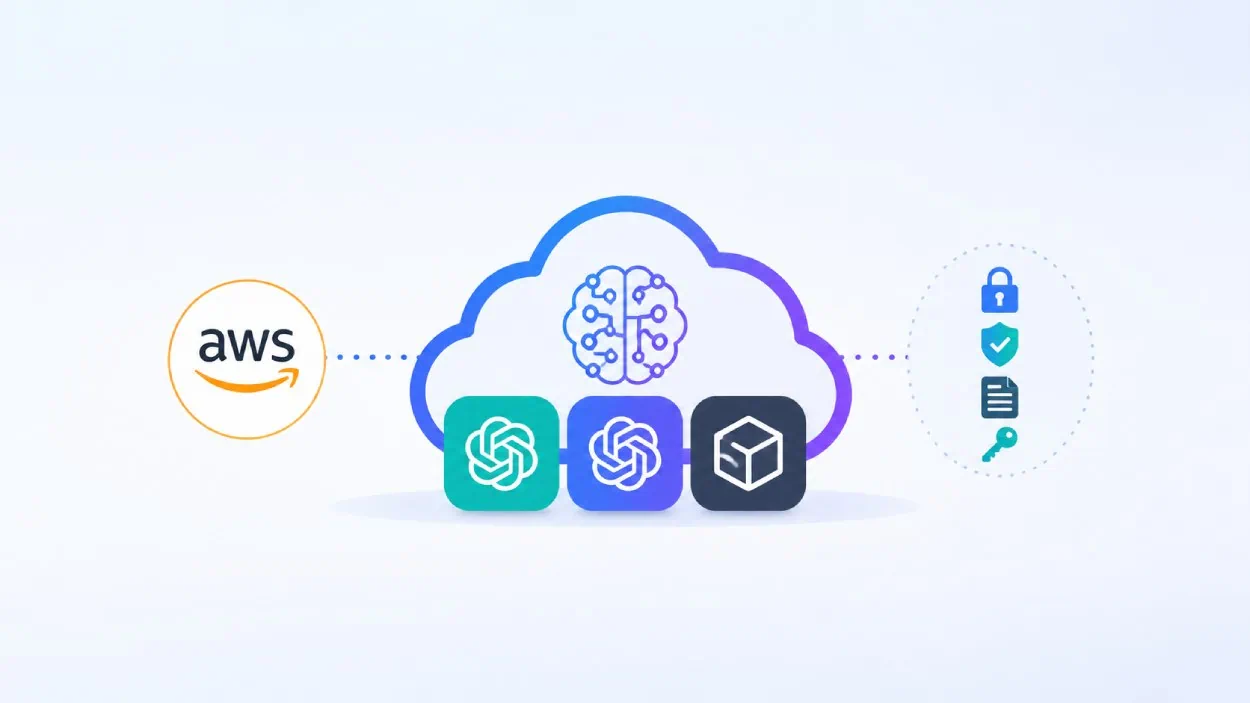
Amazon Web Services and OpenAI have expanded their partnership, bringing GPT 5.5, GPT 5.4, and Codex to Amazon Bedrock. The move allows millions of AWS customers to access OpenAI’s most advanced models through the cloud platform they already use for infrastructure, security, and governance.
The announcement is aimed squarely at enterprise customers that want access to frontier AI models without introducing new compliance, procurement, or operational challenges into their organizations.
OpenAI frontier models and Codex are now generally available on AWS, giving enterprises a new way to build on Amazon Bedrock with OpenAI through the security, compliance, and governance workflows they already use.
— OpenAI (@OpenAI) June 1, 2026
This is also the beginning of a broader expansion of OpenAI…
OpenAI Models Arrive on Amazon Bedrock
For the first time, organizations can access OpenAI’s latest models directly through Amazon Bedrock alongside models from providers such as Anthropic, Meta, Mistral, Cohere, and Amazon. This gives customers the flexibility to evaluate and deploy different AI models through a single platform.
According to AWS, GPT 5.5 and GPT 5.4 run on Bedrock’s next generation inference engine, which is designed to deliver high performance, reliability, and security. Customers can access the models through the same APIs and management tools they already use on AWS.
A major selling point is that pricing remains consistent with OpenAI’s direct rates. AWS says there are no additional fees, and usage can count toward existing AWS cloud spending commitments.
Enterprise Security Takes Center Stage
One of the biggest barriers to enterprise AI adoption has been integrating advanced models into existing security and governance frameworks. AWS and OpenAI are positioning this launch as a solution to that problem.
Organizations using OpenAI models through Amazon Bedrock gain access to existing AWS controls, including:
- IAM based access management
- AWS PrivateLink connectivity
- KMS encryption
- Encryption in transit and at rest
- AWS CloudTrail audit logging
- Compliance and governance integrations
AWS also noted that customers do not need to learn a separate security model or deploy additional infrastructure to use OpenAI models within Bedrock.
For regulated industries, this could remove a significant hurdle that previously slowed direct adoption of OpenAI APIs.

Codex Expands Into Enterprise Development
OpenAI’s coding agent Codex is another major part of the announcement. OpenAI says more than 5 million people use Codex every week to write, review, refactor, debug, and modernize software.
Through Amazon Bedrock, Codex can now be used within existing AWS environments. It is available through the Codex CLI, desktop application, API, and popular development environments including Visual Studio Code, JetBrains, and Xcode.
A notable change is Codex’s move toward pay per token billing, eliminating traditional per seat licensing. This could make adoption easier for larger development teams while allowing organizations to scale usage based on demand.
All inference requests are routed through Amazon Bedrock infrastructure and benefit from AWS security protections and region specific data residency controls.
Bedrock Managed Agents Aim to Simplify AI Deployment
AWS also introduced Amazon Bedrock Managed Agents, powered by OpenAI, a new service designed to help companies deploy AI agents more easily.
The platform combines OpenAI’s frontier reasoning and agent capabilities with AWS infrastructure, security, memory management, identity controls, and operational tooling.
According to AWS, each agent operates with its own identity, maintains audit logs, and runs within a customer’s AWS environment. The service is built on the OpenAI agent harness and is intended to improve reasoning, execution speed, and long running task management.
The launch reflects growing demand for AI agents that can perform complex tasks with limited human supervision.
Early Enterprise Interest Emerges
Several enterprise organizations have already signaled interest in the new capabilities.
Amgen and Autodesk were cited among early adopters evaluating OpenAI workloads on AWS infrastructure. Their involvement suggests growing demand from sectors such as life sciences, engineering, and design.
Ben Kus, CTO at Box, highlighted the opportunity for developers building production scale AI applications.
What’s Next?
Both companies described this launch as the beginning of a deeper collaboration. OpenAI also pointed to future availability of Daybreak, a planned cybersecurity focused offering that would include cyber models and Codex Security capabilities such as secure code review, threat modeling, patch validation, dependency risk analysis, and remediation guidance.
While a timeline has not been announced, the initiative signals that OpenAI and AWS intend to expand their enterprise AI portfolio beyond foundation models and coding assistants.
SQ Magazine Takeaway
I think this announcement is less about adding another AI model to a cloud marketplace and more about making OpenAI easier for large organizations to adopt. Many enterprises already trust AWS for security, compliance, and procurement.
By bringing GPT 5.5, GPT 5.4, and Codex directly into that ecosystem, OpenAI removes a major obstacle that has kept some companies on the sidelines. The addition of Managed Agents and future cybersecurity tools also shows that both companies are thinking beyond chatbots and toward full scale enterprise AI operations.