





A \$29.99 renewal appears on your card, even though you’re pretty sure you canceled last week. Or you meant to end a free trial, got distracted, and remembered only after the bank notification. You want the money back. But who should you ask, and does the reason you were charged change your options?
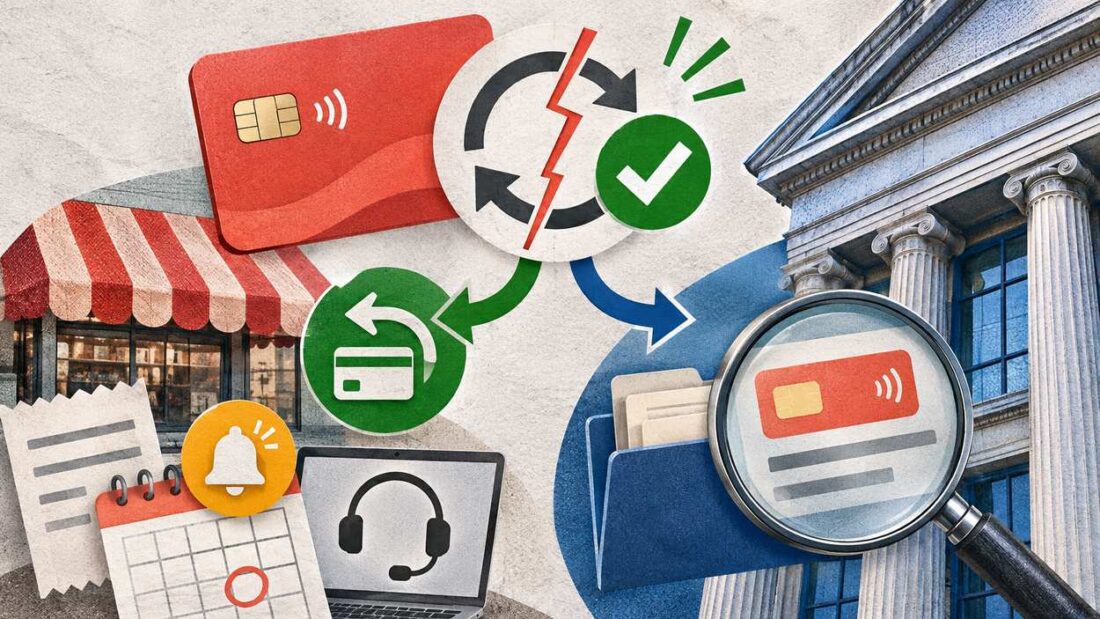
It does. A refund is something you ask the business to approve. With a charge dispute, you’re asking your card issuer to look into the payment. Missing a trial deadline isn’t the same as being billed after a confirmed cancellation, and treating the two cases alike can waste time.
A Refund Request Isn’t the Same as a Chargeback
When you request a refund, support might approve it, ask a few questions, or say the charge doesn’t qualify. Going through your card issuer is a different process. The bank reviews the payment, and the outcome depends on the circumstances. If you’ve already canceled but charges keep appearing, save whatever shows when you asked to end the subscription. Subdelete can help you send a documented cancellation request. That won’t automatically get your money back, though.
Start With the Reason You Were Charged
Before sending an angry email or opening a bank dispute, look at what actually happened. Did the company charge you twice? Did you miss the trial deadline? Or is the transaction completely unfamiliar? The answer changes your next step, and some cases are much easier to resolve directly with the business.
| Situation | First Action | When a Dispute May Be Appropriate |
|---|---|---|
| Renewal after cancellation | Send your cancellation confirmation and request a refund | The company refuses to correct an improper charge |
| Forgotten free trial | Check the trial terms and request a goodwill refund | Billing violated the agreed terms, not merely because you forgot |
| Duplicate charge | Ask the company to reverse the extra payment | The duplicate remains unresolved |
| Unknown transaction | Contact your bank or card issuer promptly | The payment is unauthorized or cannot be resolved |
| Subscription already used | Review the refund policy and explain any service problem | The service was misrepresented, not delivered, or incorrectly billed |
Where you purchased the subscription matters too. If Apple handled the payment, you can request a refund through Apple. Google Play has its own refund process, although the rules depend on what you bought and when. Not sure who actually charged you? Go back to the original receipt. It may save you an unnecessary conversation with the wrong support team.
Start With a Refund Request When the Charge Is Recognizable
You Forgot to Cancel Before Renewal
A \$14.99 charge shows up for an app you haven’t thought about in a while. You tried the trial, clicked around for a bit, and then moved on. Now you’re paying for another month. Can you get the money back? Maybe. Have another look at the terms you accepted when the trial began. If automatic renewal was part of the deal, the company might not be required to return your money. Tell support you missed the deadline and haven’t used the app since the new billing period began. Some companies will make an exception, others won’t. If you authorized the renewal but forgot about it, don’t report it as fraud. Meanwhile, cancel the subscription before another \$14.99 lands on your statement.

Two Charges, or a Service You’ve Already Used
Two \$19.99 charges from the same merchant catch your eye. Check whether both have actually posted. Sometimes one is a temporary authorization that disappears. But if both are final charges for the same subscription period, something needs explaining. Send support the dates and ask them to look into it. Your message can be short:
“Hi, my statement shows two \$19.99 charges on November 4 for the same subscription. Was I billed twice? If so, could you refund the extra payment? Thanks.”
Already used the subscription? That doesn’t necessarily rule out a refund. Maybe the feature you needed kept crashing, or you paid for something that wasn’t actually available once you signed in. Tell support what happened. Include an error message or screenshot if you have one. And before sharing your account information with a service that’s helping you cancel, check their privacy page to see how your details will be handled.
When a Bank Dispute Makes Sense
You’ve explained the problem to support, but the payment is still there. Maybe they refused to refund a renewal that happened after you canceled. Or you’re looking at two charges for the same month, and nobody has explained the second one. At this point, you can ask your card issuer whether the payment qualifies for a dispute. But check your deadline before another week passes. In the U.S., the Consumer Financial Protection Bureau explains that certain credit card billing errors must generally be disputed in writing within 60 days after the statement showing the error was sent. Debit card rules and other disputes can have different deadlines. Tell your issuer when the charge appeared and ask how long you have to file.
What to Do With an Unfamiliar Charge
A company you’ve never heard of has charged your card. You go through your recent purchases, but nothing matches. Could it be fraud? Maybe. First, try searching your inbox for the amount or date of the payment. That photo editing app you tried months ago might still have an active subscription, except the charge now appears under the name of its parent company. Easy to miss if you don’t know what you’re looking for. But if you can’t find a matching receipt or subscription, contact your card issuer and report the unfamiliar transaction.
And if you have reason to think someone else made the purchase, tell the bank exactly that. They may suggest blocking your card or replacing it, depending on what they find. You might be asked a few questions about recent purchases, or the bank could open an investigation straight away. Either way, write down the case number if they give you one. You don’t want to start explaining the whole situation from scratch if you have to call again.
You probably won’t need a long explanation when you file a dispute. Maybe you have an email showing you canceled before renewal. Or two identical charges appear on your statement, and the company has refused to return the extra payment. Give the issuer the documents that relate to your charge. A dispute can still be denied, even if you feel the business acted unfairly. And if the company refunds you while the case is open, let the bank know so you don’t receive two credits for one payment.