





TL;DR:
Finding the perfect web address feels tougher than ever, but having the right tools makes the process incredibly simple. Discover how to move past outdated, keyword-stuffed ideas to find a memorable, brandable option. We cover five smart tools that help you brainstorm, check availability, and secure your idea quickly.
Finding a domain name has become harder, not easier. The most obvious names were scooped up years ago, keyword-stuffed domains look painfully outdated, and industry trends move much faster than registration queues. Staring at a blank screen and hoping a great idea pops into your head is a frustrating way to start a business. The real differentiator is the tool you use, not just the raw idea you start with. When you want to find a title that truly fits your brand, Wix gives entrepreneurs the tools to instantly brainstorm, check availability, and register a fitting address using their domain name generator. This takes the guesswork out of the naming process and gets you moving forward faster.
Why Your Domain Name Is a Brand Decision, Not a Search Query
Many founders approach domain naming the wrong way. They mash a bunch of industry keywords together, add a random suffix, and hope for the best. Years ago, that strategy might have worked to grab some quick search traffic. Today, it just looks spammy. Your web address is one of the most important brand decisions you will make. It dictates how people perceive your company before they ever read a single word of your content.
Think about how your chosen name will sound when a host reads it aloud during a podcast ad. Consider how it will look printed on a physical business card or painted on the side of a delivery van. Ask yourself what it will look like when a customer scans a list of search results. You want a name that builds authority over time and sticks in the minds of your audience. A great brand name is human, memorable, and easy to spell. If you find yourself explaining how to spell your web address, it is too complicated. You deserve a name you feel proud to share with the world.
The 5 Domain Name Generators Worth Your Time
When you are ready to find the perfect name, you need tools that offer more than basic dictionary combinations. These five options bring something unique to the brainstorming process, helping you uncover ideas you would never think of on your own.
Wix Domain Name Generator
The Wix tool is incredibly intuitive and deeply integrated into the website-building process. What makes it distinctive is how it bridges the gap between brainstorming and building. You enter a few words that describe your business, and it provides a curated list of brandable options.
Who it is best for: Founders and creators who want an all-in-one solution to find their name and immediately start building their site.
Practical tip: Try entering abstract concepts related to your business rather than just literal product names to get the most creative results.


Namelix
Namelix uses artificial intelligence to generate short, brandable business names. Instead of just combining the words you type, it creates entirely new words and portmanteaus based on your input. It also generates sample logo designs alongside the names.
Who it is best for: Startups and modern brands looking for a slick, tech-forward, or highly unique abstract name.
Practical tip: Use the “brandable names” filter and keep your input to just one or two core concepts to let the AI do its best creative work.

Lean Domain Search
Lean Domain Search takes a very straightforward, highly effective approach. You type in one word, and it pairs that word with thousands of common prefixes and suffixes, showing you only the available .com addresses. It is incredibly fast and thoroughly checks availability in real-time.
Who it is best for: E-commerce brands, bloggers, and agencies who are dead-set on securing a .com extension.
Practical tip: Sort your results by length. Often, the shortest combinations are the most memorable and the easiest for your customers to type.

Wordoid
Wordoid is a brilliant tool for inventing new words. It generates made-up words that look and sound natural in multiple languages, including English, Spanish, and French. You can set rules, like asking the tool to create a word that starts with, contains, or ends with a specific letter combination.
Who it is best for: Creative agencies and software companies looking for a short, snappy, and completely original name that does not mean anything yet.
Practical tip: Keep the length limit set to no more than ten letters. Invented words become very difficult to remember if they get too long.
Bust a Name
Bust a Name looks a bit old-school, but its exact-match combining tools are powerful. You load a bucket of words into the tool, and it rapidly tests every possible combination of those words to see which ones are available. You can also add natural plurals and prefixes with a single click.
Who it is best for: Traditional businesses, local services, and consultants who want a clear, descriptive name made from specific terms.
Practical tip: Use the “make words plural” checkbox. Sometimes adding an “s” to the end of a word reveals a perfectly good available alternative.
What the AI Search Shift Means for Your Domain Choice
The way people find information on the internet is changing rapidly. As search engines rely more on artificial intelligence, we are moving away from a world of ten blue links. Today, many users get their answers directly through AI overviews & LLM citation, meaning the way algorithms read and trust your brand matters more than ever.
In this new environment, brand legibility is crucial. AI tools look for authoritative, specific, and human-sounding sources to cite in their answers. A web address that looks like a jumble of random keywords often gets ignored by these intelligent systems because it lacks genuine brand authority. A strong, memorable name tells both the user and the AI that you are a real, trustworthy business. Focus on a name that sounds like it belongs to a respected company, and you will position yourself beautifully for the future of search discoverability.
From Generated to Registered: How to Lock In the Name You Want
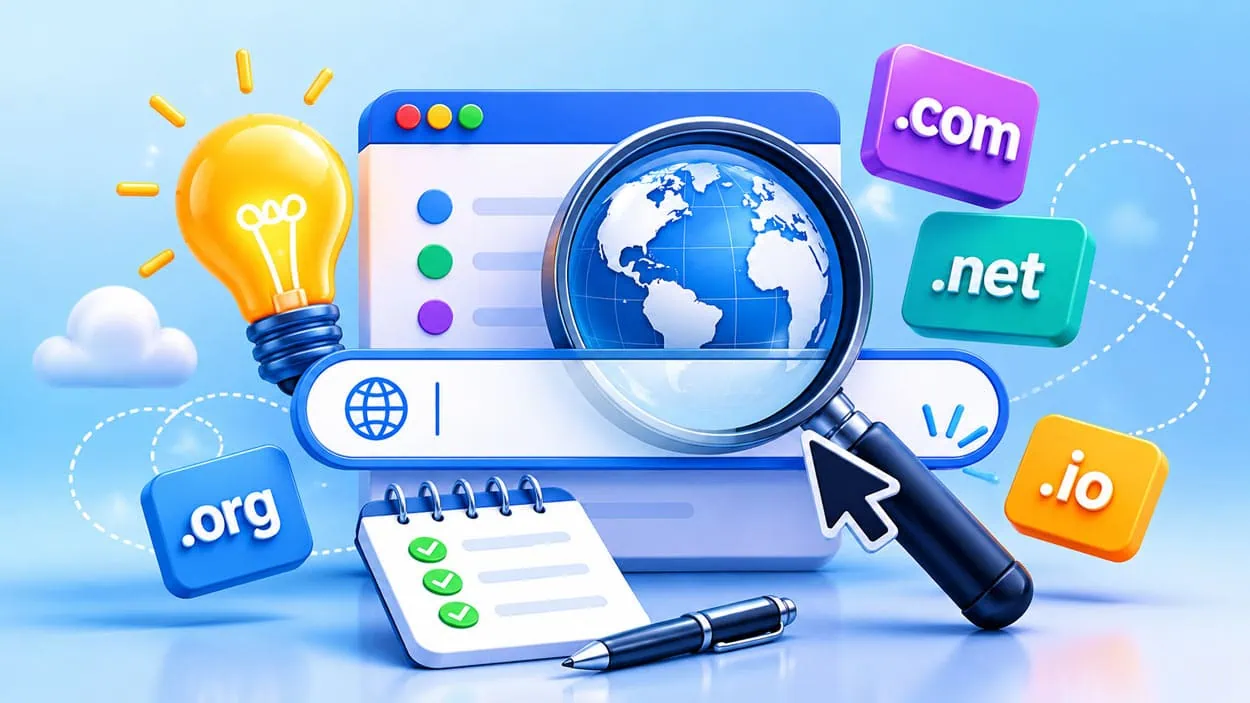
Once you fall in love with a name, you need to claim it quickly. The process to register a web domain is actually very straightforward, but you should keep a few details in mind. First, check availability across multiple extensions. While a .com is widely recognized, modern alternatives like .co, .io, or .shop are fantastic options if your primary choice is taken.
When you go to checkout, you will need to choose your registration length. Registering for one year is standard, but locking the name in for three to five years prevents you from accidentally losing it if a renewal email goes to your spam folder. Pay attention to renewal costs, as some registrars offer a massive discount for the first year and charge a standard rate thereafter. Finally, always opt for WHOIS privacy protection, which keeps your personal contact information hidden from public databases and shields you from endless spam calls.
One Step Most Founders Skip After Registration
You found the name, you paid the fee, and you are ready to build. But there is one crucial step you must take right after registration. You need to protect the asset you just bought. Secure your business by immediately setting up two-factor authentication on your registrar account. If a bad actor gains access to that account, they can transfer your domain away in minutes, effectively stealing your brand.
Additionally, consider defensive registrations. If you buy a .com, it is a smart move to grab the .co and .net versions as well, just to prevent competitors from setting up shop next door. Think about common misspellings of your brand and register those too, redirecting them back to your main site. Cybersquatting, where someone buys a similar name to confuse your customers, is a real nuisance. Taking a few extra minutes to secure variations of your name makes a massive difference in protecting your long-term brand equity.
The Right Name Is Closer Than You Think
The barrier to finding an incredible domain is much lower than most founders believe. You just have to stop guessing and start using the right tools. When you apply the evaluative criteria we discussed, focusing on how it sounds, how it looks, and how memorable it is, you naturally filter out the bad ideas.
Revisit your brainstorming process with a fresh perspective. Test out the generators on this list, play around with different word combinations, and see what sparks your imagination. The name that will define your brand for years to come is out there waiting for you. It is just one smart search away.
Frequently Asked Questions
Most modern generators and registrars automatically show you a list of different extensions when you search for a specific word. Tools like Lean Domain Search or Wix will instantly display whether the .com, .net, .org, and newer options like .store are open for registration. This saves you from running dozens of individual searches.
A free domain (like yourname.freeprovider.com) is fine for a temporary project or a personal hobby site. However, if you are building a professional brand or a business, you should always purchase a custom address. A custom name builds instant trust with your audience and looks much more legitimate.
Shorter is almost always better. Aim for something between 6 and 14 characters if possible. Keep it concise enough that a customer can easily type it into their mobile browser without making a spelling mistake.
If your primary choice is unavailable, try adding a relevant action word to the beginning, such as “get,” “try,” or “use.” You can also explore alternative extensions like .co or .io. Often, a slight modification results in a name that is just as memorable as your original idea.