





Anthropic has launched Claude Opus 4.8, bringing improvements in coding, reasoning, accuracy, and AI reliability while introducing new tools designed to handle larger and more complex tasks.
Quick Summary – TLDR:
- Claude Opus 4.8 is now available at the same price as Opus 4.7.
- Anthropic says the model outperforms GPT 5.5 and Gemini 3.1 Pro on several coding benchmarks.
- New features include Dynamic Workflows and Effort Control for users and developers.
- The company is also preparing a wider rollout of its advanced Mythos AI model in the coming weeks.
What Happened?
Anthropic has officially released Claude Opus 4.8, the latest version of its flagship AI model. The company says the upgrade delivers better coding performance, stronger reasoning capabilities, and more reliable responses while maintaining the same pricing as the previous Opus 4.7 release.
The launch also introduces several new features across the Claude ecosystem, including tools that allow users to control how much effort the model puts into a task and new agent capabilities designed for large scale software projects.
Introducing Claude Opus 4.8: it builds on Opus 4.7 with sharper judgment, more honesty about its own progress, and the ability to work independently for longer than its predecessors.
— Claude (@claudeai) May 28, 2026
Available today at the same price. pic.twitter.com/EufxL7T1kb
Claude Opus 4.8 Focuses on Accuracy and Reliability
One of the biggest themes behind the Claude Opus 4.8 release is improved accuracy and transparency. Anthropic says large language models often jump to conclusions or present uncertain information with too much confidence. The new model is designed to better recognize uncertainty and communicate it more clearly.
According to the company, early testing showed Claude Opus 4.8 is less likely to make unsupported claims and more likely to flag potential issues in its own work. Anthropic’s internal evaluations found the model is about four times less likely than Opus 4.7 to allow flaws in generated code to pass without comment.
The company’s alignment team also reported stronger results in areas such as supporting user autonomy and acting in the user’s best interests while maintaining low levels of misaligned behavior.
Stronger Performance Across Coding Benchmarks
Anthropic highlighted several benchmark results that position Claude Opus 4.8 among the top AI models currently available.
The company reported a 69.2% score on SWE Bench Pro, claiming it outperformed both OpenAI’s GPT 5.5 and Google’s Gemini 3.1 Pro on that benchmark. Claude Opus 4.8 also achieved a 74.2% score on Terminal Bench 2.1, demonstrating improvements in software engineering and agent based coding tasks.
Beyond coding, Anthropic says the model delivers stronger performance in computer use, financial analysis, practical knowledge work, and browser based agent tasks.
Several early testing partners also reported improvements in judgment, tool usage, citation quality, context retention, and long session collaboration.

New Dynamic Workflows and Effort Control Features
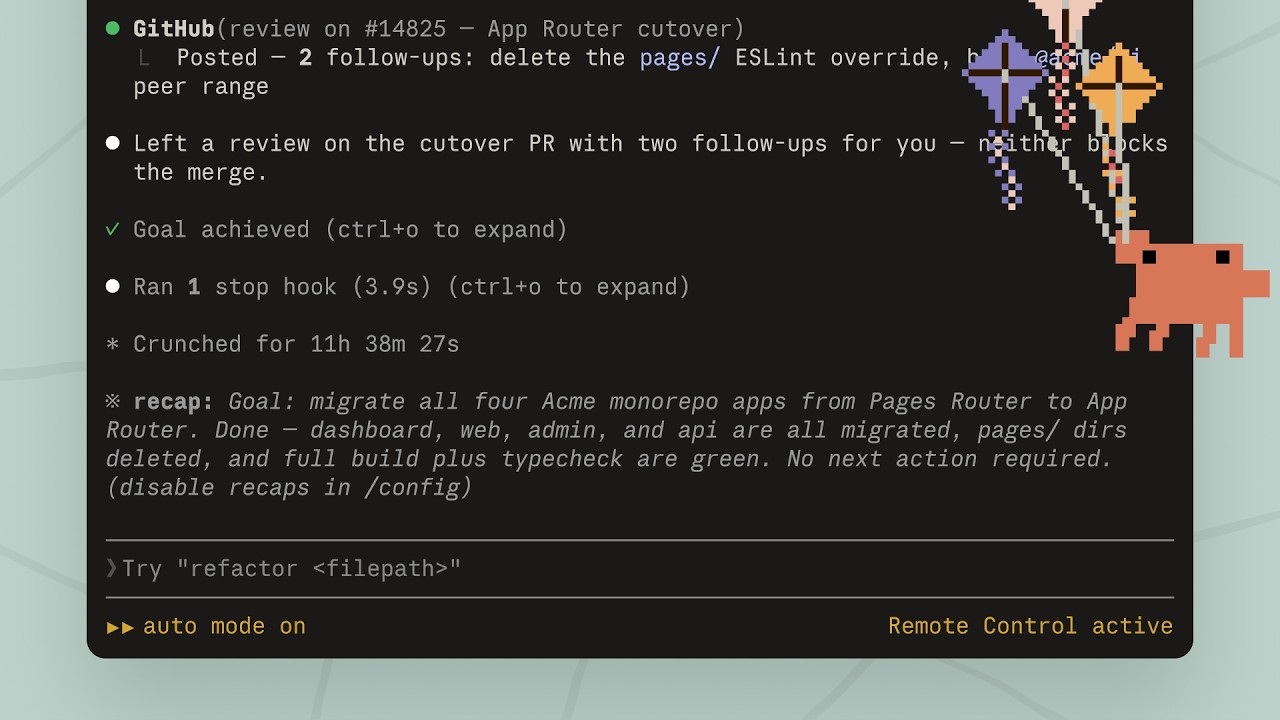
Alongside the model launch, Anthropic introduced Dynamic Workflows, a research preview feature available in Claude Code.
The feature allows Claude to plan work and deploy hundreds of parallel subagents within a single session. According to the company, this enables large scale projects such as codebase migrations involving hundreds of thousands of lines of code while verifying outputs before reporting results.
Anthropic also launched Effort Control across Claude.ai and Cowork. Users can now choose how much effort the model spends on a response. Higher settings allow deeper reasoning and more detailed answers, while lower settings prioritize speed and reduced usage limits.
Developers are also getting more flexibility through updates to the Messages API, which now allows instructions to be updated during a task without disrupting workflow execution.
Mythos Rollout Moves Closer
The launch comes as Anthropic continues preparing broader access to Mythos, its next generation AI model that has attracted attention for its cybersecurity capabilities.
Mythos is currently being tested under Project Glasswing, where a limited number of organizations are using the system for cybersecurity related work. Reports suggest major technology companies including Amazon, Microsoft, and Apple have been involved in accessing the model for security focused applications.
Anthropic says it is making progress on the safeguards needed to support wider deployment and expects Mythos class systems to become available to more customers in the coming weeks.
Pricing Remains Unchanged
Despite the upgrades, Anthropic is keeping pricing unchanged from Opus 4.7.
Regular usage costs $5 per million input tokens and $25 per million output tokens. The company also says its updated fast mode can operate significantly faster than before while reducing costs compared to previous implementations.
SQ Magazine Takeaway
I think the most important part of this launch is not the benchmark scores. Every major AI company is competing on performance numbers. What stands out here is Anthropic’s focus on reliability, transparency, and honesty. Businesses increasingly want AI systems that can recognize uncertainty and avoid presenting guesses as facts.
If Claude Opus 4.8 delivers on those promises in real world use, it could become a very attractive option for developers, enterprises, and professionals handling high value work. The upcoming Mythos rollout is also worth watching because it hints at Anthropic’s next big leap in advanced AI capabilities.