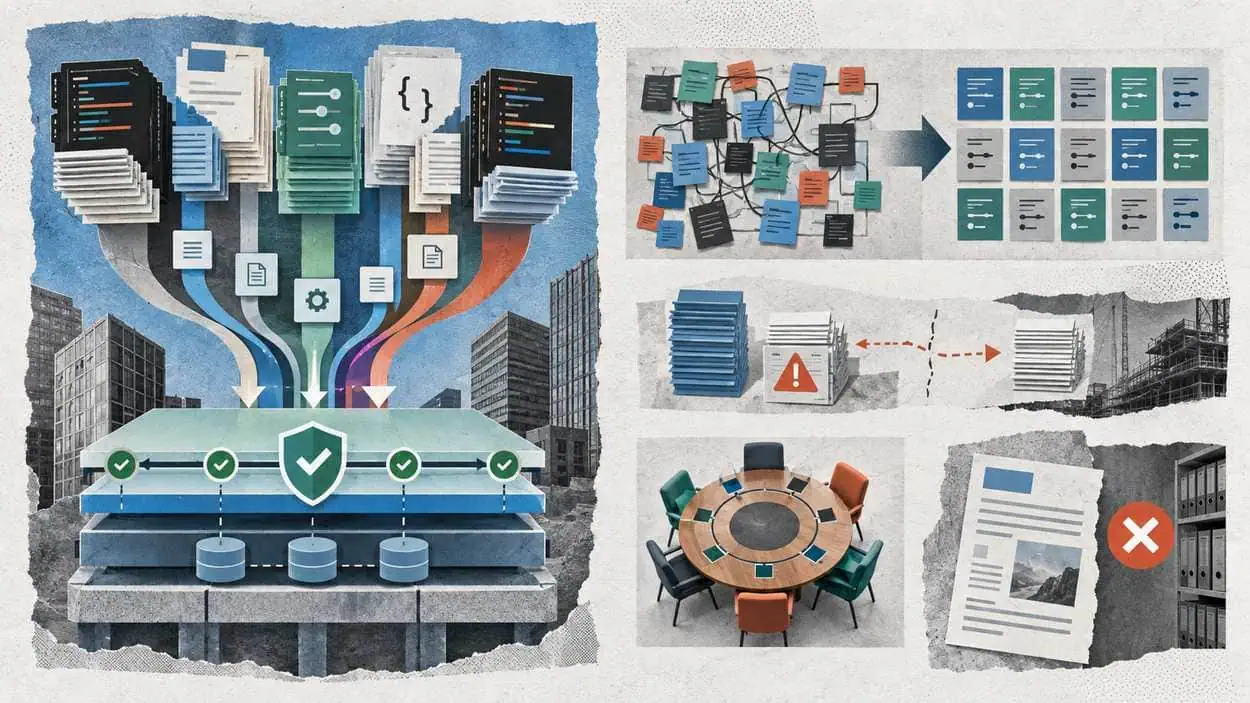






Most growing companies don’t set out to build operational silos. They happen gradually, as a natural side effect of growth itself. Sales starts using one platform to track deals. Finance adopts a separate system for invoicing and revenue recognition. Support stands up its own ticketing tool. Partner teams, in the absence of anything better, fall back on spreadsheets. Reporting becomes a monthly exercise in stitching together exports from five different sources, and by the time leadership sees a “single view” of the business, it’s already out of date.
Individually, each of these tools might work well enough. Together, they create a fragmented picture of the customer, the deal, and the business, which gets harder to manage as the company scales.
Why Operational Silos Become a Growth Problem
Operational silos rarely show up as a single, obvious failure. Instead, they show up as friction: the kind that slowly drags down productivity and customer experience without ever triggering an alarm.
Data gets duplicated across systems, and no one is quite sure which version is accurate. Teams stop trusting their own reports because the numbers don’t match what another department is seeing. Manual handoffs between sales, finance, and support slow down processes that should take minutes, not days. Customers are asked to repeat information they’ve already provided, because the person helping them doesn’t have access to the full history. Managers lose visibility into the complete customer lifecycle, since no single system captures it end-to-end.
Perhaps most importantly, automation becomes difficult, sometimes impossible, when the underlying systems can’t talk to each other. Companies that want to scale efficiently need workflows that move data automatically between teams. Disconnected systems make that a manual, error-prone process instead.
What a Connected CRM System Should Bring Together
A connected CRM system is not just a database of contacts. Done well, it becomes the operational backbone of the business, bringing together the information and workflows that used to live in separate tools.
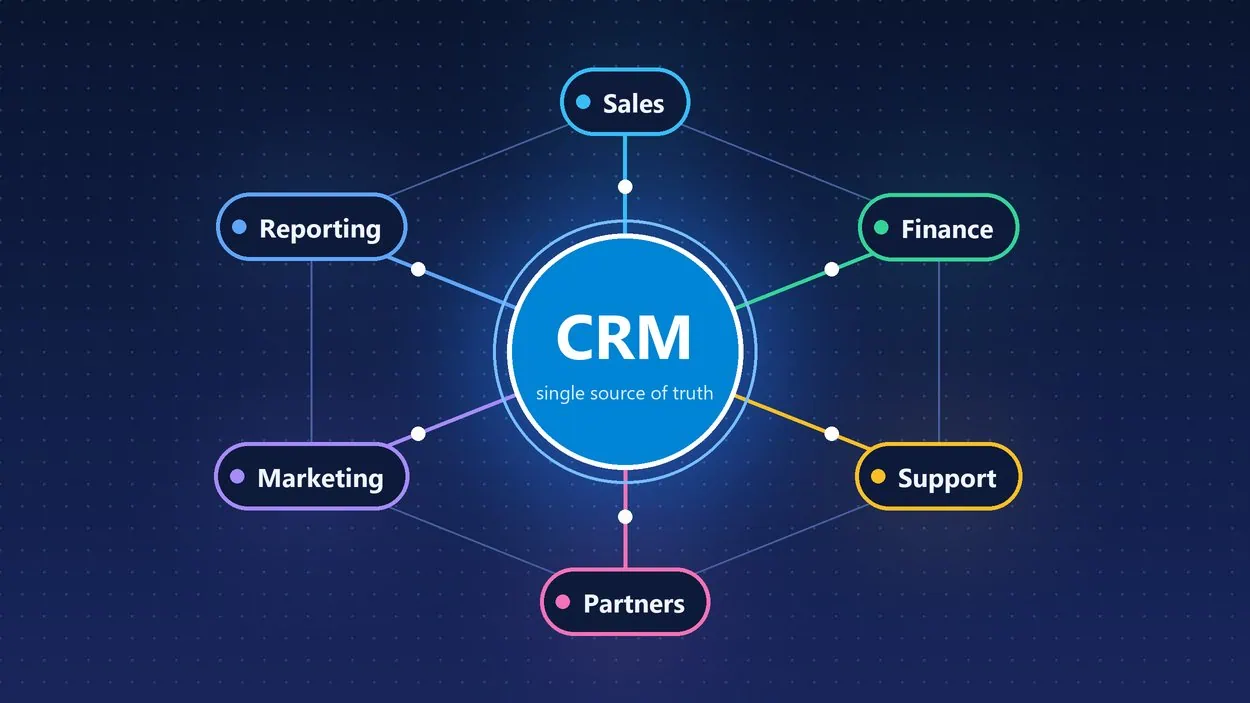
That typically includes sales data and pipeline activity, complete customer records, service cases and support history, partner activity and performance, revenue operations and billing information, marketing engagement data, portal interactions from customers or partners, and the reporting and dashboards leadership relies on to make decisions. When these pieces sit inside one connected environment, workflow automation becomes far more practical, since the system has the full context it needs to act. Getting there is fundamentally a question of CRM integration: connecting the systems and data sources that already exist rather than starting from scratch.
The result isn’t just cleaner data. It’s a business that can actually see itself clearly: which departments are performing well, where customers are getting stuck, and where processes are quietly breaking down.
How Salesforce Can Support a More Connected Business Architecture
Salesforce is often the platform companies turn to when they decide to solve this problem at the architecture level, rather than patching it one integration at a time.

At a business level, the value isn’t about any single feature, but about consolidation. Salesforce can serve as a single source of truth for customer and business data, connecting Sales, Service, Experience, Revenue, and Partner processes so that information flows between them instead of getting trapped in separate systems. Business process automation reduces the manual handoffs that slow teams down. Built-in dashboards and reporting give leadership a real-time view instead of a monthly reconstruction project. Secure, role-based access allows both internal teams and external users, such as customers, partners, and members, to interact with the same underlying data appropriately. And because the data is structured and centralized, the business is also better positioned to take advantage of AI-driven insights and automation as those capabilities mature.
None of this requires a company to become a Salesforce power user overnight. The point is architectural: fewer disconnected tools, more shared context, and a foundation that can support growth instead of complicating it.
Where Companies Usually Start
Solving operational silos doesn’t happen in one step, and it doesn’t require replacing every system at once. Most companies that succeed at this start with a practical, phased approach.
That usually begins with an audit of disconnected tools. It should be a clear-eyed inventory of what’s being used across departments and why. From there, companies map their core business processes to understand where handoffs actually happen, and identify where data is being duplicated or contradicted across systems. Defining reporting needs early helps clarify what “single source of truth” should actually look like for that business. Teams then prioritize high-impact automations rather than trying to automate everything at once, and decide which portals or external users need direct access to the system. Finally, cleaning up CRM data before scaling further prevents the same silo problems from simply migrating into the new environment.
This kind of phased approach tends to produce more durable results than a single, sweeping overhaul, since it lets teams adjust as they learn what actually works for their processes.

When to Work with a Salesforce Consulting Partner
Some companies can manage this transition internally, particularly if they have strong in-house Salesforce expertise. Many others reach a point where the complexity outpaces their internal bandwidth or experience.
That tends to happen when business processes are complex enough that a generic setup won’t hold up, when multiple teams need to operate inside one shared CRM environment without stepping on each other’s workflows, or when legacy systems need to be integrated rather than replaced outright. It’s also common when a company needs to stand up customer, partner, or member portals and doesn’t have the internal resources to build them well. In some cases, Salesforce is already in place but underutilized. For example, it may have been implemented for one team’s needs years ago and never expanded to support the rest of the business. And often, it simply comes down to reporting and automation needing to be more sophisticated than what the current setup can deliver.
For companies that need to connect CRM data visibility, portals, automation, and reporting across departments, working with a Salesforce consulting partner can help turn disconnected tools into a more scalable business architecture, one where sales, finance, support, and partner teams are finally working from the same set of facts.
Operational silos are rarely solved by adding one more tool. They’re solved by rethinking how existing systems and teams connect. And that shift, more than any single feature, is what separates companies that scale smoothly from those that keep hitting the same operational friction as they grow.
Third-Party Content Notice: This press release/article is provided by a third party, which is solely responsible for its content. It is published on SQ Magazine exactly as received from the issuing organization, without any edits, verification, or endorsement by SQ Magazine.
SQ Magazine does not guarantee the accuracy, completeness, or reliability of the information. All investments involve risk, and readers should conduct their own research or consult a qualified advisor before making financial decisions. Any questions, concerns, or issues regarding this material should be directed to the original content provider.