





Introduction: The Bot Is No Longer Just a Bot
Crypto and stock trading bots are being redefined in 2026, but not in the way many traders expected.
The old image of a trading bot was simple: software that follows rules and places trades automatically. That still exists. But the more important change is happening somewhere else. Trading bots are becoming the interface between retail traders and fast-moving markets.
They now shape what users see, which signals receive attention, how strategies are organized, when automation feels acceptable, and how risk is presented on a screen.
That means the real question is no longer only whether a bot can execute faster than a human. The better question is whether the bot helps traders understand the market more clearly, or whether it turns complex financial decisions into something that feels too easy.
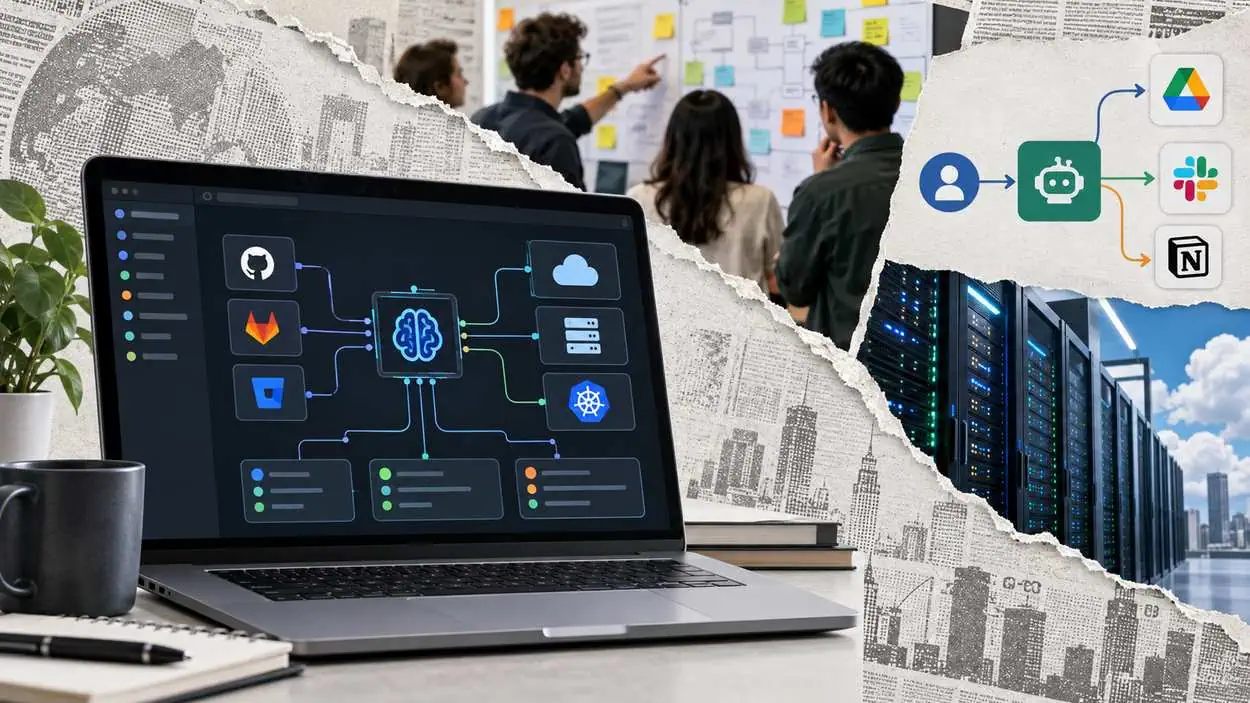
Platforms such as BulkQuant reflect this wider shift. Instead of being viewed only as a crypto bot or stock bot, BulkQuant fits more naturally into the category of AI-assisted trading interfaces: platforms that combine market monitoring, strategy workflow, dashboard-based automation, and multi-market access in one environment.
This distinction matters. In 2026, the most meaningful trading technology may not be the tool that does the most for the user. It may be the tool that helps the user see more clearly what is happening, what is active, what is at risk, and what still requires human judgment.
From Execution Engine to Decision Interface
For years, trading bots were mainly judged by execution.
- Could they place orders quickly?
- Could they follow rules without emotion?
- Could they run while the trader was away?
- Could they operate across crypto exchanges or stock market tools?
Those questions still matter, but they no longer define the whole category. While baseline execution relies on a dedicated trading VPS to keep platforms online around the clock without local outages, a modern trading bot is increasingly becoming a decision interface.
A modern trading bot is increasingly becoming a decision interface. It does not simply execute instructions. It shapes the trader’s view of the market.
That includes:
- Which assets are shown first,
- Which alerts are prioritized,
- How signals are ranked,
- How performance is displayed,
- Whether risk is visible or hidden,
- Whether automation settings are easy to review,
- Whether the user feels informed or simply pushed toward action.
This is a major change. When software becomes the main interface through which traders experience the market, design choices start to matter as much as technical features. A dashboard is not neutral. It decides what appears important. A signal is not just information. It can influence behavior. A one-click automation button is not just convenient. It can reduce hesitation before a high-risk decision.
That is why the redefinition of crypto and stock trading bots is not only technological. It is behavioral.
Why Crypto Bots and Stock Bots Are Moving Closer Together
Crypto trading bots and stock trading bots used to feel like separate categories. Crypto bots were often associated with 24/7 trading, exchange connectivity, grid strategies, arbitrage claims, and volatility management. Stock trading bots were more often linked to screeners, technical signals, earnings reactions, broker integrations, and portfolio tools.
In 2026, that separation is becoming less clear. Retail traders are no longer thinking in only one asset class. Many users monitor Bitcoin and Ethereum while also following Nvidia, Tesla, major indexes, forex pairs, and macroeconomic news. A trader may hold crypto, watch technology stocks, open a forex trade, track interest-rate expectations, and check dollar strength from the same phone.
This creates demand for a different kind of tool. The trader does not only need a crypto bot or a stock bot. The trader needs a workflow layer that can organize several markets at once.
That is one reason AI-assisted platforms are gaining attention. They can help turn scattered market information into a more structured interface. Instead of forcing users to jump between charts, news feeds, exchange apps, broker tools, and spreadsheets, a more complete platform can centralize part of that workflow.
BulkQuant’s multi-market positioning fits this convergence. Its relevance is not simply that it belongs to the AI trading software category. It is that many retail users now want to compare crypto, forex, and stock automation from a more unified dashboard-based environment rather than treating each market as a completely separate world.
The bigger trend is clear: trading bots are moving from single-market tools toward multi-market decision systems.
Efficiency Is No Longer Just About Speed
Many articles still describe trading bots as efficiency tools because they can execute faster than humans. That is true, but it is an incomplete definition.
In 2026, efficiency means more than speed. For retail traders, efficiency increasingly means reducing mental overload. It means knowing where to look first. It means seeing active strategies without opening five different platforms. It means understanding which alerts matter and which ones are just noise. It means reviewing exposure before acting.
A trading bot or AI-assisted platform can create efficiency in several ways.
- It can reduce tool switching.
A trader who follows crypto, stocks, and forex may otherwise move between several apps throughout the day. - It can reduce repeated manual checks.
Markets can be monitored through predefined alerts or strategy conditions. - It can reduce emotional decision-making.
Rules can be created before the market becomes stressful. - It can reduce workflow confusion.
A dashboard can show active settings, watched markets, and account activity in one place. - It can reduce beginner friction.
New users may understand trading automation more easily when the workflow is organized visually instead of through code, API documentation, or fragmented exchange tools.
Efficiency also depends on the environment a strategy runs in. Where the bot actually runs matters as much as how it is coded, and QuantVPS has a useful comparison of how NinjaTrader, Tradovate, MetaTrader and TradeStation handle backtesting, custom code and round-the-clock execution.
This is where the efficiency argument becomes more realistic. A trading bot should not be described as a shortcut to profits. A stronger argument is that it may help traders organize attention. That may sound less exciting, but it is more accurate.

The New Risk Gateway Is Behavioral, Not Only Technical
Most discussions about trading bot risk focus on technical issues: bad code, failed execution, poor strategy design, unstable APIs, or platform reliability.
Those risks are real. But they are not the only ones. The newer risk is behavioral. A trading bot becomes a risk gateway when the interface makes risk feel smaller than it is. This can happen even when the software looks clean, modern, and professional.
For example, a simple activation button can make automation feel harmless. A polished performance chart can make uncertainty look controlled. A confident AI signal can make users ignore their own doubts. A dashboard that highlights potential upside but hides drawdown details can distort decision-making.
The UK Financial Conduct Authority has studied how trading app design and digital engagement practices can affect investor behavior. Its high-level observations on trading apps are relevant because they show that app-based investing is not only about easier access. It is also about how digital design can influence user decisions.
That point matters for trading bots. A trading bot can increase efficiency, but it can also increase activity. It can reduce friction, but sometimes friction is useful. It can help users act faster, but acting faster is not always acting better.
The risk gateway is not always a scam page or a fake company. Sometimes it is a smooth interface that encourages users to take actions they do not fully understand.
AI Makes the Interface More Powerful – and More Sensitive
AI changes the trading bot discussion because it gives the interface more authority.
When a basic rule-based bot acts, users may understand that the bot is simply following conditions. But when an AI-assisted system filters signals, summarizes trends, ranks opportunities, or suggests strategy direction, users may treat the output as more intelligent than it really is. That creates a trust gap.
IOSCO’s report on Artificial Intelligence in Capital Markets shows that AI is being used across areas such as algorithmic trading, investment research, robo-advice, surveillance, and compliance. This broader institutional context shows that AI is not just a retail buzzword. It is part of a larger transformation in financial markets.
But retail trading is different from institutional infrastructure. A professional firm may have risk teams, compliance review, model governance, and technical oversight. A retail trader may only have a mobile screen and a short explanation. That makes communication critical.
If an AI trading platform provides signals, users need to understand what those signals mean. If it supports automation, users need to understand what conditions trigger activity. If it presents strategy options, users need to understand the limits.
AI does not remove uncertainty. In some cases, it can make uncertainty harder to see because the output feels more confident.
That is why serious AI trading platforms should not only focus on automation. They should focus on interpretation.
What Separates an Efficiency Tool From a Risk Gateway?
The same trading bot can look useful to one trader and dangerous to another. The difference often comes down to how the platform frames control.
- A useful bot helps users organize decisions.
- A risky bot pushes users to surrender judgment.
Here is a more practical way to separate the two:
| Area | Efficiency Tool | Risk Gateway |
| User role | The user reviews settings and remains involved | The user is encouraged to trust the system blindly |
| Interface | Shows strategy status, exposure, and limits | Highlights action while hiding downside |
| Automation | Supports rules, monitoring, and workflow | Makes outcomes feel effortless |
| Market scope | Helps organize several markets clearly | Pushes users into products they do not understand |
| AI language | Explains what AI assists with | Uses AI as a vague symbol of superiority |
| Risk display | Makes limits and uncertainty visible | Makes risk feel secondary or invisible |
| Content style | Uses realistic tool-based wording | Relies on profit-focused claims |
This table is not only useful for traders. It is also useful for platforms and publishers.
If a platform wants long-term trust, it should look more like the first column. If an article wants to be helpful, it should explain that difference instead of simply ranking bots by popularity or promotional offers.
The Scam Problem Changed the Standard of Trust
Recent crypto bot scams have made traders more suspicious of AI trading claims. That suspicion is not unreasonable.
The CFTC’s advisory, AI Won’t Turn Trading Bots into Money Machines, warns that fraudsters may use public interest in AI to promote automated trading algorithms, trade signal strategies, and crypto schemes with unrealistic or guaranteed return claims.
Investor education agencies have also warned about similar risks. Investor.gov’s Artificial Intelligence and Investment Fraud alert explains that bad actors may use the popularity and complexity of AI to make investment fraud sound more credible.
This does not mean every AI trading platform is a scam. It means the standard of explanation has changed.
- A platform cannot simply say it uses AI.
It needs to explain where AI fits into the workflow. - A platform cannot simply show a dashboard.
It needs to show what the user controls. - A platform cannot simply talk about automation.
It needs to explain what happens when market conditions change. - A platform cannot simply promote performance.
It needs to explain risk, limitations, fees, and account rules.
The trust standard is higher because the language of AI has already been abused.
Where BulkQuant Fits in This Redefined Market
In this redefined market, BulkQuant is better presented as part of the shift from simple bots to AI-assisted trading workflows.
That positioning is important. If BulkQuant is described only as a bot, the description becomes too narrow. If it is described as a guaranteed trading solution, the message becomes risky and less credible. A more accurate framing is that BulkQuant offers a structured environment where users can explore market monitoring, strategy execution support, and dashboard-based automation across crypto, forex, and stock markets. This gives the platform a clearer place in the article without turning the article into direct promotion.
For users who do not want to build custom trading systems from scratch, a guided dashboard can make automation easier to understand. It can show available tools, supported markets, and account options in a more organized format. Users who want to compare plan options can review BulkQuant trading plans as part of their own evaluation process, especially if they are trying to understand how a platform structures automation access and account features.
The key is not to present BulkQuant as a shortcut around trading risk. The stronger angle is that it belongs to a category of tools trying to make multi-market automation more accessible and more organized. That is a more sustainable form of visibility.
Why “Redefined” Matters for Traders, Not Just SEO
The word “redefined” matters because crypto and stock trading bots are no longer judged only by whether they can execute trades automatically. In 2026, the more important question is how these tools change the way retail traders see markets, react to signals, and manage decisions across different asset classes.
This shift is already visible in the broader trading app market. The UK Financial Conduct Authority has noted in its high-level observations on trading apps that app-based platforms have made it easier for retail investors to access a wider range of investments. That easier access can be useful, but it also raises a practical question: when trading becomes faster and simpler on the screen, do users still understand the risk behind each action?
That question is especially relevant to AI-assisted trading bots. IOSCO’s report on Artificial Intelligence in Capital Markets shows that AI is being used across areas such as algorithmic trading, investment research, robo-advice, surveillance, and compliance. For retail traders, this means AI is not just a marketing term. It is becoming part of the trading interface itself, shaping how signals are filtered, how opportunities are presented, and how users interpret market information.
This is where crypto and stock trading bots are being redefined in a more practical sense. They are moving from simple execution tools to decision interfaces. A bot may still place orders, but it may also decide which assets are highlighted, which alerts are shown first, how strategy performance is displayed, and whether risk appears clearly before the user acts. That creates both value and danger.
As an efficiency tool, a trading bot can help reduce tool-switching, organize signals, monitor multiple markets, and make strategy settings easier to review. As a risk gateway, the same interface can make high-risk actions feel routine, encourage overconfidence, or hide complexity behind a clean dashboard.
This is why regulators continue to warn investors about AI-related trading claims. The CFTC’s advisory, AI Won’t Turn Trading Bots into Money Machines, directly warns that fraudsters may use public interest in AI to promote automated trading algorithms, signal strategies, and crypto schemes with unrealistic or guaranteed return claims. Investor.gov also warns in its Artificial Intelligence and Investment Fraud alert that bad actors can use the popularity and complexity of AI to make investment scams sound more credible.
For this reason, a stronger article about trading bots should not only ask which platform is faster or more automated. It should ask how the platform changes user behavior. Does it help traders understand the market, or does it simply push them toward action? Does it make risk visible, or does it make risk feel smaller than it is? Does it explain what AI does, or does it use AI as a vague symbol of superiority?
That is also why this topic can support stronger search visibility than a generic “best trading bots” list. Google’s guidance on creating helpful, reliable, people-first content emphasizes content that helps users, rather than pages created mainly to gain search rankings. For financial topics, that means the article should help readers understand the decision in front of them: how trading bots are changing, what new risks come with that change, and how users can judge automation without being misled by hype.
In that sense, “redefined” is not just a headline word. It is the core argument of the article: crypto and stock trading bots are becoming decision interfaces. That makes them more useful than simple execution tools, but also more powerful in shaping trader behavior.
The Future: Bots Will Be Judged by Control, Not Autonomy
The next stage of crypto and stock trading bots will probably not be judged by how much autonomy they promise. It will be judged by how much control they give back to the user.
That may sound contradictory. After all, automation is supposed to reduce human work. But in trading, removing too much user involvement can be dangerous.
A better future is not necessarily one where bots make every decision. It may be one where bots help users make fewer scattered decisions and more deliberate ones.
- That means better dashboards.
- Clearer strategy settings.
- More visible risk limits.
- More honest explanations.
- Less aggressive language.
- More context around automation.
The best trading bots may not be the ones that make users feel like they can stop thinking. They may be the ones that help users think in a more structured way.
Final Thoughts
Crypto and stock trading bots are being redefined in 2026 because the role of the bot is changing. The bot is no longer just an execution engine. It is becoming a decision interface, an attention filter, a workflow organizer, and sometimes a behavioral risk gateway. That makes the category more useful and more dangerous at the same time.
For traders, the best approach is to ask a different set of questions. Not only “Can this bot trade automatically?” but also:
- What does this interface make easier?
- What does it make less visible?
- What decisions remain mine?
- What risks are displayed clearly?
- What am I being encouraged to believe?
For platforms such as BulkQuant, the stronger long-term positioning is not built around hype or guaranteed performance language. It is built around AI-assisted workflows, market monitoring, strategy execution support, multi-market access, visible controls, and user education.
In 2026, the most trusted trading bots may not be the ones that promise to do everything automatically. They may be the ones that help traders stay more aware, more organized, and more in control.
FAQ
They are being redefined because retail traders now expect more than automated order execution. Many users want market monitoring, signal organization, strategy dashboards, multi-asset access, and risk visibility from one interface.
An execution bot mainly follows predefined rules and places trades. A decision interface helps traders understand market conditions, review automation settings, compare signals, and decide how much control they want to keep.
Crypto and stock traders are both dealing with faster information flows, multi-market exposure, and more complex decision-making. As a result, bots in both markets are moving toward dashboard-based workflow tools.
A trading bot can change behavior by making some actions feel easier, faster, or safer than they really are. Interface design, alerts, AI signals, and one-click automation can influence confidence, trading frequency, and risk perception.
Speed still matters, but many retail traders also need better organization. A useful trading bot can reduce dashboard switching, help structure market attention, show active strategies, and make risk settings easier to review.
A trading bot becomes a risk gateway when it hides complexity, encourages overconfidence, makes high-risk actions feel routine, or uses automation language to reduce the user’s sense of responsibility.
BulkQuant fits this category because it is better described as an AI-assisted trading workflow platform than a simple one-function bot. Its relevance comes from dashboard-based market monitoring, strategy execution support, and multi-market automation tools across crypto, forex, and stocks.
Third-Party Content Notice: This press release/article is provided by a third party, which is solely responsible for its content. It is published on SQ Magazine exactly as received from the issuing organization, without any edits, verification, or endorsement by SQ Magazine.
SQ Magazine does not guarantee the accuracy, completeness, or reliability of the information. All investments involve risk, and readers should conduct their own research or consult a qualified advisor before making financial decisions. Any questions, concerns, or issues regarding this material should be directed to the original content provider.