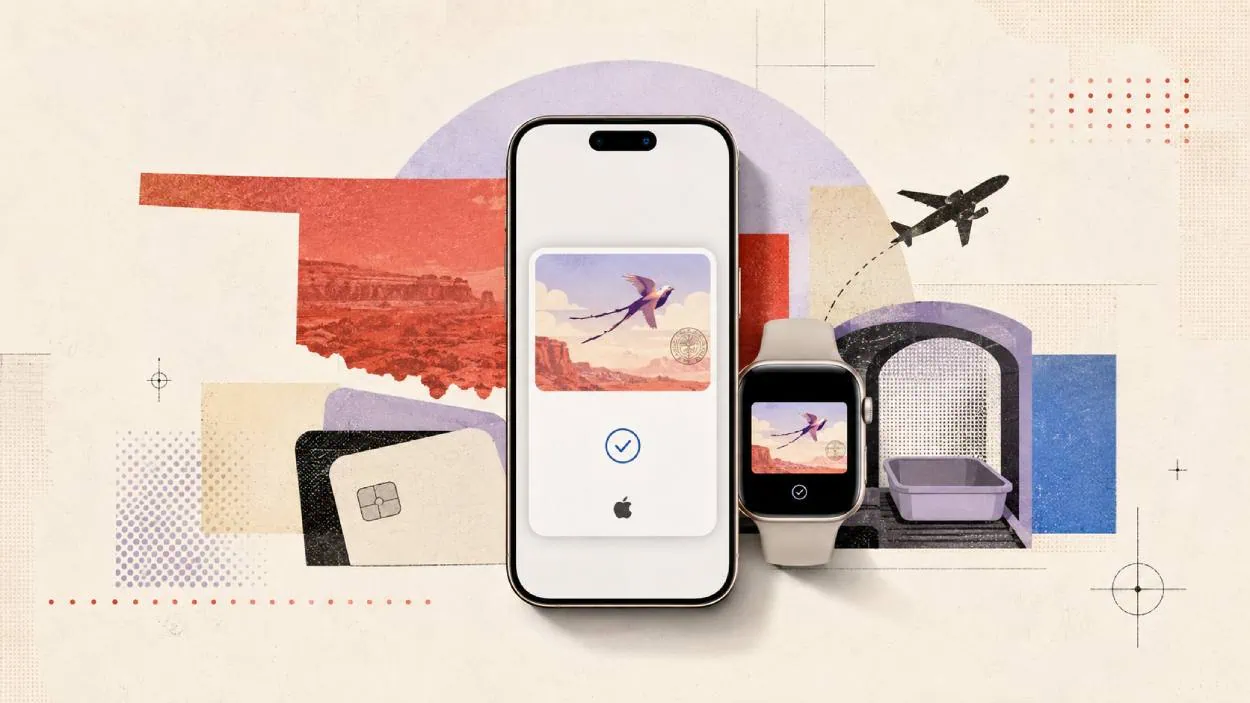






Oklahoma residents can add their driver’s license to Apple Wallet starting September 2, 2026, making Oklahoma the 16th U.S. state to support the feature. The digital license still will not satisfy a police officer at a traffic stop.
The Big Picture
- Oklahoma drivers can now load a license into Apple Wallet on iPhone and Apple Watch, joining 15 other states.
- The TSA accepts the digital ID at more than 250 airports for domestic travel, which is where it mostly gets used.
- Law enforcement generally does not take it, so Oklahoma drivers still need the plastic card at a traffic stop.
- Virginia turned on the same feature a week earlier, and five more states are lined up behind Oklahoma.
- Apple’s separate Digital ID, built on a U.S. passport, already covers TSA checkpoints in states with no deal.
Oklahoma becomes the 16th state to put IDs in Apple Wallet
Oklahoma residents set the license up inside the Wallet app by tapping the plus sign, choosing Driver’s License and ID Cards, selecting Oklahoma, and following the prompts. The card then lives on both iPhone and Apple Watch.
The state joins Arizona, Arkansas, California, Colorado, Georgia, Hawaii, Illinois, Iowa, Maryland, Montana, New Mexico, North Dakota, Ohio, Virginia, and West Virginia. Apple also supports the feature in Puerto Rico and works with Japan’s My Number Card. Virginia went live a week earlier, the tightest pair of launches in the program so far.
Holders present the card by tapping an iPhone or Apple Watch against an identity reader, which then displays exactly what the TSA agent or business has asked for. The device releases those fields only after Face ID or Touch ID authorization, and the phone never leaves its owner’s hand.
Where an Apple Wallet license actually works?
The TSA accepts Apple Wallet IDs at checkpoints in more than 250 U.S. airports for domestic travel, alongside a much smaller set of businesses, venues, and apps. Apple tells travelers to check whether their airport reads mobile ID before flying, which is an unusual caveat to attach to a shipping feature.
Apple states the ceiling plainly in its own support documentation: “ID in Wallet is not a replacement for a physical ID which may still be needed (e.g. for use with law enforcement).” That sentence is the whole story of the rollout in one line, and it has not changed as the state count climbed.
Five years in, the acceptance gap is still the story
Apple showed the feature at WWDC in 2021 and has signed 16 states since. That leaves 34 states with no Wallet license at all, and only North Carolina and Utah carry a near-term timeline. Connecticut, Kentucky, and Mississippi committed years ago and still have no launch date attached.
Payments took a similar path, and Apple Pay still runs about 10.2% of eligible U.S. in-store transactions, according to Apple Pay adoption data. Issuing a credential is the easy half; getting counters, doors, and squad cars to read it is the half that takes a decade.
The state count is also the wrong number to watch. Apple launched Digital ID on November 12, 2025, letting any U.S. passport holder build a Wallet ID for TSA use without waiting on a state deal. That feature covers the one venue where acceptance is already broad, which tells you where the demand actually sits.
What the public record shows is where the credential gets issued, not where it gets read. Apple publishes the participating states and the airport figure, but no count of participating businesses, no list of which Oklahoma venues will accept the card this week, and no timeline for law enforcement acceptance in any state.
Oklahoma drivers adding the license today should keep the physical card on them, check their departure airport’s mobile ID status before a flight, and treat the Wallet version as a checkpoint convenience. Using it helps reduce how often the card leaves your hand, which is a real privacy gain, but it does not change what you legally need to carry.

Why It Matters?
The privacy design deserves more attention than the state tally. A TSA agent or a bartender reading a Wallet ID sees only the fields requested, and the owner keeps the phone throughout, which removes the moment when a stranger holds a card printed with a home address and a full date of birth. The FTC received more than 1.1 million identity theft reports in 2024, and every transaction that stops exposing a full ID shrinks that surface a little.
Two things decide whether this matters in Oklahoma by next summer. North Carolina and Utah landing on schedule would push the count past a third of the country and give Apple a stronger case to bring to retailers. The harder win is getting a single state to authorize the credential for traffic stops, because a driver’s license that fails the one check drivers actually face is a boarding pass with extra steps.