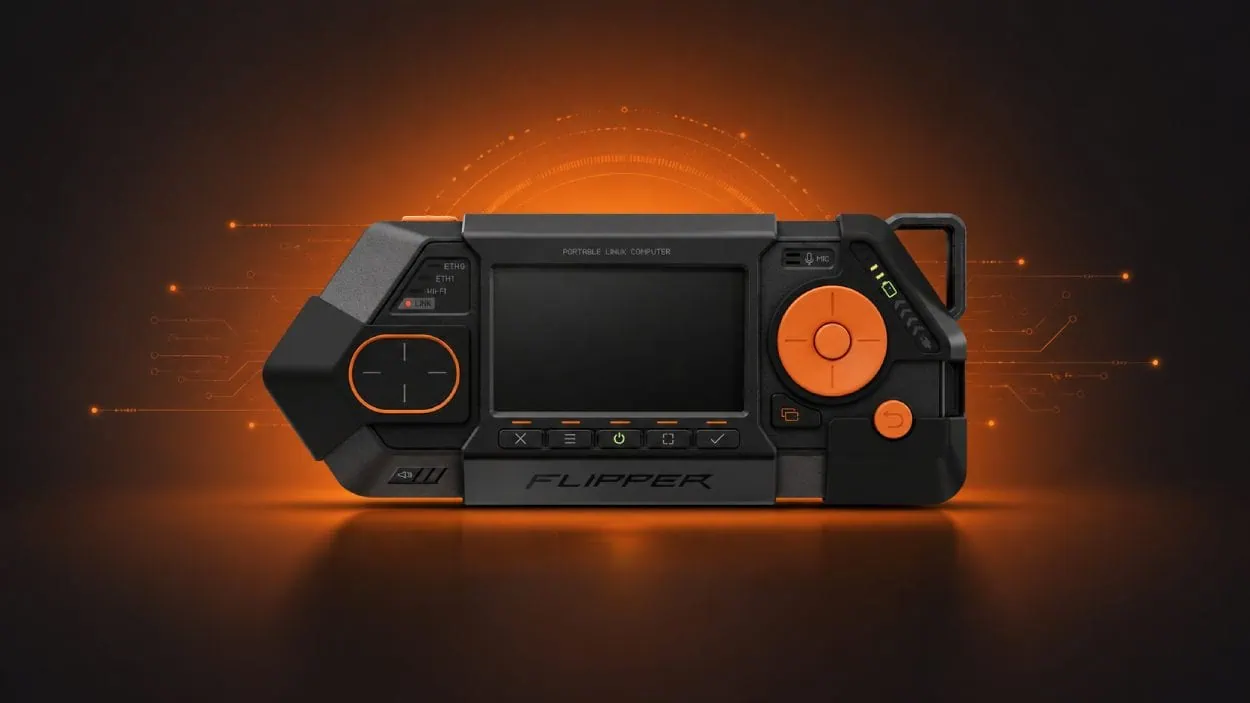






Flipper Devices has unveiled the Flipper One, a compact Linux powered computer designed for hackers, developers, makers, and networking enthusiasts who want powerful tools in a pocket sized form.
Quick Summary – TLDR:
- Flipper One is a new modular Linux computer from Flipper Devices.
- It runs on the Rockchip RK3576 processor with built in AI acceleration.
- The device includes dual Ethernet ports, WiFi 6E, USB 3.0, PCIe, SATA, and optional 5G.
- Flipper Devices is developing the project publicly with community feedback through an online developer portal.
What Happened?
Flipper Devices, the company best known for the Flipper Zero hacking multi tool, has officially revealed its next major hardware project called the Flipper One. Unlike the Flipper Zero, which focused heavily on wireless signal testing and penetration tools, the Flipper One is being positioned as a fully open Linux-powered handheld computer for advanced networking, AI workloads, and hardware experimentation.
The company says the device is still under active development, with pricing and launch details yet to be finalized. However, Flipper Devices confirmed that the hardware will be developed openly with direct input from the community through its new developer portal.
We’re finally ready to talk about Flipper One — a project we’ve been grinding on for years and have rebuilt from scratch several times. Read blog post >>https://t.co/tTywwytXzO
— Flipper Devices (@flipper_net) May 21, 2026
A Pocket Linux Computer Built for Power Users
The Flipper One is designed around the Rockchip RK3576, an 8 core ARM processor that includes a GPU and a dedicated 6 TOPS NPU for AI acceleration. According to the company, the hardware is intended to support high performance computing tasks while remaining portable enough to fit in a pocket.
The device will reportedly ship with 8GB RAM and support several modern connectivity options, including:
- Two Gigabit Ethernet ports
- WiFi 6E
- USB 3.0
- PCIe and SATA interfaces
- M.2 expansion slot
- Optional 5G modem support
Flipper Devices says the modular design will allow users to expand the system with additional modules, including hardware that could bring NFC and RFID functionality similar to the Flipper Zero.
Instead of relying entirely on touch controls or external peripherals, the Flipper One will also include a built in D pad and customizable buttons for navigating the Linux interface directly on the device.
AI and Networking Are a Big Focus
One of the biggest additions compared to previous Flipper products is the inclusion of dedicated AI hardware acceleration. The company says the Flipper One will be capable of running AI tasks locally without depending on cloud services.
This could make the device appealing for developers experimenting with private AI models, lightweight machine learning tasks, or offline assistants.
Networking also appears to be a major part of the product vision. With dual Ethernet ports, wireless analysis tools, and optional cellular connectivity, the Flipper One could function as a portable networking toolkit for:
- Network debugging
- Wireless traffic analysis
- Portable servers
- Edge computing projects
- Security research
- Field testing environments
The company also believes hobbyists and tinkerers may use the hardware for projects like retro gaming emulation, home server setups, or portable Linux workstations.

Built in Public With Community Feedback
Flipper Devices is taking an unusual approach with the Flipper One by opening much of the development process to the public before the hardware is finalized.
The company launched a dedicated Developer Portal where users can view architecture notes, follow development progress, track tasks, and submit ideas for improving the hardware and software ecosystem.
In a statement, Flipper Devices co-founder and CEO Pavel Zhovner said:
The company is reportedly aiming to launch a Kickstarter campaign later this year, with an estimated starting price of around $350.
SQ Magazine Takeaway
I think the Flipper One is one of the most interesting hardware projects we have seen in a long time because it combines several worlds into a single portable device. You get Linux computing, AI acceleration, networking tools, modular hardware, and open development all packed into something that fits in your pocket.
What makes this stand out even more is the company’s decision to build the product publicly with its community instead of hiding development behind closed doors. If Flipper Devices can deliver on its promises without compromising openness or flexibility, the Flipper One could become a favorite tool for developers, cybersecurity researchers, and serious tech enthusiasts.