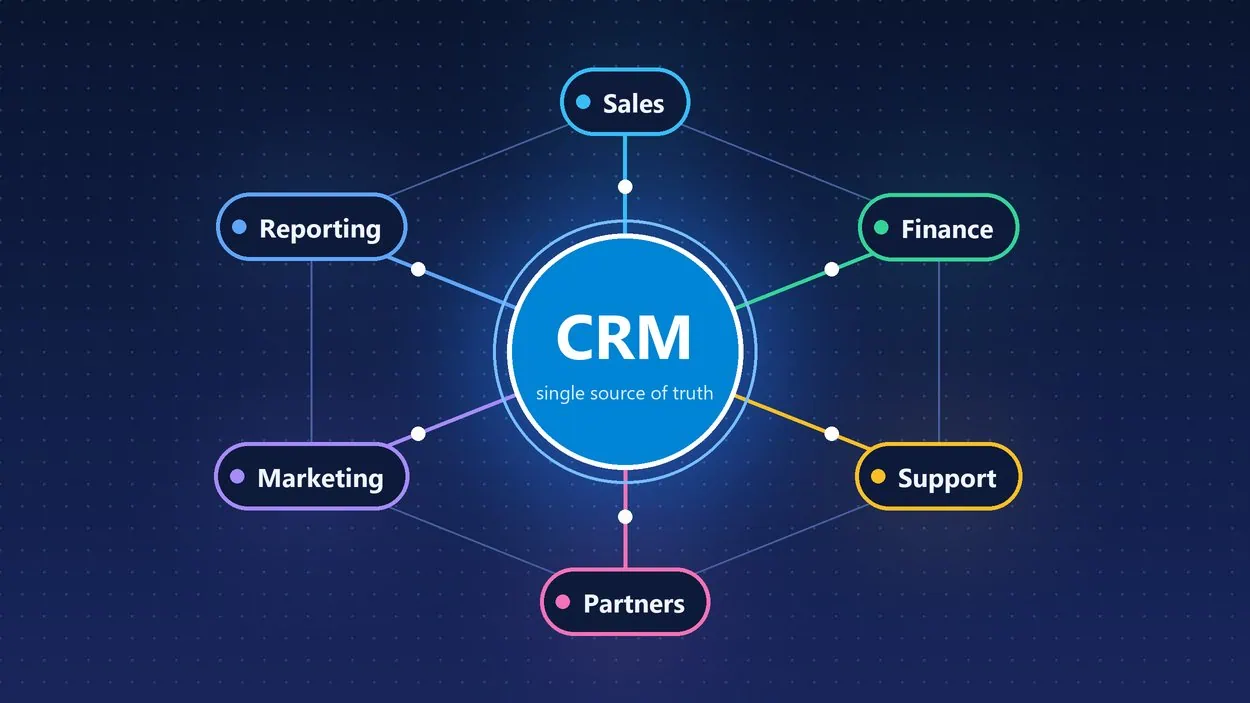






Most organizations encounter ITIL service strategy as a diagram in a certification course, a tidy wheel with five phases, a clean lifecycle, and the implicit promise that following the process will align IT with the business. What happens in practice is considerably messier.
The service strategy phase exists to answer three deceptively simple questions: which services should IT offer, to whom, and at what cost. Done well, it becomes the scaffolding for every decision that follows: service design, transition, operations, and continual improvement. Done poorly, it produces a 40-page document that no one reads and a service portfolio that nobody trusts.
This guide focuses on the practical side: how ITIL service strategy applies to organizations that aren’t running ServiceNow on a 500-person IT team, what happens when you extend service management principles beyond IT into HR, facilities, and finance, and where the typical implementation actually breaks down.
What ITIL Service Strategy Actually Governs
The original ITIL v3 framework organized service strategy around five core processes: strategy management for IT services, service portfolio management, financial management for IT services, demand management, and business relationship management. ITIL 4 reorganized this into the Service Value System (SVS), distributing these responsibilities across practices rather than treating strategy as a separate lifecycle phase.
The conceptual intent survived the restructuring. Service strategy still means deciding which services exist, who funds them, how demand is managed, and what relationships the service provider maintains with its stakeholders.
For most mid-market organizations, say, a 6-person IT team managing 800 endpoints across a school district or a regional hospital, the immediate translation of “service strategy” is: what goes in the service catalog, who can submit what kind of ticket, and how do you keep HR data from being visible to the facilities team. These sound like operational questions. They are, but they’re also the downstream consequences of strategic decisions about service scope and access control that most teams make ad hoc rather than intentionally.
The ESM Extension: When Service Strategy Grows Beyond IT
Enterprise service management, using ITSM principles in non-IT departments, has been growing steadily since roughly 2015, with COVID-era remote work significantly accelerating adoption. When staff stopped walking down the hall to ask HR about payroll questions or facilities about broken equipment, organizations needed structured intake channels for those requests too. ITSM tooling, already in place for IT, was the natural starting point.
The departments that typically extend into ESM first are IT, HR, and facilities. Security and accounting (or finance) follow with some lag. This sequencing isn’t arbitrary. HR and facilities handle high volumes of operational requests, many of them recurring and relatively straightforward to categorize. Finance and legal come later partly because their request types are less routine, partly because the regulatory sensitivity of their data requires more careful configuration.
Here’s the part most articles skip: when HR joins the service management platform, data segmentation stops being a nice-to-have and becomes a hard requirement. HR operates on salary information, personal records, and sensitive employment data. IT, by contrast, often doesn’t need visibility into HR tickets at all, and facilities may actually prefer that IT can see certain of their requests, particularly those tied to asset management (who has which equipment, where it is, what needs replacing). These aren’t the same privacy posture, and a platform that can’t reflect those distinctions will either force you to run separate systems or force you to accept access controls that don’t match your actual requirements.
The pivot question that real customers ask when they’re ready for ESM, even when they don’t use that term, tends to sound like: “Is there any way to bring another team onto the platform and make sure IT can’t see their data?” That question is ESM in one sentence.
Why Process Maturity Is the Real Prerequisite
ITIL service strategy, and ESM as its organizational extension, only works if your processes are already structured enough to be extended. This is where a lot of implementations run into trouble.
Service management rollouts commonly fail not because of bad tooling or insufficient budget, but because of categorization. Categories are where the strategy meets the data. The fundamental workflow of service management has three phases: gathering information (the ticket comes in), managing it (routing, resolving, escalating), and analyzing it (reporting, identifying trends, reducing repeat incidents). Most teams plan for the first two and neglect the third.
If your service catalog has 200 categories, which is genuinely common among IT organizations that over-engineer their intake forms, you will accumulate a year of ticket data that is essentially unanalyzable. You cannot report on a category structure that no one follows consistently. You cannot identify problem patterns when each analyst categorizes the same recurring incident differently. Service strategy requires that reporting be meaningful, and meaningful reporting requires disciplined categorization designed for analysis, not just for organization at intake.
The practical lesson: before extending a service management platform to HR or facilities, audit how your existing IT categories are performing. If your IT team can’t pull a credible monthly report on ticket volume by category and resolution time without manual cleanup, you’re not ready to add two more departments.
Where ITIL Service Strategy Fits in the Tooling Decision
ITIL as a framework is explicitly not a product requirement. It doesn’t mandate a specific platform, and the framework itself predates most of the ITSM software market by decades. The relationship between ITIL adoption and tooling is roughly this: ITIL gives you the process framework; software gives you the operational surface to run those processes on.
In practice, different platforms suit different organizational profiles. The table below compares four tooling options commonly considered by mid-market organizations evaluating a structured service strategy implementation:
| Platform | ITIL Alignment | ESM / Multi-Dept Support | On-Premise Option | Best Fit |
| Alloy Navigator (Alloy Software) | Strong (ITIL-aligned workflows, configurable) | Yes, data segmentation per department | Yes (cloud or on-prem) | Mid-market IT teams needing integrated ITSM + ITAM without vendor lock-in |
| ServiceNow | Comprehensive | Yes | No (SaaS only) | Large enterprise, 100+ IT staff, deep budget |
| ManageEngine ServiceDesk Plus | Strong | Partial, limited data isolation | Yes | SMB/mid-market, cost-sensitive, basic ESM needs |
| Freshservice | ITIL-lite | Yes, multi-team portals | No (SaaS only) | Cloud-first orgs, simpler workflows |
The column that matters most for ESM is the data segmentation capability. Running HR requests alongside IT requests on the same platform is only viable if the platform can enforce strict access controls at the department level. Without that, you’re choosing between a security compromise and a separate system, neither of which is the outcome the service strategy is supposed to produce.
Alloy Navigator’s data segmentation feature is a good example of functionality that solves a real architectural problem but is easy to miss because it doesn’t appear prominently in top-level marketing materials. Organizations that have extended the platform to HR teams specifically cite the ability to isolate department data as the feature that made multi-team deployment practical rather than theoretical. It’s not a flashy capability; it’s the kind of thing that matters only when you’re actually trying to make ESM work.

The Categorization Problem in Practice
There’s a common failure pattern worth describing in detail because it shows up repeatedly across industries and organization sizes.
A team rolls out service management with the goal of tracking tickets. That’s actually a reasonable first objective; before you can manage demand, you need visibility into it. The problem is that many teams stop there. They get the intake working, build a service catalog with dozens of categories, and call it done. Six months later, they’re sitting on thousands of tickets and can’t answer basic questions: what are our three most frequent request types, how long does a password reset actually take to resolve, where are our SLA breaches happening?
The answer is almost always that the categories were designed for routing, not for analysis. There’s a difference. Routing categories tell a technician where to send the ticket. Analytical categories tell a manager what’s actually happening in the environment. When you’re doing ITIL service strategy properly, building a real demand management picture, making investment decisions based on workload data, you need both, and they have to be aligned.
The simplest test: take your top five categories by ticket volume and ask whether a monthly trend report on those categories would tell you something actionable. If the answer is no, your categorization isn’t serving the analytical phase of service management.
When ITIL Service Strategy Is the Wrong Move
Not every organization should be working on ITIL service strategy. This is worth saying directly because the framework’s reputation leads some teams to treat it as a universal maturity target rather than a tool for specific organizational circumstances.
The threshold question is whether your current processes are structured enough to extend. ITIL is fundamentally a mid-market-to-enterprise framework. Alloy Navigator Express, the lighter-weight tier of Alloy Software’s product line, deliberately omits full ITIL practice support, because the organizations it serves are often at a stage where structured service management is the right next step, but ITIL certification-level process formalism is overhead they don’t need yet.
If your team is still managing assets in a spreadsheet and tickets through email, the right move is foundational: get an integrated ticketing and asset management system in place, build basic categorization, and generate your first meaningful reports. That’s the prerequisite. ITIL service strategy, and especially ESM expansion, becomes relevant once those fundamentals are stable.
The other failure mode is over-engineering the process at the expense of the actual goal. The point of service management isn’t sophisticated workflows for their own sake. The point is that service recipients, employees, departments, and end users can get what they need efficiently and reliably. Implementing ESM adds genuine overhead: governance structures, cross-departmental coordination, change management, training. That investment is only worth it if the volume and complexity of multi-department service demand justifies the structure.
The honest pre-implementation question is: will the operational improvement from formalizing these service workflows outweigh the effort of building and maintaining them?
A Practical Sequence for Organizations Ready to Move
For organizations that have cleared the maturity threshold and are ready to extend service strategy into ESM territory, the implementation sequence below reflects what actually works rather than what looks good in a project plan.
The priority is auditing your current IT service catalog, not redesigning it, just understanding which categories are analytically useful and which exist only for routing. Fix the categorization before adding departments. The second step is identifying which department you’re bringing in first and working directly with that team to document their services: what requests do they receive, from whom, on what timeline. HR is a common starting point because the request volume is high and the service types are well-defined, but the data sensitivity means you need to confirm your platform’s access controls before you touch a single record.
The third step, and this is the one most implementation plans skip, is defining what “done” means for year one. Not in terms of features deployed, but in terms of analytical outcomes. What reports will you run in twelve months that will tell you whether the ESM extension created value? If you can’t answer that before deployment, categorization will drift and reporting will be meaningless, and you’ll be in the same position as the team that deployed three years ago and still can’t pull a credible workload analysis.
Connecting Service Strategy to Tooling Reality
ITIL service strategy is ultimately a planning discipline. The framework tells you to define your service portfolio, manage financial accountability for IT spend, understand demand, and maintain stakeholder relationships. These are the right things to do. The question is always whether the organization has the process maturity, the right tooling, and the genuine business case to do them at the level of formality ITIL implies.
For mid-market organizations, the government agencies, healthcare systems, construction firms, and educational institutions that make up the bulk of ITSM platform buyers, the answer is almost always “some of it, selectively.” Asset management is usually the priority, because you can’t manage services you can’t see. Integrated ticketing comes next, because incident resolution depends on linking the ticket to the affected asset. Service strategy in its fuller form- portfolio management, demand analysis, and ESM expansion- follows once the foundation is producing reliable data.
Platforms like Alloy Navigator are built for exactly this pattern. The integrated approach of asset management, ticketing, and service workflows in one system means you’re not coordinating data across five vendors. The configurable workflows mean the platform adapts to your processes rather than forcing your processes to adapt to the platform. And the data segmentation capability means that when HR finally asks the question that signals they’re ready for ESM, the answer doesn’t require a new system.
That’s where service strategy and tooling actually meet: not in a framework diagram, but in whether the system you’re running can support the service structure you’re trying to build.