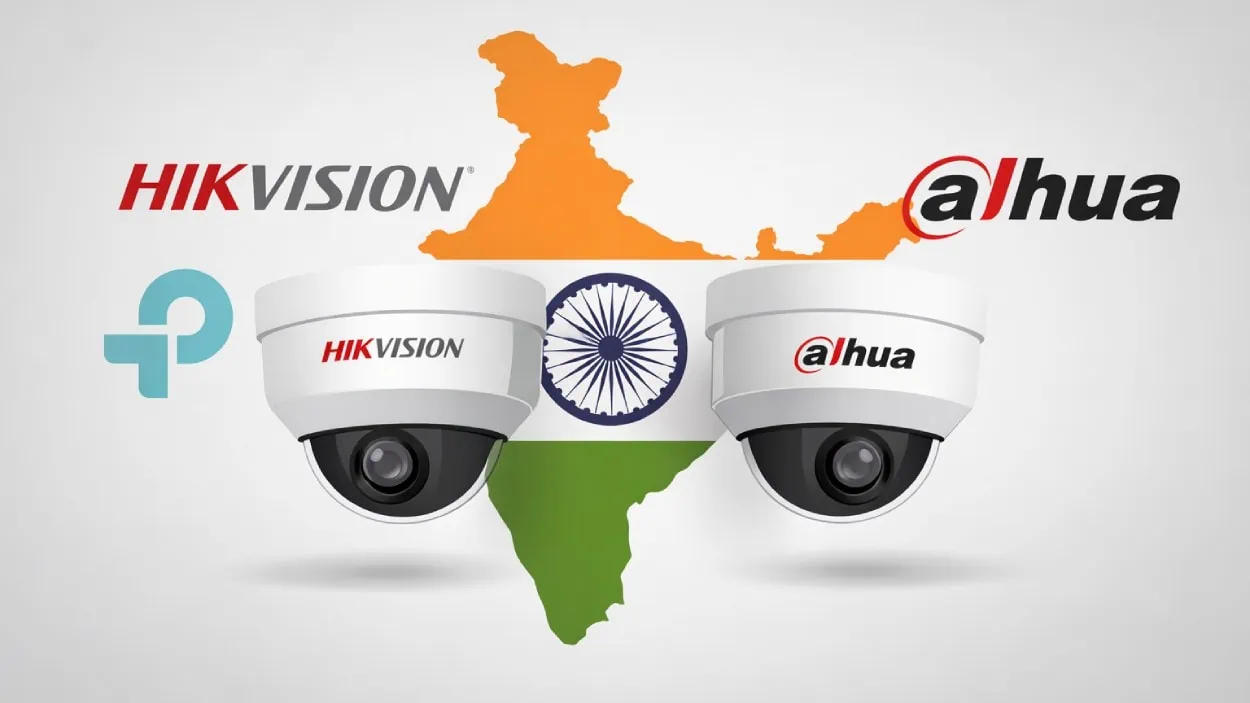






India is set to restrict Chinese CCTV companies like Hikvision and Dahua from selling internet connected cameras starting April 1 under new security certification rules.
Quick Summary – TLDR:
- India will block sale of certain Chinese CCTV products without mandatory certification from April 1.
- New rules focus on security risks and data protection in surveillance systems.
- Indian brands now control over 80 percent of the CCTV market.
- The move could reshape a market valued between 5 billion dollars and 7.5 billion dollars.
What Happened?
India is preparing to enforce stricter certification rules for CCTV cameras from April 1, effectively restricting Chinese firms like Hikvision and Dahua from selling internet connected devices. The move is part of a broader push to strengthen security standards and reduce reliance on foreign surveillance technology.
🚨 From April 1, only ER/STQC-compliant internet-connected CCTV cameras can be sold in India after MeitY ended the relaxation for non-compliant stock.
— Public News X (@PublicNewsX) March 30, 2026
Uncertified models, including from major Chinese brands, face a sales ban. #CCTV #India pic.twitter.com/mdoYIliNpH
New Rules Target Security Risks in Surveillance Systems
The government’s decision is tied to the Essential Requirements norms introduced by the Ministry of Electronics and Information Technology in April 2024. These rules aim to ensure that all CCTV devices sold in India meet strict security and data protection standards.
Under the updated framework, manufacturers must:
- Obtain certification under the Standardisation Testing and Quality Certification regime.
- Disclose the origin of key components such as System on Chip.
- Pass security testing to prevent unauthorised remote access.
Without this certification, CCTV products cannot be legally sold in India. Reports suggest that authorities are denying approval to devices using Chinese origin components, effectively blocking several Chinese brands.
So far, over 500 CCTV models have been approved under the new system, showing steady progress toward compliance.
Why India is Cracking Down on Chinese CCTV Firms?
Surveillance systems are considered critical infrastructure because they monitor sensitive areas like airports, government buildings and transport networks. This raises concerns about how data is collected, stored and potentially accessed.
Security agencies have flagged risks such as:
- Hidden backdoor access in connected devices.
- Data transmission to foreign servers.
- Use of surveillance equipment in sensitive locations.
These concerns have placed companies like Hikvision and Dahua under global scrutiny, not just in India.
The move also aligns with India’s broader trusted vendor policy, which aims to reduce dependence on Chinese technology in strategic sectors. Similar steps have already been taken in telecom and mobile applications.

Indian Brands Rapidly Gain Market Share
The ban comes at a time when the Indian CCTV market is already undergoing a major shift. Domestic companies have significantly increased their presence by adapting to the new rules.
Leading Indian players include:
- CP Plus
- Qubo
- Prama
- Matrix
- Sparsh
These companies have reworked supply chains, shifting to non Chinese components such as Taiwanese chipsets and building localised firmware to meet compliance standards.
As of February 2026, Indian brands control more than 80 percent of the market, a sharp rise from previous years when Chinese firms held about one third of total sales.
Multinational companies like Bosch and Honeywell continue to dominate the premium segment.
Market Impact and What Comes Next
India’s video surveillance market, valued between 5 billion dollars and 7.5 billion dollars, is expected to see short term disruption as the new rules take effect.
Possible impacts include:
- Temporary supply shortages as companies adjust.
- Slight increase in prices of CCTV systems.
- Faster growth for domestic manufacturers.
Some companies have already responded to the shift. Dahua has reportedly scaled back to selling only analogue cameras, while brands like Xiaomi and Realme have exited the smart camera segment after failing to meet certification requirements.
Over time, the market is expected to stabilise with a stronger focus on trusted and locally compliant vendors.
SQ Magazine’s Takeaway
I think this is a decisive move by India that goes beyond just business. It clearly signals that data security and control over critical infrastructure are now top priorities. While it may cause short term disruption, the long term impact looks positive for local manufacturing and safer surveillance systems. If anything, this could accelerate India’s push to become more self reliant in sensitive technology sectors.