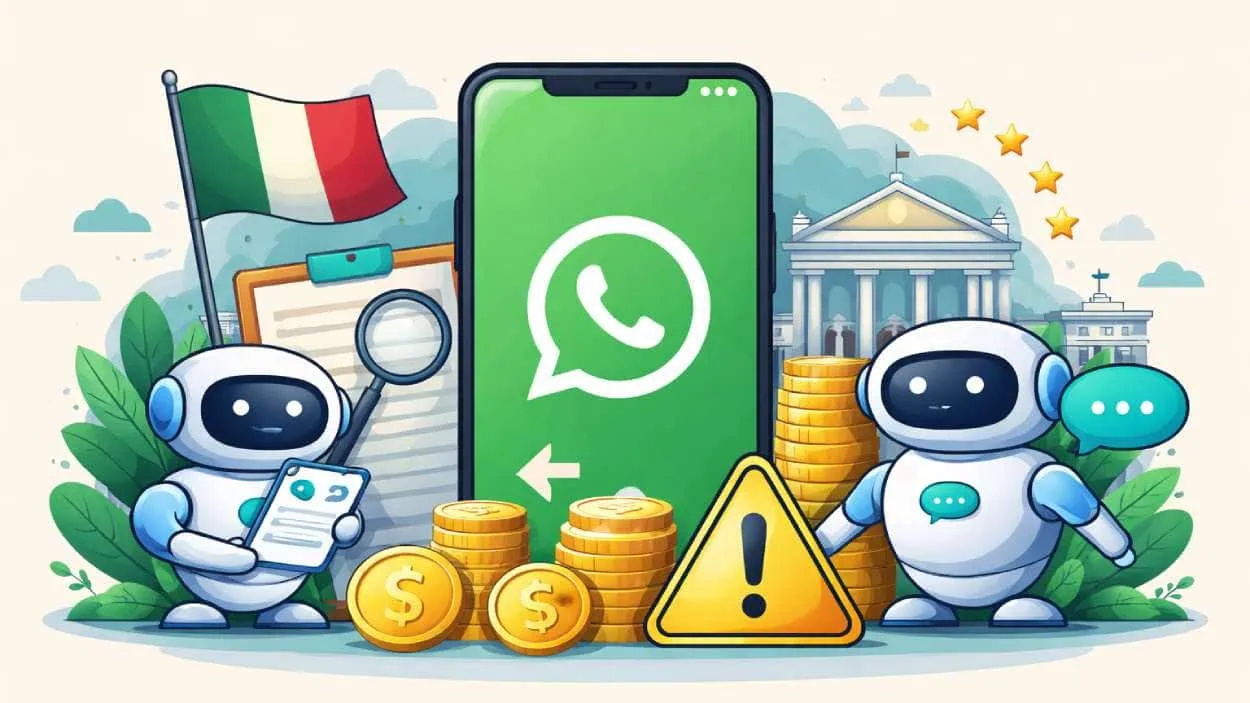







Meta is introducing per-message fees for AI chatbot developers on WhatsApp in Italy, following mounting regulatory pressure.
Quick Summary – TLDR:
- Meta will charge developers $0.0691 per AI message on WhatsApp starting February 16, 2025.
- The pricing applies to non-template responses and is currently limited to Italy.
- Italy’s competition regulator forced Meta to suspend its earlier ban on third-party AI chatbots.
- This move may set a global precedent as other regions investigate Meta’s platform policies.
What Happened?
Meta has announced it will begin charging developers to run AI chatbots on WhatsApp in Italy, marking a sharp policy reversal driven by regulatory intervention. The fees come after the Italian Competition Authority (AGCM) ordered Meta to suspend its ban on third-party AI bots late last year.
WhatsApp will now charge AI chatbots to operate in Italy https://t.co/bfi6gM6Ekg
— TechCrunch (@TechCrunch) January 28, 2026
Meta Responds to Italy’s Regulator
Meta originally banned third-party AI bots from WhatsApp’s Business API starting January 15, 2025, citing technical strain and claiming its platform was not built to support chatbot interactions. However, in December 2024, Italy’s antitrust watchdog intervened, ordering the company to pause the ban amid concerns over anti-competitive practices and reduced consumer choice.
To comply, Meta is now allowing chatbot access, but with a catch. Beginning February 16, developers will pay $0.0691 (or €0.0572 / £0.0498) per AI-generated message sent through the WhatsApp API.
Why This Matters for Developers?
The new per-message fee could significantly affect the bottom line for AI service providers handling high volumes of user queries. Compared to WhatsApp’s existing business template pricing, which varies by region and use case, the cost for AI messages is steeper and applies to every non-template, conversational response.
Here’s how WhatsApp pricing now breaks down:
- AI Chatbot Responses: $0.0691 per message (Italy only, for now).
- Template Messages: Variable rates for marketing, utility, and authentication.
- Session Messages: Free within 24 hours of user initiation.
Meta said this structure ensures access where legally required, while maintaining that WhatsApp is not intended to act as an app store for AI services.

Developers Shift Gears
Several major players, including OpenAI, Perplexity, and Microsoft, stopped offering AI chatbots on WhatsApp as of January 15. They now redirect users to their own apps or websites.
Developers still using WhatsApp must adopt workarounds, like sending predefined messages that guide users to external platforms. These efforts help maintain user engagement while staying compliant with Meta’s updated policies.
Global Ripple Effect
While Italy is the first market to enforce access under regulatory pressure, similar probes are underway in other regions:
- European Union: Investigating Meta for potential antitrust violations.
- Brazil: Initially issued a suspension order, but a court later sided with Meta.
- Other Markets: Closely monitoring developments.
If regulators in these areas follow Italy’s lead, Meta could expand the pricing model to other countries, fundamentally reshaping how AI services operate on messaging platforms.
Technical Limitations and Platform Vision
Meta maintains that WhatsApp’s infrastructure is optimized for template-based business communication, not freeform AI interactions. The company argues that its Business API wasn’t designed to handle highly dynamic conversations, which contributed to its original ban.
“The emergence of AI chatbots on our Business API put a strain on our systems that they were not designed to support,” Meta said, reiterating that AI developers should use traditional app stores, websites, or partnerships instead.
SQ Magazine Takeaway
I think this is a bold move by regulators and an even bolder pivot by Meta. Italy forcing Meta to reverse its policy shows that governments can have real sway over Big Tech behavior. But let’s be honest: that $0.0691 per message is no small fee. For AI startups and even established players, this changes the economics of using WhatsApp. If other countries follow suit, we could be looking at a brand new battleground for AI deployment. It’s a story of regulation versus innovation, and this is just the first chapter.