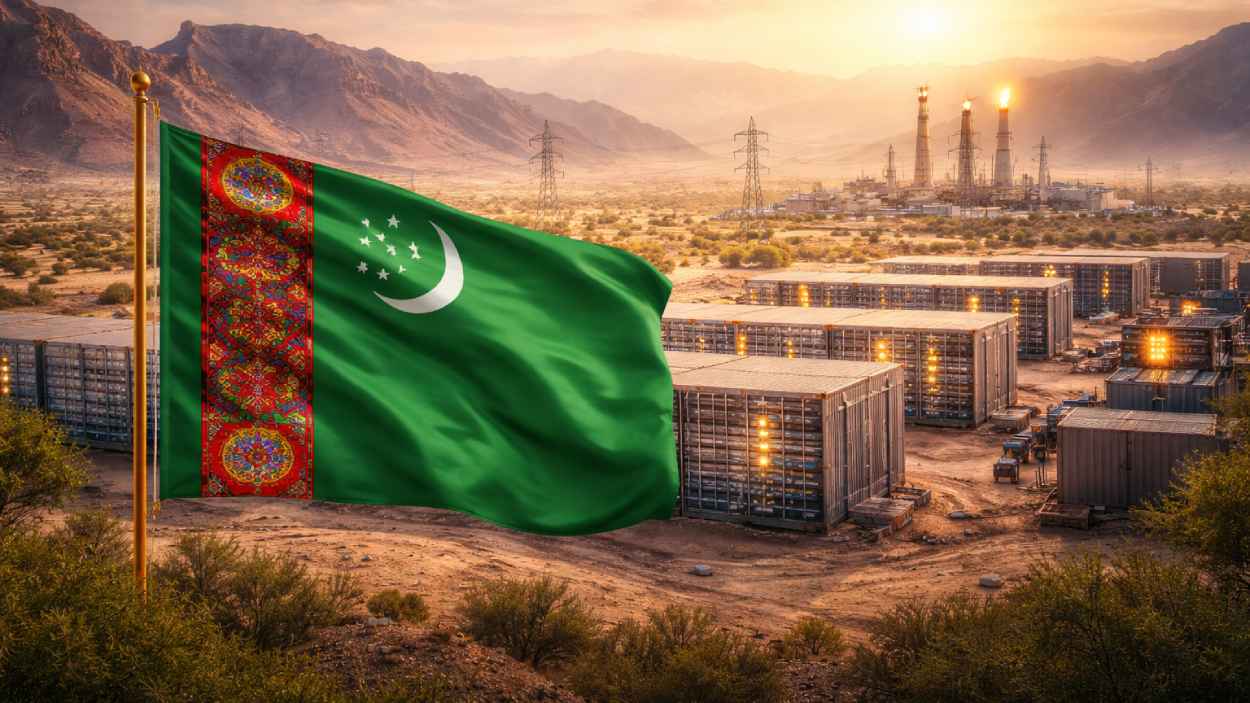







Turkmenistan has taken a surprising step into the world of cryptocurrency by legalizing mining and exchanges, while still keeping tight control over digital payments and online access.
Quick Summary – TLDR:
- Turkmenistan passed a new law legalizing crypto mining and exchanges.
- The law includes a licensing system under the supervision of the central bank.
- Crypto still cannot be used for payments, currency, or securities.
- The move signals economic shifts in the gas-rich but tightly regulated country.
What Happened?
Turkmenistan, one of the world’s most closed and tightly governed nations, has officially legalized the mining and exchange of cryptocurrency. This marks a significant development in the country’s economic policy, particularly for a state that has long resisted technological and financial openness. Despite this step, cryptocurrencies are still not recognized as legal tender or securities, and internet access remains highly restricted.
JUST IN: 🇹🇲 Turkmenistan officially legalizes Bitcoin and crypto mining and exchanges – The Washington Post pic.twitter.com/6ateFUKX7s
— Bitcoin Archive (@BitcoinArchive) January 1, 2026
Crypto Legalization with Limitations
In a move that few expected, President Serdar Berdimuhamedov signed legislation that brings mining and crypto exchange activities under civil law. The new regulation includes a licensing framework for exchanges, which will be monitored and managed by Turkmenistan’s central bank.
However, the law falls short of full adoption. Digital currencies are not allowed as a means of payment, nor are they recognized as currency or securities. This essentially limits the use of crypto to mining and trading under government oversight, without extending its role into daily financial transactions.
Internet Control Remains a Barrier
Even with this policy shift, Turkmenistan’s internet remains heavily controlled by the state. The lack of open digital infrastructure could pose serious challenges for any meaningful development of a crypto economy. Citizens face restricted access to many parts of the internet, and government censorship remains a core aspect of digital life in the country.
Energy-Rich but Economically Rigid
Turkmenistan has long relied on natural gas exports to drive its economy. China is the primary importer of Turkmen gas, and the country is currently working on a pipeline to Afghanistan, Pakistan, and India. The new crypto law might reflect early signs of the government exploring economic diversification, even if in a very controlled and cautious manner.
Gradual Openness?
This move comes on the heels of another shift last year, when Turkmenistan introduced electronic visas in an effort to ease entry for foreigners. Historically, the country has imposed strict entry restrictions, often denying visa applications without explanation. While these reforms are relatively modest, they hint at a government starting to test the waters of modernization.
SQ Magazine Takeaway
I think it’s fascinating to see a nation like Turkmenistan, known for its isolation and rigid control, make even a small move toward digital finance. Legalizing crypto mining and exchanges is a big deal, especially for a country where the internet is still locked down and information flow is tightly managed. Sure, they’re not recognizing crypto as money yet, but even this step could be the start of something bigger. It tells me that even the most closed-off places are feeling the pressure to evolve with global tech trends.