






The Bank of Russia is proposing a major shift in cryptocurrency policy that would allow ordinary citizens to legally invest in digital assets under a new two-tier regulatory framework.
Quick Summary – TLDR:
- The Bank of Russia aims to open crypto investing to retail participants with annual caps and knowledge tests.
- Qualified investors will have broader access but cannot invest in privacy-focused tokens.
- The framework still prohibits using crypto for domestic payments, reaffirming the ruble’s primacy.
- The move reflects Russia’s evolving financial strategy amid global sanctions and shifting trade routes.
What Happened?
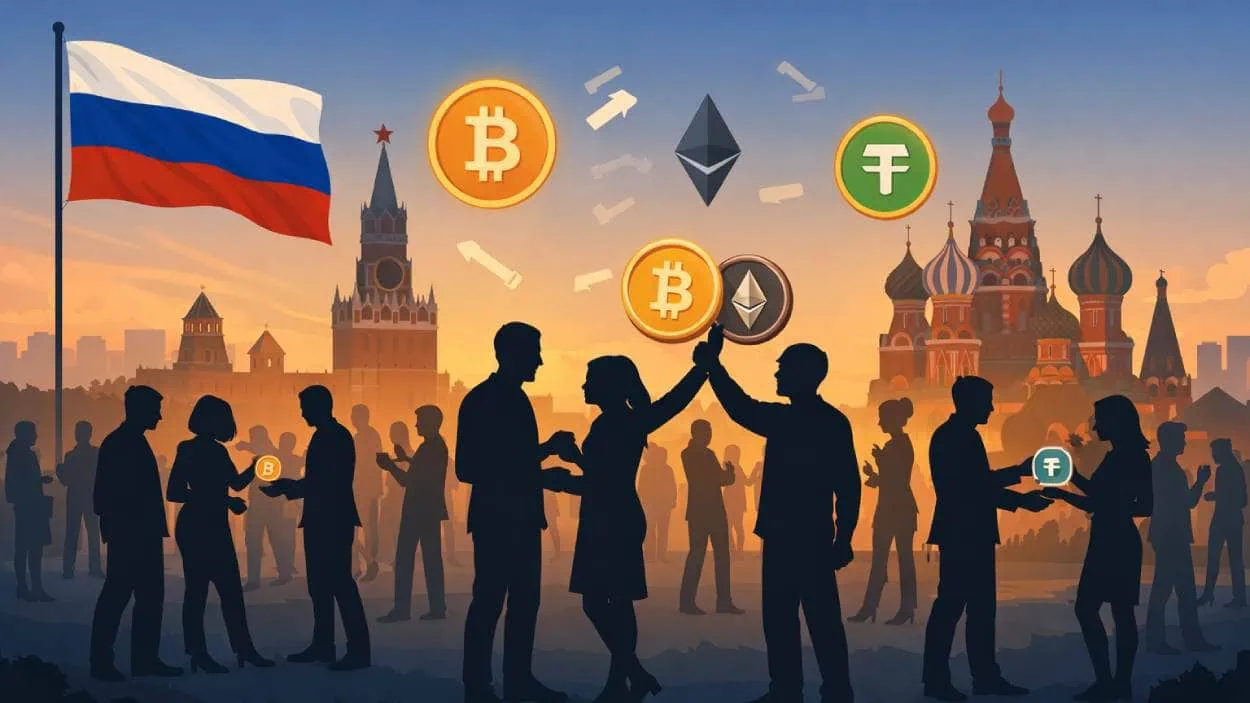
Russia’s central bank has released a new concept paper proposing tiered access to cryptocurrency markets for both retail and professional investors. While maintaining its cautious stance, the Bank of Russia now supports limited crypto purchases by non-qualified investors, marking a significant policy shift as the country navigates financial isolation and looks to new digital pathways.
JUST IN: 🇷🇺 Bank of Russia considers allowing unqualified investors to purchase crypto.
— Watcher.Guru (@WatcherGuru) December 23, 2025
Russia’s Two-Tier Crypto Framework
Under the proposed guidelines, the Bank of Russia would allow non-qualified investors to purchase up to 300,000 rubles (about $3,800) worth of cryptocurrency annually, but only after passing a mandatory knowledge test. This group would be restricted to a still-to-be-defined list of liquid and regulated crypto assets, excluding any privacy coins.
On the other hand, qualified investors, those who meet existing financial thresholds and pass a risk assessment would have access to a wider range of cryptocurrencies. However, even they are barred from trading tokens designed to conceal user identities or transaction details.
Non-qualified investors:
- Annual limit: 300,000 rubles.
- Must pass a knowledge test.
- Only liquid, approved cryptocurrencies allowed.
Qualified investors:
- Broader market access.
- No spending cap.
- Still prohibited from buying privacy-focused coins.
Not Just a Legal Shift, But a Financial Strategy
This proposal follows a string of strategic financial moves by Russia’s central bank. Earlier this year, banks were allowed to conduct limited crypto operations under tight supervision. First Deputy Governor Vladimir Chistyukhin also acknowledged there was no longer a reason to exclude banks entirely from crypto markets.
Some reports have hinted at Russia using Bitcoin in oil transactions with countries like China and India, navigating around Western sanctions by leveraging intermediaries.
The policy document signals Russia’s gradual embrace of cryptocurrencies, not as a replacement for the ruble, but as a tool for international trade and investment diversification.

Rules Still Strict on Crypto Payments
Despite this increased access, the use of cryptocurrencies for domestic payments remains forbidden. Since a 2020 law passed by the State Duma, Russia has upheld the ruble as the sole legal tender for internal transactions.
The new plan maintains this position, clarifying that crypto assets are to be considered monetary assets, meaning they can be bought and sold, but not used to pay for goods or services within Russia.
All trading will occur through licensed brokers, crypto exchanges, and trustees operating under current financial regulations. Additional requirements will be enforced for specialized depositories and exchangers.
Tax Compliance and Cross-Border Flexibility
Russian citizens will also be able to buy crypto through foreign platforms using foreign accounts, and even transfer their assets abroad via Russian intermediaries. In such cases, notification to tax authorities will be mandatory.
The policy also includes Digital Financial Assets (DFAs) and other digital rights instruments, allowing their circulation on open networks, with the aim of attracting foreign investment and aligning local DFAs with international crypto standards.
The roadmap includes:
- Full legislative framework by July 1, 2026.
- Legal penalties for unauthorized crypto activity by July 1, 2027.
SQ Magazine Takeaway
I think this is a bold yet calculated step by Russia. Letting everyday citizens into crypto with knowledge tests and spending caps shows they are serious about embracing Web3 while keeping it under control. Sure, there are limitations, and privacy coins are off the table, but it’s still a big move in a country that was once openly hostile to digital currencies. For investors and startups alike, this is a green light to start building in a more open but regulated crypto environment. I’ll be watching closely to see how this reshapes the digital finance scene in Russia.