






OpenAI has officially launched a full-featured app store for ChatGPT, giving third-party developers a new platform and users a more powerful, customizable AI experience.
Quick Summary – TLDR:
- OpenAI has opened its ChatGPT app directory, allowing developers to submit and publish chat-native apps.
- Users can now browse, connect, and use apps like Spotify, Canva, Zillow, and more without leaving ChatGPT.
- Apps extend ChatGPT’s functionality by bringing services directly into conversations, such as ordering food or building presentations.
- Developers use the OpenAI Apps SDK, which allows deep integration through natural language and structured interfaces.
What Happened?
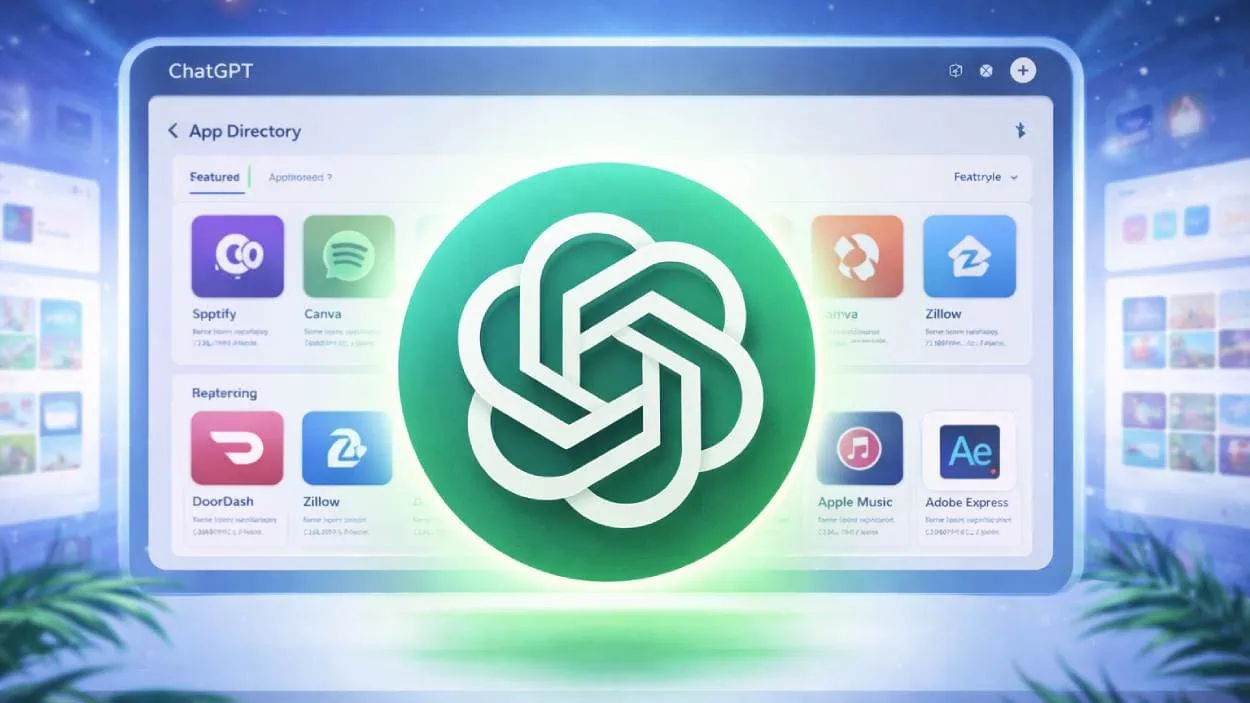
OpenAI announced that its new ChatGPT App Directory is officially open for developers and users. The move turns ChatGPT into more than just a chatbot by introducing a full-scale app store, similar in concept to the Apple App Store or Google Play Store, but designed around natural language interaction and contextual workflows. Developers can now submit their apps for review and, if approved, have them listed in the ChatGPT interface for global access.
📣Calling all app developers! Starting today, you can submit your ChatGPT app for review.
— OpenAI Developers (@OpenAIDevs) December 17, 2025
Approved apps will be listed in the app directory, a new surface for users to search for apps directly in ChatGPT. https://t.co/bO1OfXb0Em
ChatGPT App Store: A Platform Shift for AI
OpenAI’s launch marks a shift in strategy, turning ChatGPT from a tool into a platform. With the new app store now live, users can connect third-party services directly within their chats. These aren’t just basic plugins. They allow users to create playlists, order groceries, browse listings, and more, all without switching apps or tabs.
- The app store is accessible at chatgpt.com/apps or through the “Apps” section in ChatGPT’s tools menu.
- Apps can be triggered by mentioning them in chat (e.g., “@canva make a presentation”) or selecting them from the interface.
- The directory currently includes Featured, Lifestyle, and Productivity categories.
Examples of early partners include Spotify, Canva, DoorDash, Zillow, Adobe, and Apple Music, showing a broad spectrum of practical applications already being explored.
For Developers: Building Apps for Conversations
At the core of this initiative is the OpenAI Apps SDK, a development toolkit that enables creators to build apps that interact naturally with users inside ChatGPT. These apps are powered by the Model Context Protocol (MCP), allowing them to respond to prompts, display interactive elements, and take actions in a conversation flow.
- Developers submit apps via the OpenAI Developer Platform for review.
- Apps must pass a quality and safety review before being published.
- OpenAI provides submission guidelines, example apps, and a UI library to streamline development.
The company is also experimenting with ways to surface relevant apps in real time, using conversational cues like user intent and past behavior. Apps may also leverage ChatGPT’s Memory feature, if enabled, to provide more personalized experiences.

Why It Matters for Users?
For users, the launch is a game-changer. Tasks that used to require multiple apps or browser windows can now be handled in a single chat interface. Whether it’s researching a topic, ordering dinner, or designing slides, ChatGPT becomes a hub for productivity and daily life.
- Users no longer need to install anything. Apps are added via a Connect button.
- Some apps offer example prompts and screenshots to help users get started quickly.
- Many services can also be used alongside other apps in a single conversation, creating a seamless workflow.
This new model reduces friction and builds on users’ increasing willingness to delegate planning and tasks to AI tools. Nearly one-third of users are open to having an AI agent help organize their daily lives.
SQ Magazine Takeaway
I’ve always seen ChatGPT as a smart assistant, but this app store pushes it into new territory. It’s not just answering questions anymore, it’s doing things for you in real time. I love the fact that I can now make a playlist, book a ride, or generate slides, all from one place. This feels like the beginning of something much bigger. If developers embrace this the way they did mobile apps a decade ago, ChatGPT might just become the new home screen for digital life.