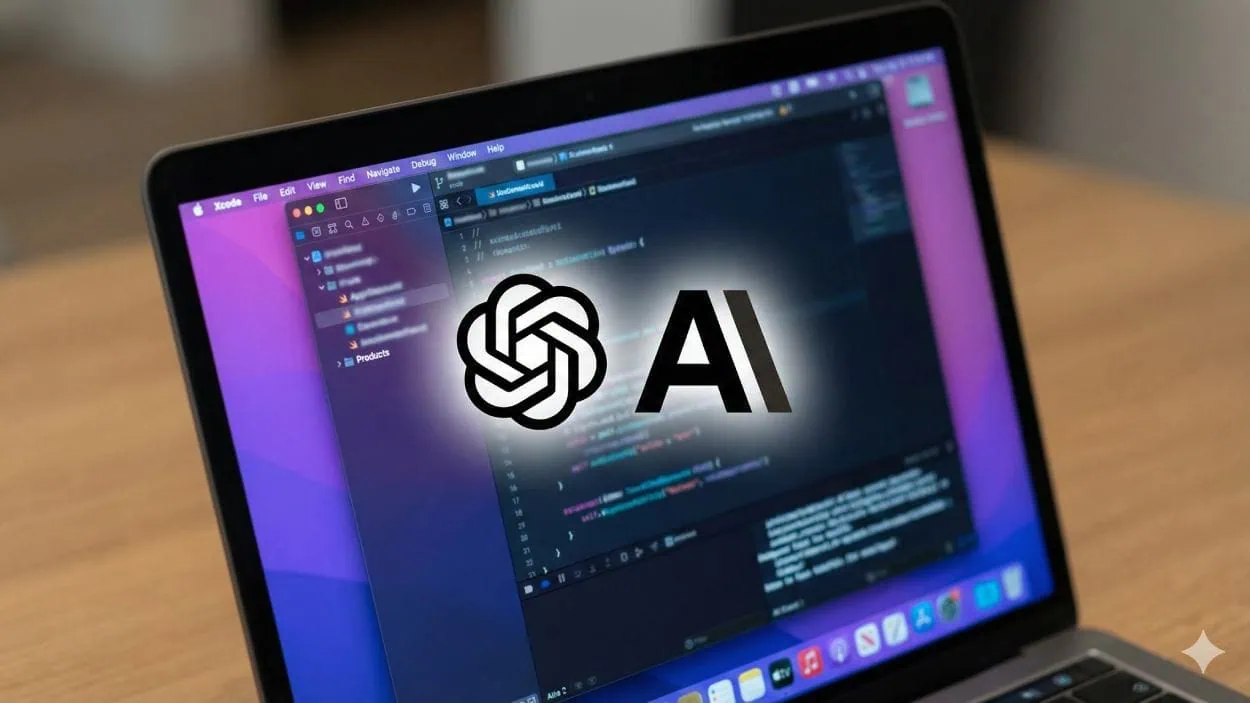







Apple’s latest Xcode 26.3 update introduces agentic coding support, letting developers harness powerful AI coding agents like Claude and Codex directly within the development environment.
Quick Summary – TLDR:
- Xcode 26.3 adds agentic coding with support for Claude Agent and OpenAI’s Codex.
- AI agents can now perform complex coding tasks directly inside Xcode.
- Apple introduces the Model Context Protocol to enable integration with other AI tools.
- The update aims to speed up app development and enhance learning for new coders.
What Happened?
Apple has rolled out Xcode 26.3 with full support for agentic coding, allowing developers to work side-by-side with AI models like Anthropic’s Claude Agent and OpenAI’s Codex. These agents can now perform actions within Xcode itself, not just suggest code, marking a major leap in Apple’s AI development tools.
This release also introduces the Model Context Protocol (MCP), giving developers flexibility to integrate other AI agents or tools that are MCP-compatible. Xcode 26.3 is available now as a release candidate for Apple Developer Program members, with the full rollout coming soon on the App Store.
Apple’s Xcode now has direct integration with the Claude Agent SDK, giving developers the full functionality of Claude Code for building on Apple platforms, from iPhone to Mac to Apple Vision Pro.
— Anthropic (@AnthropicAI) February 3, 2026
Read more: https://t.co/fyZ10bhkN3
Agents That Do More Than Assist
With agentic coding now part of Xcode, Apple is going beyond simple code suggestions. Developers can now ask agents to:
- Write and edit code
- Search Apple’s developer documentation
- Understand and update project structure and settings
- Capture Xcode Previews
- Run builds and tests
- Automatically fix bugs and iterate improvements
This means that AI agents can fully participate in the software development life cycle, transforming how developers build apps for iPhone, iPad, Mac, Apple Watch, and Apple TV.
Apple said it worked closely with Anthropic and OpenAI to fine-tune how the agents run inside Xcode, optimizing token usage and tool calls to improve performance and reliability. Developers can choose different versions of the agents (like GPT-5.2-Codex or Claude 3) based on their project needs.
Natural Language Coding and Full Transparency
Inside Xcode, a dedicated prompt box lets developers give natural language commands to the agents. For example, a developer might type: “Add a login screen using SwiftUI and Apple’s AuthenticationServices framework.” The agent will break down the task into logical steps, fetch relevant documentation, and implement the changes all while highlighting the updates in real time.
To help developers, especially beginners, understand what the agent is doing, Xcode provides a visual transcript of each step and a milestone system that lets users revert changes anytime.
Apple believes this level of transparency and control will make agentic coding a valuable learning tool, not just a productivity booster. To support that goal, the company is hosting a “code-along” workshop where developers can watch and try agentic coding themselves in real time.

Model Context Protocol Opens Xcode to More AI Tools
A big part of this update is Apple’s introduction of the Model Context Protocol (MCP) an open standard that makes Xcode compatible with other AI tools. This opens the door for developers to bring in third-party agents, beyond Codex and Claude, as long as they follow MCP.
Through MCP, agents can access:
- Project metadata
- File management tools
- Snippets and documentation
- Previews and test results
This level of integration ensures that any AI tool working within Xcode can contribute meaningfully to the development process.
SQ Magazine Takeaway
I think this is a huge moment for Apple’s developer ecosystem. It’s not just about adding ChatGPT or Claude into Xcode, it’s about letting those AI agents actually do the work. The way they can now break down tasks, search docs, build, test, fix bugs, and even teach developers as they go? That’s seriously impressive.
What excites me most is the transparency. You’re not just handing over your code to a black box. You get to see exactly what’s happening, learn from it, and take control when you need to. Whether you’re a seasoned developer or just starting out, this is the kind of update that changes how we build software.