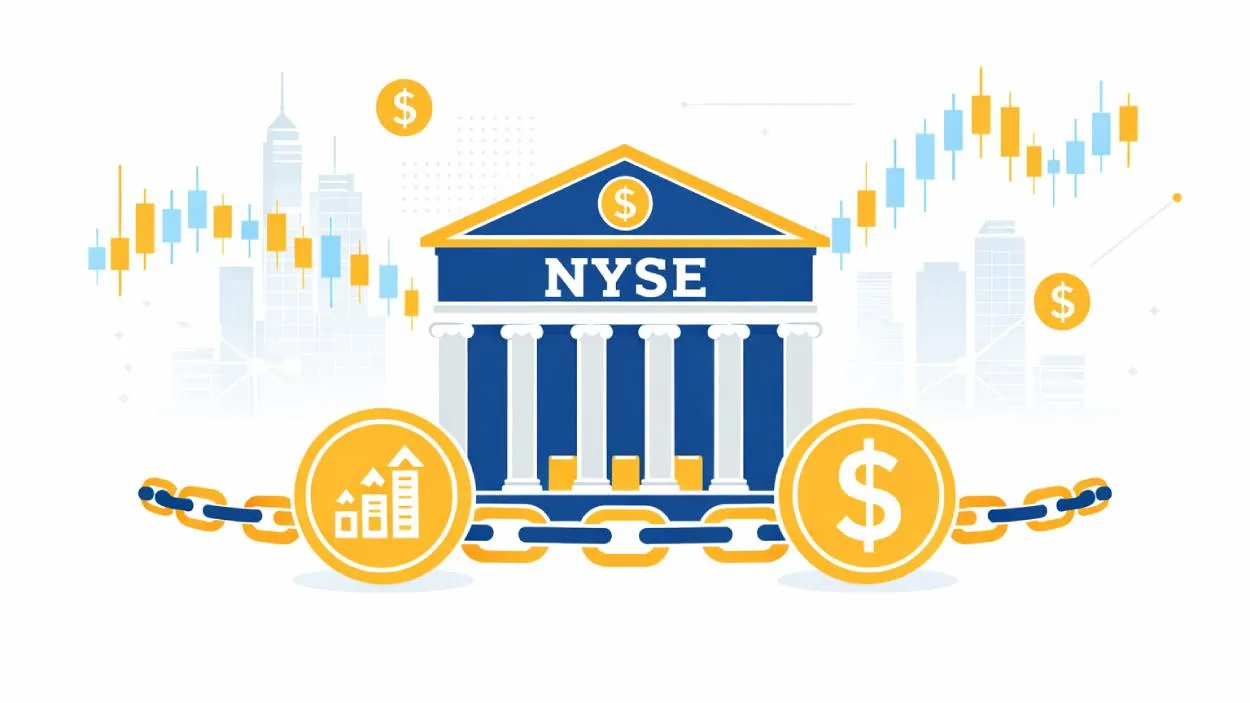







The New York Stock Exchange is stepping into the future of finance with a new platform designed for tokenized securities and around-the-clock trading.
Quick Summary – TLDR:
- NYSE is building a platform for tokenized stock trading and instant settlement.
- It aims to enable 24/7 operations, stablecoin funding, and blockchain-based post-trade.
- The system supports both tokenized versions of traditional stocks and natively digital assets.
- Part of ICE’s broader digital strategy involving banks like BNY and Citi.
What Happened?
The New York Stock Exchange (NYSE) has announced its plans to develop a new trading platform focused on tokenized securities, a move that could modernize how equities and ETFs are bought and sold. This platform will allow 24/7 trading, instant settlement, and fractional investments using stablecoins, all pending regulatory approval.
The NYSE is going all-in on tokenization.
— Ondo Finance (@OndoFinance) January 19, 2026
The world’s most iconic stock exchange just announced plans for 24/7 trading and instant settlement of tokenized securities.
“Tokenization has the potential to bring greater efficiency, transparency and accessibility to capital… pic.twitter.com/JajKg1zX0T
NYSE’s Leap Into Blockchain
The new NYSE platform will use its in-house Pillar matching engine alongside blockchain-based post-trade infrastructure. This hybrid model is designed to support multiple blockchains for both settlement and custody, allowing greater flexibility and resilience in handling digital assets.
Here’s what the platform promises:
- Tokenized trading that mimics crypto markets, operating 24/7.
- Instant settlement via blockchain, bypassing the traditional two-day wait.
- Orders priced in dollars rather than shares, enabling fractional ownership.
- Stablecoin-based funding, helping streamline liquidity movement.
Once approved, the platform will support both:
- Tokenized versions of traditional securities
- Natively issued digital assets
Both types of tokenized assets will carry the same dividend and governance rights as conventional shares, ensuring investor protection remains intact. The venue will be open to qualified broker-dealers under non-discriminatory access rules.
ICE’s Bigger Digital Vision
This move is part of Intercontinental Exchange’s (ICE) broader strategy to modernize financial infrastructure. ICE, the NYSE’s parent company, is also preparing its global clearing systems to handle tokenized collateral and 24/7 operations.
To power this shift, ICE is partnering with major banks including BNY and Citi. These partnerships will allow:
- Tokenized deposits to flow through ICE’s clearinghouses.
- Clearing members to move money outside standard banking hours.
- Support for global margin and funding needs across time zones.
This builds on ICE’s earlier efforts, including previous collaborations with stablecoin issuer Circle, and points toward a future where capital markets run non-stop with tokenized assets at their core.

NYSE vs Nasdaq
Interestingly, Nasdaq is also pursuing a similar vision but with a different model. Nasdaq has applied to the SEC for approval to handle tokenized stocks within its existing exchange, letting dealers choose whether they prefer digital or conventional form during settlement. In contrast, NYSE is creating a separate venue entirely focused on tokenized assets, making its infrastructure more purpose-built for this new market.
Additionally, although the Depository Trust Company (DTC) received SEC approval in December to support multiple tokenized trading venues starting in late 2026, NYSE has not confirmed any plans to use the DTC infrastructure for its initiative.
SQ Magazine Takeaway
Honestly, this is a big deal. I’ve been watching the slow march of traditional finance toward blockchain, and this feels like a leap rather than a step. The NYSE getting into tokenized securities means we’re not talking about fringe innovation anymore. We’re talking about the heart of Wall Street going digital. Fractional shares, stablecoins, instant settlement, and trading at 3 a.m.? That’s not just cool, that’s game-changing. I’m curious to see how regulators respond, but make no mistake, the future of stock trading might look a lot more like crypto than we ever expected.