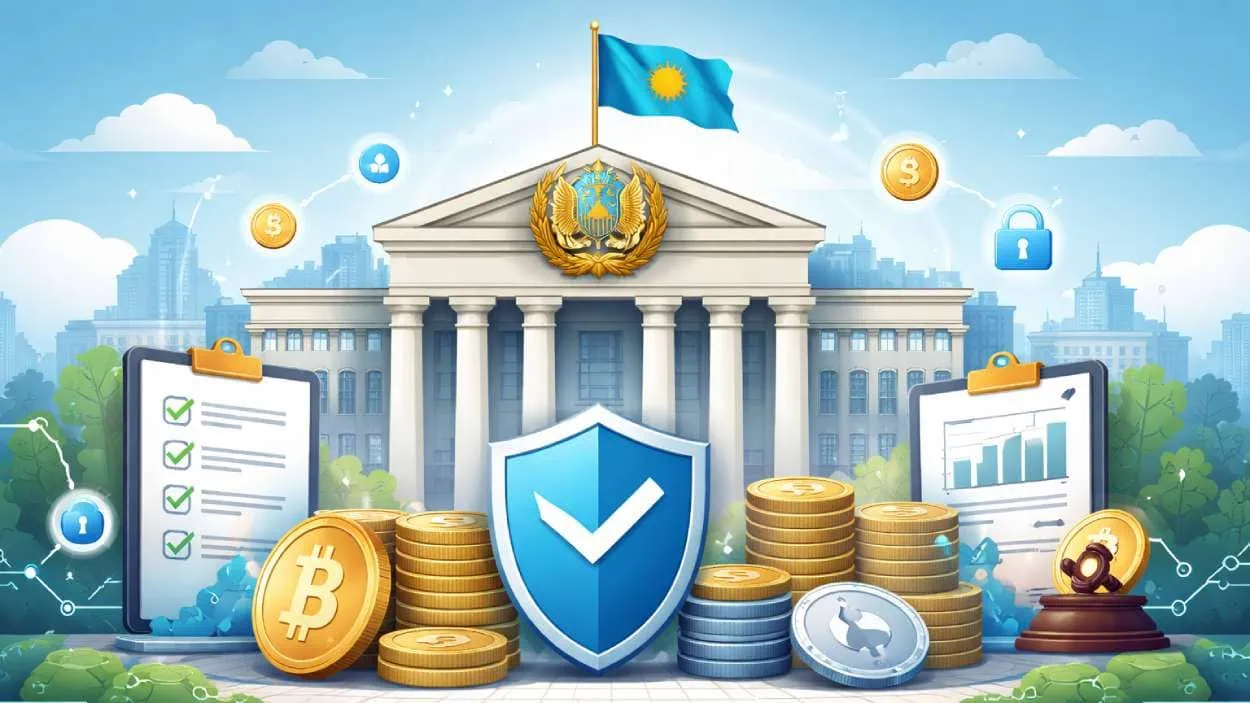






Kazakhstan has passed a sweeping new law that puts its central bank in full control of which cryptocurrencies can be traded legally within the country.
Quick Summary – TLDR:
- Only cryptocurrencies approved by the National Bank of Kazakhstan (NBK) can be legally traded.
- Crypto exchanges must now be licensed directly by the central bank.
- A new classification system covers digital financial assets, stablecoins, and more.
- Kazakhstan is aiming to balance innovation with investor protection and market stability.
What Happened?
In a major step toward regulating its digital economy, Kazakhstan enacted legislation giving the National Bank of Kazakhstan unprecedented authority over crypto markets. Effective early 2025, only digital financial assets (DFAs) approved by the central bank can be traded on licensed platforms.
This central bank-led approach replaces the country’s previously open environment and sets the stage for a more controlled crypto market. It is a dramatic policy shift for a country that was once a global hub for Bitcoin mining.
NEWS: 🇰🇿 Kazakhstan establishes a digital asset regulatory framework, licensing crypto exchanges and giving the central bank authority to approve tradable coins. pic.twitter.com/gxL7U61H0K
— CoinGecko (@coingecko) January 19, 2026
A New Era of Crypto Governance
Under the new law, the National Bank of Kazakhstan becomes the sole authority in licensing crypto exchanges and approving tradeable cryptocurrencies. This includes oversight of issuance, circulation, and monitoring of DFAs, which now have clearly defined classifications. Stablecoins, although recognized, are excluded from the DFA category but still fall under central bank scrutiny.
The regulatory framework grants the NBK the power to:
- Approve or deny listing of cryptocurrencies based on technical security, financial viability, and legal compliance.
- Maintain a whitelist of approved digital assets.
- Monitor trading activity and enforce transaction limits.
- Sanction or delist exchanges that breach regulations.
This strict structure aims to eliminate scams and safeguard investors, while integrating crypto into Kazakhstan’s broader financial system.
From Crypto Mining Leader to Regulated Market
Kazakhstan once produced over 18 percent of the global Bitcoin hashrate, attracting miners with cheap energy and loose regulations. However, concerns about power consumption, money laundering, and financial instability led the government to rethink its approach.
The shift began with mining regulations and pilot programs for a central bank digital currency (CBDC) starting in 2021. By 2023, draft legislation began circulating, culminating in this 2025 law signed by President Kassym-Jomart Tokayev in early 2026.

What It Means for Crypto Exchanges and Investors?
Exchanges must now undergo a formal licensing process and adapt to new compliance demands, including:
- Strict know-your-customer (KYC) and anti-money laundering (AML) protocols.
- Offering only assets approved by the NBK.
- Transparent reporting and risk management standards.
For investors, the upside is a safer trading environment with state-approved cryptocurrencies. The downside is limited access to the global crypto market and restricted exposure to innovative DeFi protocols and emerging tokens.
Questions remain about peer-to-peer (P2P) trading and decentralized exchanges (DEXs), which operate beyond centralized licensing frameworks. These could face heightened scrutiny or enforcement as the NBK tightens its grip.
Central Asia’s Fintech Aspirations
This regulatory pivot aligns with Kazakhstan’s ambition to become a Central Asian fintech leader. The Astana International Financial Centre (AIFC) plays a central role in attracting global tech firms and investors.
By combining innovation with regulation, Kazakhstan hopes to build a secure, scalable digital asset ecosystem. Experts suggest that this “controlled adoption” strategy could serve as a model for other emerging markets.
As Dr. Aisha Petrova, a regional financial regulation scholar, noted:
SQ Magazine Takeaway
I think Kazakhstan is taking a bold and calculated approach here. Instead of shutting down crypto or letting it run wild, they’re choosing to manage it from the top. As someone who has followed how chaotic crypto regulation can get globally, this kind of clarity might actually attract more serious investors and developers. Yes, the rules are strict and might slow down innovation, but if it creates a trustworthy environment for digital assets, the long-term benefits could be huge.