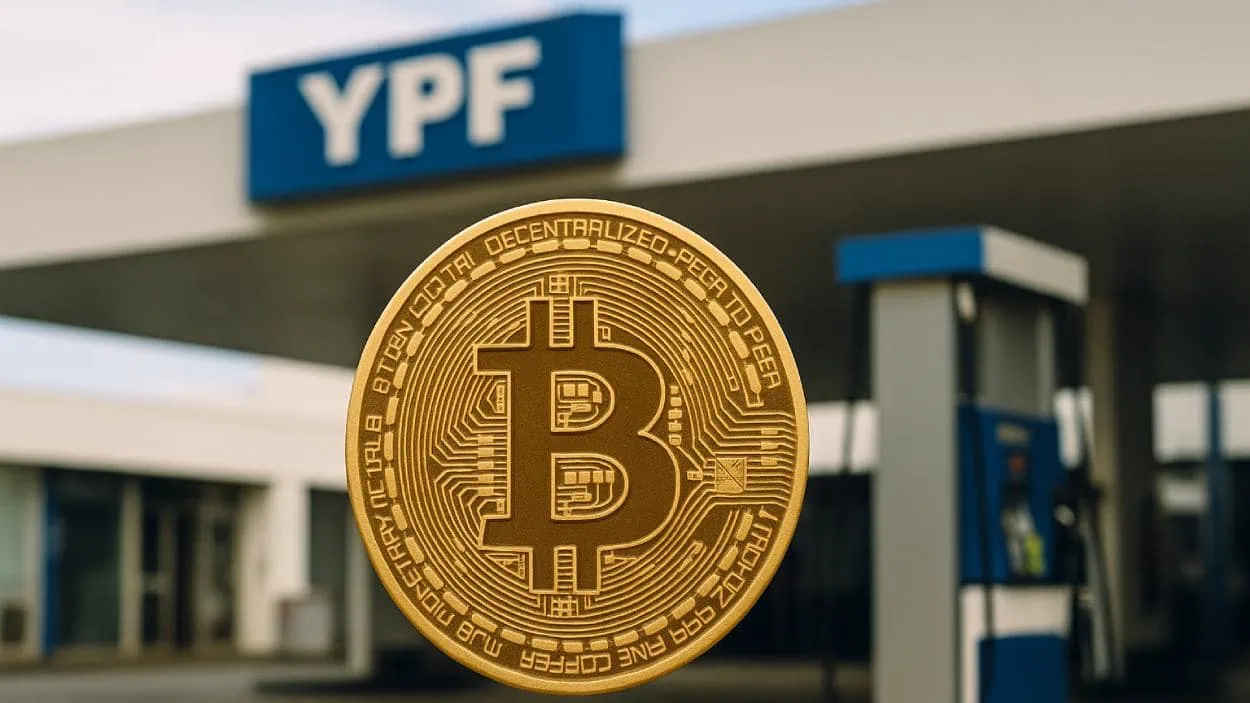







Argentina’s state-run oil company YPF is exploring a plan to accept cryptocurrency payments for fuel, reflecting the country’s growing shift toward digital assets amid a turbulent economy.
Quick Summary – TLDR:
- YPF is evaluating a crypto payment system for fuel, modeled after its US dollar payment program
- Payments would go through intermediaries like Lemon, Ripio, or Binance instead of direct wallet transfers
- Argentina ranks 20th globally in crypto adoption, with rising use of stablecoins for daily needs
- The move reflects broader efforts to stabilize the economy and reduce dependency on the peso
What Happened?
YPF, Argentina’s state-controlled oil company, is considering letting drivers pay for gasoline and diesel using cryptocurrencies. The system under review would use third-party platforms to convert crypto into local settlement, much like YPF’s current method for accepting US dollars.
This potential shift follows the country’s deepening reliance on digital currencies as a practical tool in daily life, driven by economic instability, inflation, and a weakening peso.
JUST IN: 🇦🇷 Argentina’s state energy giant YPF considers crypto payments for gasoline and diesel. pic.twitter.com/kVrlYCke2r
— Crypto India (@CryptooIndia) December 4, 2025
Crypto Payments Could Arrive at the Pump
YPF is currently studying a payment model that would allow customers to use cryptocurrencies such as Bitcoin or USD-pegged stablecoins at its service stations. While the company hasn’t announced a timeline or formal launch, early signs suggest the system would replicate its existing US dollar payment method. Here’s how it would work:
- Users scan a QR code to transfer funds to a YPF account at Banco Santander.
- The system displays the peso equivalent, using a reference rate from Banco Nación.
- Crypto intermediaries like Lemon, Ripio, or Binance would handle conversion, custody, and pricing.
The approach avoids direct currency exchange, instead functioning as a valuation and settlement mechanism through regulated platforms.
Argentina’s Dollarization Push Sets the Stage
This crypto evaluation is part of a broader trend triggered by Economy Minister Luis Caputo, who introduced measures to promote internal dollarization. YPF was the first in the country to accept direct US dollar payments for fuel, paving the way for alternative payment strategies like crypto.
Officials say the same structure used for dollar transactions will likely underpin the crypto version, allowing customers with eligible accounts to participate without needing to exchange currency themselves.
However, YPF has clarified that dollar and potential crypto payments remain limited to purchases within its own ecosystem. These are not foreign exchange operations and don’t involve buying or selling currencies in the traditional sense.

Crypto Integration Matches Real-Life Usage
The push for crypto at the fuel station mirrors the wider reality of how many Argentines already live. Faced with soaring inflation, limited access to formal financial tools, and a highly unstable currency, citizens have turned to stablecoins for basic needs.
Key insights on Argentina’s crypto landscape:
- Ranked 20th globally in the 2025 Crypto Adoption Index.
- Around 5 million daily users of cryptocurrency.
- Over 6,000 informal OTC locations for converting crypto to cash.
- Nearly 62% stablecoin usage rate as a hedge against peso volatility.
- Most major stores in large cities accept USD-pegged stablecoins.
Even the government has moved toward crypto legitimacy, recognizing Bitcoin as enforceable in contracts, and local platforms have surged in popularity.
Economic Crisis Accelerates Digital Shift
Argentina’s financial instability has made crypto not just viable, but necessary for many. Citizens use stablecoins to buy groceries, pay rent, and even receive wages. Digital wallets like Mercado Pago dominate retail transactions, and young professionals increasingly rely on Web3 income.
Economic indicators that explain the trend:
- An abandoned $20 billion bailout involving major US banks.
- A parallel market where traders exploit up to 7% spread using arbitrage.
- Deep public mistrust in financial institutions and the government.
YPF’s plan is not just about modernization. It is part of a much bigger effort to navigate around the peso’s shortcomings and embrace the tools that Argentines already use.
SQ Magazine Takeaway
Let me be honest. This isn’t some PR stunt or high-tech experiment. Argentina is in financial survival mode, and crypto is no longer optional. It’s already a lifeline for millions, and YPF tapping into that reality is both smart and overdue. As someone who watches how tech shifts economies, I think this move is hugely symbolic. It shows that digital currencies are not just for investment bros or early adopters. They’re becoming part of the fabric of everyday life in places where traditional money is failing.