






Venezuela is now collecting most of its oil revenue through USDT, showing how digital assets are helping the country bypass strict U.S. sanctions and keep its oil industry running.
Quick Summary – TLDR:
- About 80% of Venezuela’s oil revenue is now settled in USDT, a stablecoin pegged to the U.S. dollar.
- The shift began in early 2024 to circumvent U.S. financial sanctions on PDVSA and related entities.
- USDT has boosted oil production to nearly 1 million barrels per day, helping economic recovery.
- Challenges remain with capital controls, wallet freezes, and liquidity bottlenecks.
What Happened?
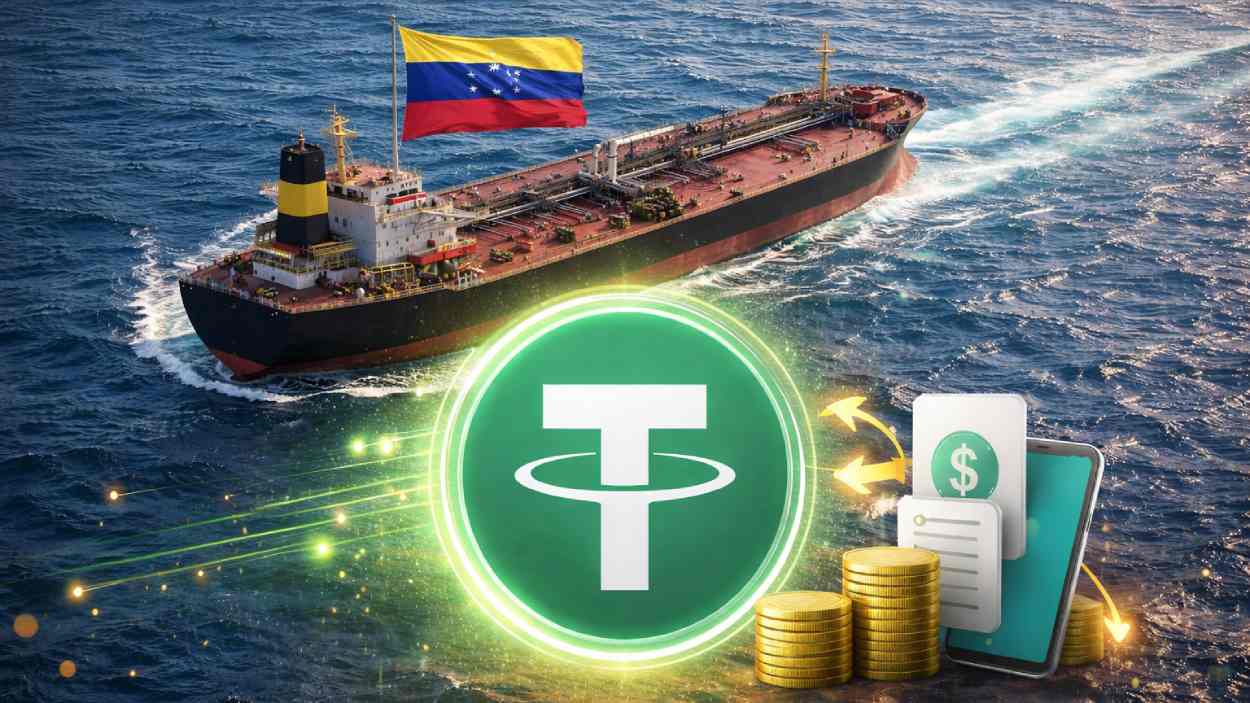
Venezuela has embraced USDT as a workaround to ongoing U.S. sanctions that have crippled traditional oil payments. According to economist Asdrúbal Oliveros, around 80% of the country’s oil export income is now being captured through stablecoins, especially USDT. This change has become a central feature of Venezuela’s energy and financial strategy.
📰 Venezuela collects 80% of its oil sales revenue in Tether’s USDT, says economist Asdrubal Oliveros. The country uses stablecoins to sustain its oil economy under US sanctions but faces challenges liquidating holdings.
— FYNX | Crypto News App (@Fynx_Crypto) December 22, 2025
Download Fynx App: https://t.co/YRuRkMtizq pic.twitter.com/tpP2dUFd41
Venezuela’s Digital Shift in Oil Trade
As U.S. sanctions intensified, especially against state-owned Petróleos de Venezuela S.A. (PDVSA), Venezuela was left with limited access to international banks and dollar-based payment systems. This pushed the country to explore stablecoins as a lifeline for its most critical sector: oil.
- PDVSA began demanding digital crypto wallet use for oil buyers in early 2024.
- Private firms were authorized to acquire USDT from select banks and crypto exchanges in return for bolívars.
- Once oil deals were closed, payments in USDT were routed into government-approved wallets.
This strategy enabled Venezuela to keep selling crude, particularly to buyers in China and other regions beyond the reach of U.S. jurisdiction. The result? Oil output has bounced back to about 1 million barrels per day, levels not seen in several years.
Tether, Sanctions, and the Liquidity Challenge
Although the use of USDT has helped restore trade continuity, it hasn’t solved every problem.
- Liquidity remains a concern, as converting USDT into fiat currency is restricted by capital controls.
- International banks are reluctant to touch Venezuelan-linked USDT due to fear of violating U.S. sanctions.
- This situation has created pressure in the local foreign exchange market, making dollar shortages worse and fueling inflation.
In 2024, Tether froze 41 wallets linked to sanctioned entities, further limiting access. Still, according to local data, Venezuelan firms moved around $119 million in crypto to private buyers over four months to maintain liquidity and business operations.

Political Pressure and Economic Recovery
Despite these financial hurdles, Venezuela’s oil sector has proven resilient:
- A 25% U.S. tariff on Venezuelan oil was imposed in March 2025, tightening the grip on exports.
- Former President Trump escalated matters with a naval blockade order, aiming to block sanctioned oil tankers from port access.
- Venezuela called the move a “grotesque threat”, further straining diplomatic ties.
Yet amid this pressure, the country’s broader economy showed signs of life. Venezuela’s GDP rose from $102.38 billion in 2023 to $119.81 billion in 2024, indicating economic activity is still moving forward. Meanwhile, the global stablecoin market is booming, with USDT alone holding a 60.22% market share out of $310 billion, according to DefiLlama.
SQ Magazine Takeaway
I find it fascinating how Venezuela, cornered by some of the harshest sanctions on the planet, is managing to keep its oil lifeline flowing using USDT. This isn’t just about crypto adoption. It’s about a country rewriting the rulebook on global finance when traditional routes are blocked. While this workaround shows real innovation, the liquidity headaches and rising inflation also show it’s far from a perfect solution. Still, Venezuela’s move into stablecoins could signal a broader trend for other nations facing similar constraints.