






Rwanda becomes the testing ground for a bold new AI healthcare initiative led by the Gates Foundation and OpenAI.
Quick Summary – TLDR:
- The Gates Foundation and OpenAI have launched Horizon1000, a $50 million initiative to bring AI to primary healthcare in Africa.
- Rwanda will be the first country to pilot the program, with plans to reach 1,000 clinics by 2028.
- The project aims to support frontline health workers, not replace them, by streamlining admin tasks and improving patient care.
- This comes amid a 27 percent drop in global health aid and growing health worker shortages across the continent.
What Happened?
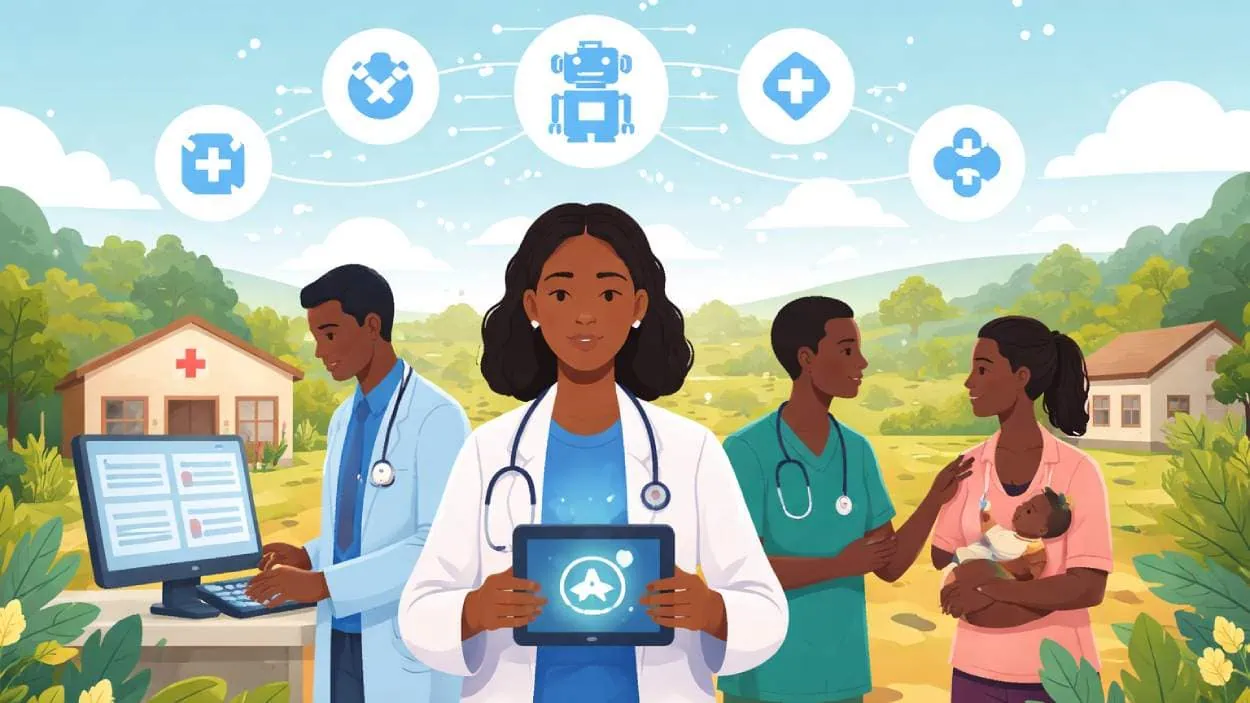
In response to shrinking foreign health aid and growing pressure on Africa’s fragile healthcare systems, OpenAI and the Bill and Melinda Gates Foundation have announced a new $50 million program. Called Horizon1000, the initiative will begin in Rwanda and expand to other African nations. Its goal is to bring AI-powered tools to 1,000 primary healthcare clinics by 2028, helping overburdened doctors and nurses manage rising demands with fewer resources.
We are excited to announce #Horizon1000, a new collaboration with @OpenAI committing $50 million in funding, technology, and technical support to strengthen primary health care across 1,000 clinics and communities in Africa.
— Gates Foundation Africa (@GatesAfrica) January 21, 2026
AI offers one of the most powerful ways to support… pic.twitter.com/9ZIt4v65aS
Rwanda Leads the AI Healthcare Push
Rwanda was chosen to lead this effort due to its solid record in digital health innovation. The country has invested in a national AI hub, expanded internet access, and integrated technology into community health programs. These factors made it an ideal launch pad for Horizon1000.
Paula Ingabire, Rwanda’s Minister of Information and Communications Technology and Innovation, emphasized the purpose of the initiative:
The broader goal is to create a scalable model that other African nations can follow.
What Horizon1000 Will Do?
Rather than promising futuristic AI diagnostics, Horizon1000 focuses on the nuts and bolts of clinic operations. The initiative targets practical uses of AI to boost efficiency, improve care quality, and relieve stressed healthcare systems. Some of the key features include:
- Clinical decision support, helping health workers apply complex national guidelines.
- Reducing paperwork by assisting with documentation, reporting, and reminders.
- Speeding up patient intake, triage, and referrals.
- Delivering health information in local languages to bridge communication gaps.
- Linking patient records to make clinic visits faster and more coherent.
According to Bill Gates, these improvements could make a typical clinic visit twice as fast and significantly better in quality.

Why It Matters Now?
The project arrives at a time when foreign health aid is falling sharply. In 2025, global development assistance for health fell by nearly 27 percent compared to 2024. These cuts, driven by countries like the United States, Britain, and Germany, have led to program disruptions in HIV care, maternal and child health, and essential services.
These disruptions have caused the first rise in preventable child deaths this century. With sub-Saharan Africa facing a shortage of nearly 6 million healthcare workers, traditional training efforts alone are not enough to close the gap.
“Using innovation, using AI, I think we can get back on track,” Gates told Reuters at the World Economic Forum in Davos.
Built for the Real World
What sets Horizon1000 apart from past digital health efforts is its focus on real-world integration, not just flashy tech demos. Tools will be customized to local clinical protocols, languages, and care models. The Gates Foundation is working with governments and health leaders to ensure the tools match each country’s system.
Sam Altman, CEO of OpenAI, stressed that success will be measured by real impact on health workers and patients, not just technology milestones. Altman said:
Challenges Still Ahead
Despite the promise, challenges remain. Many digital health pilots in low-income settings have failed to scale due to data issues, unreliable power, poor internet, or lack of oversight. Horizon1000’s success will depend heavily on infrastructure, local training, and continued funding.
There are also lingering concerns about data governance and system accountability. If an AI system makes an error, it’s not always clear who’s responsible.
SQ Magazine Takeaway
I think this initiative is one of the most grounded and meaningful uses of AI we’ve seen in healthcare so far. This isn’t about robots replacing doctors or wild tech experiments. It’s about showing up where help is needed most. If AI can genuinely cut down paperwork, guide decision-making, and help health workers spend more time with patients, that’s a big win. But the tech only works if it respects the people using it. Rwanda is setting a bold example, and I’ll be watching closely to see how Horizon1000 evolves. Hopefully, it becomes a blueprint for how tech can serve, not overshadow, humanity.