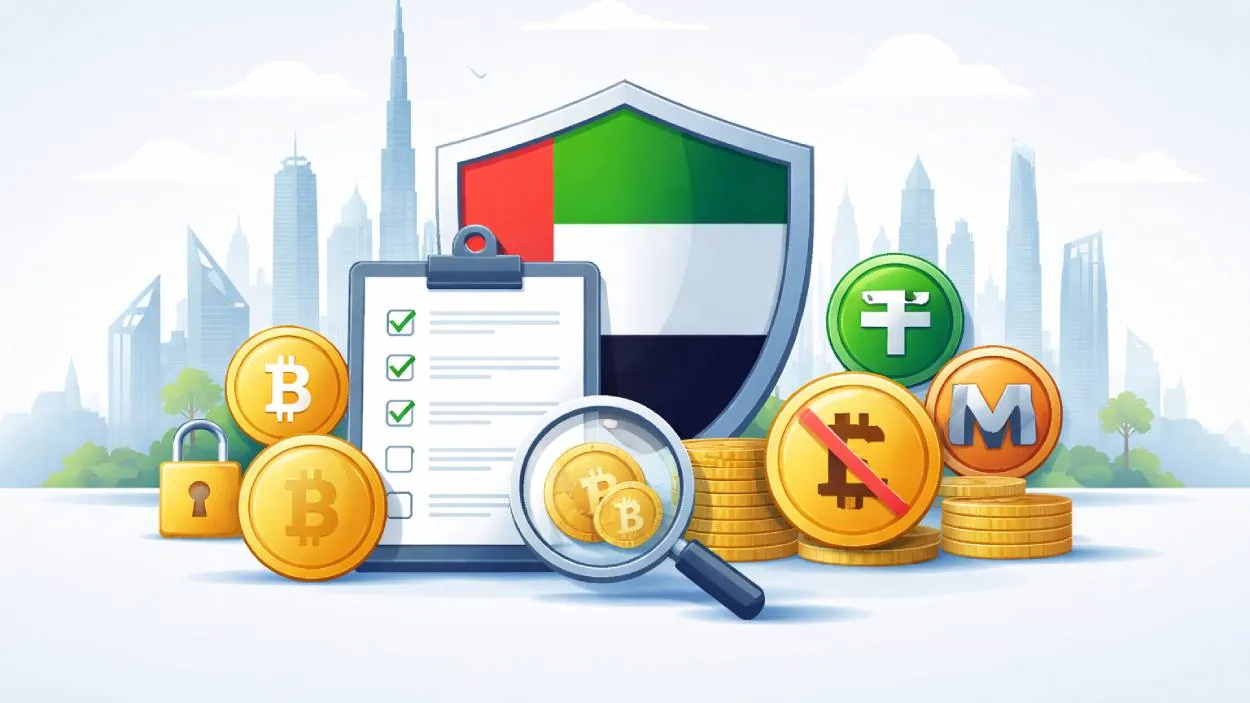







Dubai’s financial regulator has rolled out sweeping new rules targeting privacy coins and reshaping how stablecoins are treated within its main financial zone.
Quick Summary – TLDR:
- Privacy tokens like Monero and Zcash are now banned from use within the Dubai International Financial Centre (DIFC).
- Stablecoin rules were updated, now requiring fiat-backed tokens with transparent and liquid reserves.
- Token approval shifts to crypto firms, who must now assess and justify asset suitability.
- The changes reflect Dubai’s push to align with global financial crime and compliance standards.
What Happened?
The Dubai Financial Services Authority (DFSA) has officially implemented a revised Crypto Token Regulatory Framework, effective January 12. The biggest changes include a ban on privacy-focused cryptocurrencies and a stricter definition of stablecoins. In a major procedural shift, licensed firms will now be responsible for evaluating crypto tokens rather than relying on DFSA approval.
JUST IN: 🇦🇪 Dubai bans privacy tokens and tightens stablecoin rules as part of broader reset of its crypto regulatory framework. pic.twitter.com/CsY5KMbbdT
— Whale Insider (@WhaleInsider) January 12, 2026
Privacy Tokens Face Full Ban Inside DIFC
Under the new rules, privacy tokens are no longer permitted for any regulated use within the DIFC. This includes trading, promotion, fund management, and derivative activities involving these assets. The DFSA cited anti-money laundering (AML) and sanctions compliance risks as key reasons behind the ban.
Elizabeth Wallace, associate director for policy and legal at the DFSA, made it clear the decision aligns with international expectations:
According to the DFSA, the Financial Action Task Force (FATF) requires all parts of a crypto transaction to be identifiable, including the originator and beneficiary. Privacy coins like Monero and Zcash intentionally obscure that information, making compliance virtually impossible.
The ban also applies to mixers, tumblers, and other privacy-enhancing tools. Although this ban impacts regulated entities operating within DIFC, individuals can still hold these coins in private wallets. This move places Dubai alongside jurisdictions like the European Union, which has similarly limited the use of privacy coins under MiCA regulations.
Stricter Stablecoin Standards
The DFSA also clarified what constitutes an acceptable “fiat crypto token”, essentially its term for stablecoins. To be eligible under the new framework, stablecoins must:
- Be pegged to a fiat currency.
- Be backed by high-quality, liquid assets.
- Be able to meet redemption demands during stress periods.
This excludes algorithmic stablecoins and tokens with unclear or volatile reserve assets. For example, Ethena’s USDe does not qualify under the new rules. While not banned, it won’t be treated as a stablecoin and will fall under the broader crypto token category.
So far, the DFSA recognizes Circle’s USDC and EURC, along with Ripple’s RLUSD, as compliant fiat-backed stablecoins. Other popular tokens like DAI and Frax are excluded due to their reserve composition, which may include crypto assets or private credit.

Firms Now Responsible for Token Vetting
In a major departure from previous practice, the DFSA will no longer assess individual crypto tokens for approval. Instead, it will follow a model similar to Abu Dhabi’s ADGM, where licensed firms must assess whether a token is suitable for their use cases.
This means firms are required to:
- Conduct due diligence on tokens they intend to list or use.
- Document their assessments.
- Keep these decisions under ongoing review.
Wallace said this industry-led model was influenced by market feedback and aims to support a more mature and accountable crypto ecosystem.
SQ Magazine Takeaway
I think this is Dubai sending a clear signal: crypto can thrive here, but only within strict compliance boundaries. The full ban on privacy tokens shows how seriously the DFSA takes international rules on transparency and financial crime. Meanwhile, pushing token approval onto firms gives them more power, but also a lot more responsibility. This approach could set a global example for how to balance innovation with regulation. If you’re building or investing in crypto, especially in the region, understanding and aligning with these new rules is now non-negotiable.