






Customer data privacy directly influences how companies operate and how consumers choose brands. As digital transactions, AI systems, and connected devices expand, concerns around data collection, misuse, and breaches continue to grow. Privacy now affects e-commerce conversions, healthcare data management, financial services adoption, and subscription retention. The statistics below outline how consumer expectations, trust, and behavior are evolving across the United States and globally.
Editor’s Choice
- 73% of consumers are willing to share personal data when they receive clear value in return.
- 75% of consumers say they will not purchase from organizations they do not trust with their data.
- 63% trust financial brands that publish transparent data policies.
- 46% of consumers feel they cannot effectively protect their personal information.
- 86% say privacy matters, and they want greater control over their information.
- 47% have switched companies because of poor data practices.
- Only 19% of enterprises report full visibility into their data processing chains.
Recent Developments
- Data privacy laws now protect over 79% of the global population.
- As of 2025, 144 countries have enacted data protection or privacy legislation.
- Privacy risks related to generative AI increased from 22% in 2025 to 34% in 2026.
- 90% of organizations cite AI adoption as a major driver of expanded privacy programs.
- 96% of companies say strong privacy frameworks support innovation.
- 26% of privacy professionals predict a material breach in 2026 due to staffing or budget limits.
- Only 19% of enterprises maintain end-to-end visibility into data flows.
- Third-party vulnerabilities accounted for 57% of reported breaches in 2025.
Apps That Collect the Most Personal Data
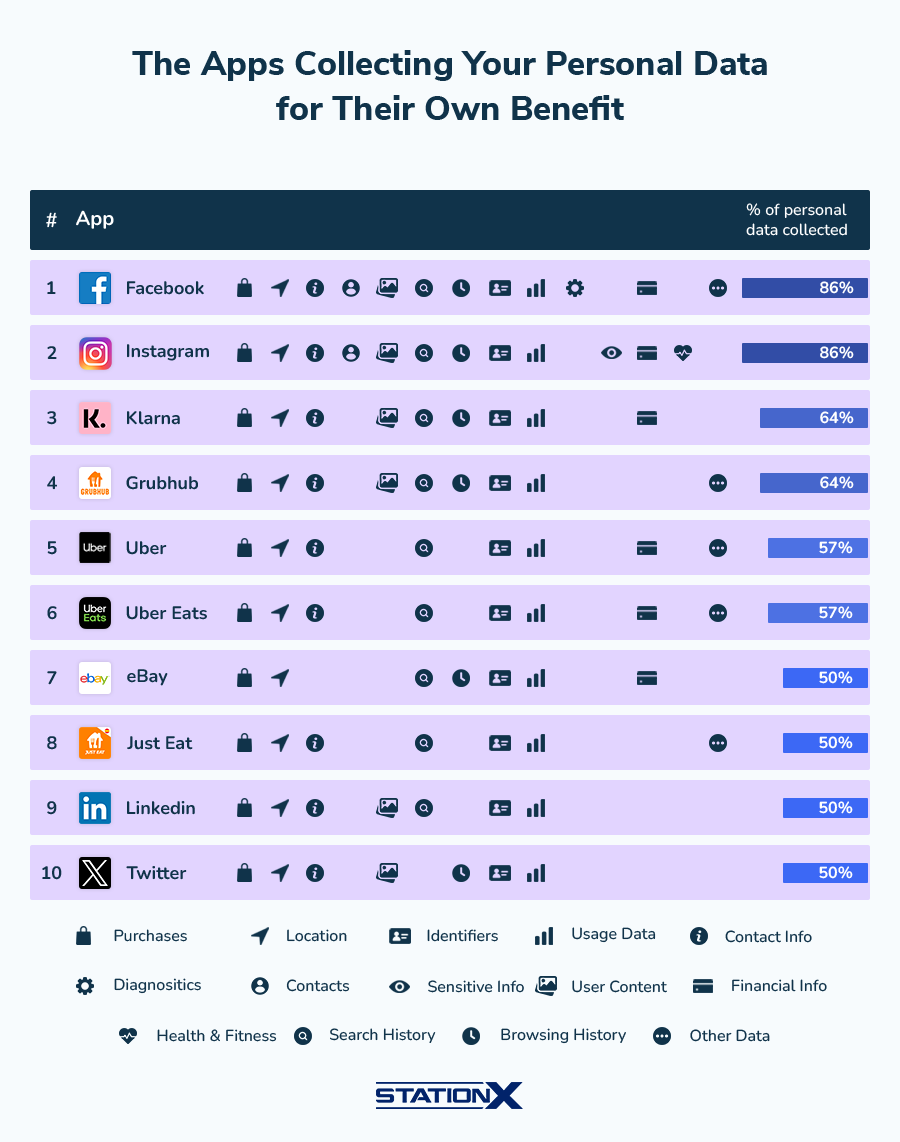
- Facebook and Instagram collect the highest share of personal data at 86% each, topping the list.
- Klarna and Grubhub follow, each gathering about 64% of user data.
- Uber and Uber Eats collect roughly 57%, showing how ride and delivery apps track users.
- eBay, Just Eat, LinkedIn, and Twitter (X) each collect around 50% of personal data.
- Social media apps dominate the top spots, highlighting their heavy data collection practices.
- Food delivery and shopping apps also gather large amounts of information to personalize services.
- Even professional networks like LinkedIn collect significant user data.
- Overall, every app on the list collects at least half of the users’ personal data.
Customer Attitudes Toward Data Privacy
- 86% of consumers say data privacy is important to them.
- 46% feel they cannot effectively protect their personal information.
- 47% of privacy-conscious consumers have switched providers over data concerns.
- 72% believe responsible AI use is essential to protecting personal data.
- 53% report awareness of local or national privacy laws.
- 73% say they are more concerned about privacy today than a few years ago.
- 65% believe it is nearly impossible to live a daily life without being tracked.
- Fewer than 30% have requested data deletion from a company.

Customer Trust and Brand Perception
- 75% avoid companies they believe misuse personal data.
- 63% trust financial institutions more when policies are transparent.
- More than 60% say privacy practices influence overall brand perception.
- 52% of consumers would pay more for brands they trust with their data.
- Over 45% report reduced trust in a company after a publicized breach.
- 38% look for visible privacy certifications before engaging with a new brand.
Cost Per Record in Data Breaches by Data Type
- Customer PII costs the most at $183 per record, making it the most expensive data to lose.
- Employee PII follows closely at $181 per record, showing high risk for internal data leaks.
- Breaches involving other corporate data cost about $168 per record on average.
- Loss of intellectual property costs around $156 per record, reflecting the value of trade secrets.
- Anonymized customer data (non-PII) has the lowest cost at $138 per record, but still causes major losses.
- Overall, records that identify people directly lead to the highest breach costs.
- Even non-personal data breaches still create significant financial damage for companies.

Willingness to Share Personal Data
- 73% are willing to share information for rewards or personalized services.
- Around 30% refuse to share personal data under any circumstances.
- 55% are more likely to share data with brands they already trust.
- 48% require clear explanations of data use before agreeing to share information.
- 41% will abandon checkout if asked for unnecessary personal details.
- 36% consider sustainability or ethical practices before sharing data.
- 29% will share limited data only if opt-out options are simple and visible.
- 25% feel comfortable sharing contact details but not financial or health information.
Customer Expectations for Data Transparency and Control
- 86% say transparency about data use is more important than five years ago.
- 81% expect clear explanations before agreeing to data collection.
- 75% want proactive notifications when privacy policies change.
- 72% expect simple opt-out options for targeted advertising.
- 69% believe companies should collect only necessary data.
- 64% expect the ability to download or delete their personal data.
- 58% reviewed a privacy policy before making a purchase in the past year.
- 52% would stop using a service if they could not manage their stored data.
- 47% want privacy dashboards to track how their information is used.
Customer Behavior Changes Due to Privacy Concerns
- 47% have switched brands due to privacy concerns.
- 44% reduced online activity after learning about a data breach.
- 39% deleted a mobile app over excessive permissions.
- 71% regularly clear cookies or browsing history.
- 68% use private browsing modes.
- 57% unsubscribe from marketing emails due to privacy concerns.
- 42% avoid smart home devices because of tracking fears.
- 29% disable location tracking, even if it limits functionality.

Impact of Data Privacy on Purchasing Decisions
- 75% say data protection influences purchasing decisions.
- 52% would pay more for products from privacy-focused brands.
- 48% have abandoned an online purchase due to privacy concerns.
- 60% review a company’s data reputation before subscribing to digital services.
- 41% refuse transactions when asked for excessive personal details.
- 67% are less likely to buy from a company after a breach.
- 55% of Gen Z factor privacy into subscription renewals.
- 46% check third-party reviews about security practices.
- 38% say visible certifications increase purchase likelihood.
Consent, Cookies, and Tracking Preferences
- 79% of websites display cookie consent banners.
- 65% click “reject all” when given complex cookie choices.
- 54% prefer granular consent controls.
- 73% believe tracking should default to minimal unless users opt in.
- 62% feel overwhelmed by frequent cookie pop-ups.
- 58% admit to accepting cookies without reading details.
- 47% use browser extensions to block trackers.
- 34% adjust mobile app tracking settings regularly.
- 28% disable cross-site tracking features.
Customer Use of Privacy Tools and Settings
- 68% of U.S. adults use at least one privacy tool.
- 42% use VPN services.
- 49% rely on ad-blocking software.
- 37% enable multi-factor authentication.
- 31% use password managers.
- 26% have requested data deletion under privacy laws.
- 33% updated social media privacy settings in the past year.
- 21% use encrypted messaging apps as their primary communication tool.
- 17% participate in data opt-out registries.

Perceived Risks vs Benefits of Data Sharing
- 79% believe personalization benefits do not outweigh privacy risks.
- 65% worry about secondary data use without consent.
- 59% fear identity theft.
- 52% dislike targeted advertising resulting from data collection.
- 48% believe companies collect excessive data.
- 44% feel they lose control once data is shared.
- 38% accept limited data sharing for discounts or rewards.
- 35% feel comfortable sharing data when safeguards are clearly explained.
- 29% view improved service as a reasonable tradeoff.
Customer Preferences by Data Type (Financial, Health, Location, etc.)
- 84% consider financial information the most sensitive.
- 78% rank Social Security numbers and government IDs as highly sensitive.
- 71% say medical records require the strongest protection.
- 69% worry about real-time location tracking.
- 63% are concerned about biometric data.
- 58% worry about sharing browsing history.
- 54% are comfortable sharing contact details but not financial data.
- 41% would avoid wearable health devices if unsure about storage practices.
- 36% trust banks more than social media platforms with personal data.
Generational Differences in Data Privacy Attitudes
- 72% of Gen Z express concern about social media tracking.
- 64% of Millennials actively manage privacy settings.
- 58% of Gen X worry about financial fraud from data leaks.
- 61% of Baby Boomers cite identity theft as their top concern.
- 49% of Gen Z are willing to trade data for personalization.
- 45% of Millennials have used a VPN in the past year.
- 39% of Boomers find privacy settings difficult to navigate.
- 53% of Gen X review privacy policies before major purchases.
- 47% of Gen Z trust brands that explain privacy practices clearly on social platforms.
Regional and Country-Level Customer Privacy Trends
- 79% of Europeans are aware of GDPR protections.
- 68% of U.S. adults support stronger federal privacy legislation.
- 73% of Canadian consumers expect compliance with national privacy laws.
- 65% of Australians would switch brands after a breach.
- 62% of UK consumers prioritize privacy over personalized advertising.
- 57% of Indian internet users worry about biometric data storage.
- 54% of Brazilian consumers say transparency drives loyalty.
- 48% of U.S. small businesses report rising compliance costs from state laws.
- 44% of global consumers express concern about cross-border data transfers.
Frequently Asked Questions (FAQs)
99% of organizations reported at least one tangible benefit from privacy investments in 2026.
93% of organizations planned to allocate more resources to privacy and data governance.
96% of organizations agreed that strong data controls help enable agility and innovation.
75% of consumers said they avoid brands that handle data poorly.
Conclusion
Customer data privacy today directly influences brand trust, revenue growth, and long-term retention. Consumers expect transparency, control, and responsible data use across every digital interaction. At the same time, they continue to weigh personalization benefits against measurable security risks.
For U.S. businesses and global organizations alike, privacy is now a competitive differentiator. Companies that simplify data practices, reduce unnecessary collection, and communicate clearly will build stronger customer relationships in an increasingly privacy-driven market.