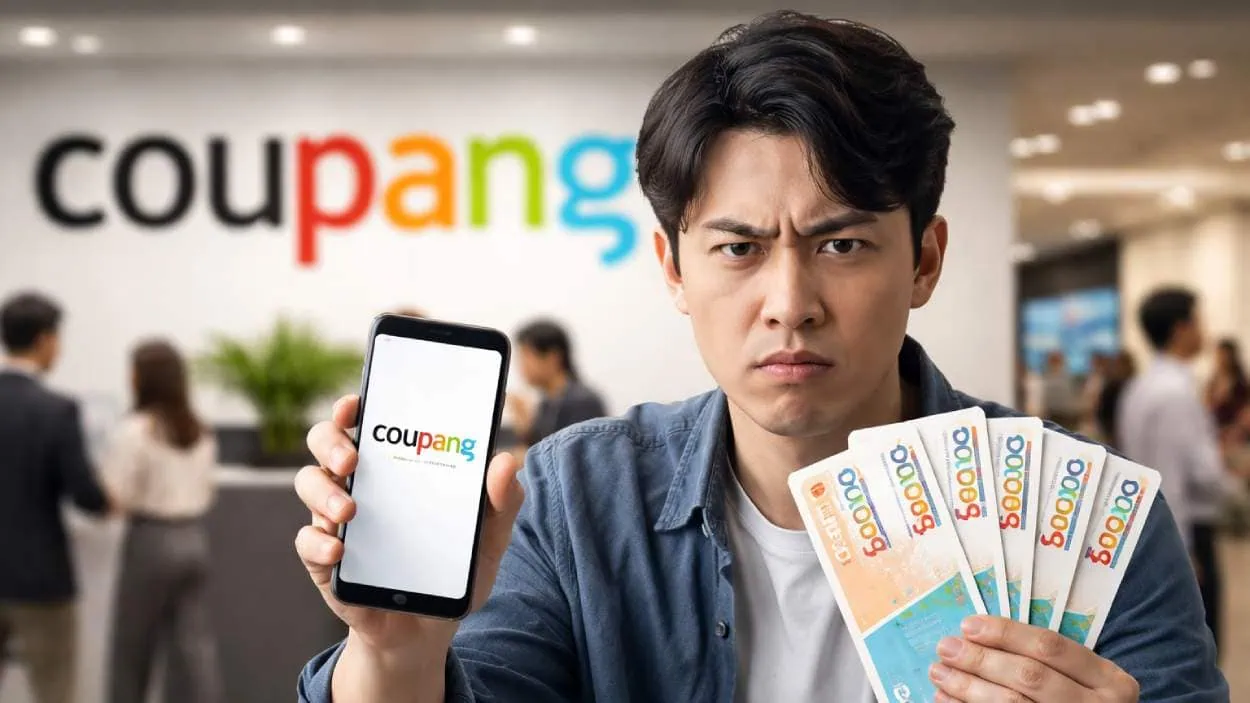







South Korea’s largest e-commerce company is under fire for offering shopping vouchers instead of cash to compensate users after a massive data breach.
Quick Summary – TLDR:
- Coupang is compensating 34 million users with $1.1 billion in shopping vouchers after a major data leak.
- Each affected user will receive ₩50,000 in vouchers, spread across various Coupang services including Coupang Eats, Alux, and Coupang Travel.
- Public backlash has erupted, with critics calling the vouchers a marketing ploy and demanding cash-based restitution.
- Lawmakers and consumer rights groups are questioning the legality and sincerity of Coupang’s approach.
What Happened?
Coupang announced it would compensate users affected by a recent data breach with ₩1.69 trillion (around $1.1 billion) in vouchers, not cash. The move has sparked intense public and political backlash. The data leak, disclosed on November 18, reportedly affected 34 million users, making it one of the largest breaches in South Korea’s history.
Coupang just told millions of users that exposing names, emails, delivery addresses and even apartment entry codes is worth ₩50,000 in coupons.
— Richard (@sejcore) December 29, 2025
This is not compensation.
This is negligence wrapped in marketing.#coupang #ConsumerRights #CyberSecurity pic.twitter.com/RN1Hn8Dbiq
Coupang’s Compensation Plan Details
The company plans to begin the compensation process on January 15, 2026. Eligible users, including those who have since deleted their Coupang accounts, will receive ₩50,000 in vouchers divided across four of Coupang’s platforms:
- ₩5,000 each for Coupang and Coupang Eats.
- ₩20,000 each for Coupang Travel and Alux, Coupang’s luxury marketplace.
Harold Rogers, Coupang Korea’s interim CEO, said in a public statement, “We deeply regret the concern caused and have prepared this plan as a responsible measure to protect our customers’ trust.” Founder Kim Bom also apologized, calling the delay in addressing the issue “poor judgment”, and admitted that he should have spoken out sooner.
Why Critics Are Calling It a Marketing Strategy?
Despite the apology and the record-setting payout, Coupang’s decision to issue vouchers has drawn fierce criticism from lawmakers, consumer groups, and users online.
- Choi Min-hee, chair of the National Assembly’s Science, ICT, Broadcasting and Communication Committee, criticized the vouchers as “coupons for services no one uses”.
- The Korea National Council of Consumer Organizations labeled the move a “mockery of consumers”, arguing that tying the vouchers to purchases effectively turns a crisis into a marketing opportunity.
- Legal experts noted that using coupons allows Coupang to record the amount as deferred sales, limiting immediate financial loss while appearing to pay restitution.
Roughly 80 percent of the total voucher value is tied to less popular platforms like Coupang Travel and Alux, raising concerns that many users will not be able to fully utilize the vouchers.

Timing Raises More Eyebrows
The announcement was made just one day before a two-day parliamentary hearing on the data breach. This timing has led some lawmakers and observers to accuse Coupang of trying to influence public opinion and defuse political scrutiny.
Critics have also pointed out that the announcement coincided with Coupang’s quarterly financial disclosures, possibly aimed at reassuring investors amidst mounting regulatory pressure and the start of class-action lawsuit registrations.
Legal Fallout and Consumer Response
More than 12,000 people have already registered for a joint class-action lawsuit in Daegu alone. Multiple law firms have launched litigation portals seeking cash compensation instead of vouchers.
Online sentiment is overwhelmingly negative. Polls on major platforms like Naver and Kakao show over 70 percent of users rejecting the compensation plan as inadequate or insincere.
Consumer advocacy groups argue that the plan may even violate the Personal Information Protection Act, which mandates “proportionate and effective” redress.
SQ Magazine Takeaway
I get why people are mad. You cannot just leak personal data from 34 million people and then hand them coupons that basically send them back to shop more on your platform. That’s not an apology, that’s a business strategy. The backlash isn’t just about the breach, it’s about trust. People want accountability, not discount codes. Coupang may have made one of the largest restitution offers ever seen in Korea, but the way it’s structured feels like a tone-deaf move in the age of consumer rights. If they truly want to regain trust, they need to start listening and maybe offer actual cash.