






Consumer trust in technology continues to define how Americans adopt digital products, share personal data, and engage with artificial intelligence. Today, trust is neither collapsing nor fully recovering; it is evolving.
From smart home ecosystems and wearable health devices to AI-powered banking tools and automated customer service, trust directly influences spending behavior, brand loyalty, and long-term adoption. The data below outlines where trust stands today, how it shifted from last year, and what it means for businesses operating in a privacy-sensitive economy.
Editor’s Choice
- 34% of organizations cite data leaks tied to generative AI as their top security concern in 2026.
- 86% of companies plan to increase investment in AI-related data privacy protections over the next two years.
- 86% of consumers expect strong data privacy rights from online companies.
- 48% of individuals reported experiencing at least one data security failure in the past 12 months.
- 75% of Americans say they trust online information less than they did a few years ago.
- 74% of US wearable device users worry about how their health data is collected and shared.
Recent Developments
- Cybersecurity now ranks among the top three board-level priorities for 80% of enterprise leaders in 2026.
- AI-driven phishing attacks increased by 47% year over year in 2025.
- Consumers reported a 48% rise in security-related incidents compared with the previous year.
- 64% of consumers say advanced encryption and visible security measures would significantly increase their confidence in a brand.
- Zero-trust architecture adoption increased by 39% among US enterprises over the past two years.
- 67% of consumers now expect companies to clearly disclose AI use in customer interactions.
- Privacy-related litigation increased by 18% in 2025 compared with 2024.
- 72% of organizations expanded internal AI governance frameworks in response to public trust concerns.
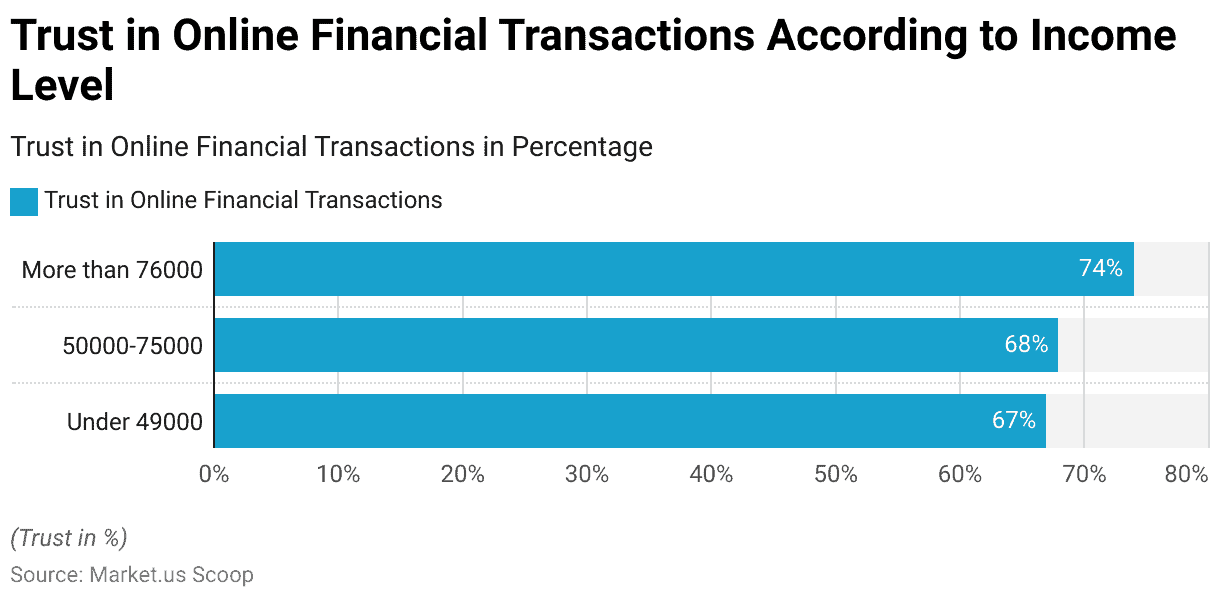
Trust in Online Financial Transactions by Income Level
- People earning more than 76,000 show the highest trust at 74%, indicating strong confidence in online financial services.
- Those in the 50,000–75,000 income group report 68% trust, slightly lower but still high overall.
- Individuals earning under 49,000 show 67% trust, nearly equal to the middle-income group.
- Higher income generally links to greater trust, but the gap between groups remains small.
- Overall, trust stays above two-thirds across all income levels, showing broad acceptance of online transactions.
Overall Consumer Trust Levels
- 86% of consumers expect companies to protect their data proactively.
- 63% believe that too much responsibility for cybersecurity falls on individuals rather than companies.
- 48% of Americans experienced at least one breach notification in the past year.
- Only 58% of wearable tech users feel confident that their devices adequately safeguard personal data.
- 75% of Americans say online misinformation has reduced their overall trust in digital platforms.
- Trust in big tech companies declined by 6 percentage points year over year in 2025.

Trust in AI and Emerging Tech
- 52% of Americans say they are more concerned than excited about AI’s growing presence in daily life.
- Only 10% report feeling more excited than concerned about AI adoption.
- 61% would feel uncomfortable with AI making hiring decisions without human oversight.
- 73% believe companies should disclose when AI systems are used in customer service.
- 42% of US adults say they have little to no trust in companies to deploy AI responsibly.
- 35% of device users have disabled AI features due to privacy concerns.
- 78% of executives say responsible AI governance directly impacts customer trust.
- 58% of consumers acknowledge AI improves personalization, yet 64% worry about how that personalization uses their data.
- Emerging markets report AI trust levels exceeding 65%, compared with 38% in North America.
Consumer Trust in Digital Services by Industry
- The Banking & Financial sector earns the highest trust at 42%, showing strong confidence in digital money services.
- Healthcare providers follow with 37% trust, reflecting growing acceptance of online health platforms.
- Consumer technology providers reach 32% trust, driven by everyday use of digital devices and services.
- Social media companies receive only 18% trust, indicating ongoing concerns about privacy and data use.
- Trust in government digital services stands at 14%, showing limited public confidence.
- Media & Entertainment ranks lowest with just 12% trust, suggesting skepticism toward online content platforms.
- Overall, essential services like banking and healthcare gain far more trust than media and social platforms.

Regional Differences in Trust
- Consumers in Southeast Asia report AI trust levels above 65%, compared with 38% in North America.
- 72% of consumers in India believe AI will positively impact economic growth.
- In Western Europe, 60% of consumers say GDPR increases their confidence in digital services.
- 49% of US consumers say national privacy regulation would improve their trust in tech companies.
- Latin American fintech trust levels exceed 55% in Brazil and Mexico.
- 68% of Japanese consumers express skepticism toward AI-generated news.
- 74% of Singapore residents report comfort using government-backed digital identity systems.
- African mobile money platforms report user confidence levels of 62%.
- Cross-border data concerns influence trust perceptions for 70% of global consumers.
Demographic Variations
- Adults aged 18 to 29 are twice as likely as those over 65 to say AI benefits outweigh risks.
- 71% of Gen Z consumers are comfortable sharing data for personalization, compared with 48% of Baby Boomers.
- 59% of college-educated adults say they understand AI basics, versus 34% of those with less formal education.
- Women are 8 percentage points more likely than men to report concerns about AI bias.
- 43% of rural Americans say limited broadband access affects their trust in digital services.
- Digitally skilled users are 1.8 times more likely to trust fintech platforms.
- 55% of small business owners say they trust cloud-based tools more than on-premise software.
Data Privacy Concerns
- 81% of Americans believe data collection risks outweigh the benefits.
- 76% of global consumers would stop doing business with a company they do not trust to protect their data.
- 63% say companies are unclear about how personal information is used.
- 90% of consumers want the right to permanently delete personal data.
- 58% have abandoned an online purchase due to privacy concerns.
- 70% say greater transparency around data practices would increase trust.
- 52% of wearable users worry about health data being sold to third parties.

Cybersecurity and Data Breaches
- Cybercrime is projected to cost the global economy $10.5 trillion annually.
- 72% of organizations experienced ransomware attacks in 2025.
- The global average cost of a data breach reached $4.45 million.
- In the US, average breach costs climbed to $9.48 million.
- Healthcare breaches average $10.93 million per incident.
- 60% of small businesses close within six months of a major cyberattack.
- 83% of companies report experiencing more than one breach.
- 57% of US adults now use multi-factor authentication, up from 45% two years earlier.
- AI-powered cyberattacks increased by 47% year over year.
Impact of Data Breaches
- Public companies see an average 7.5% stock price decline following major breach disclosures.
- 65% of consumers say they immediately lose trust in a brand after a breach.
- 32% would permanently stop doing business with a company following financial data exposure.
- Organizations with zero-trust frameworks reduce breach costs by nearly $1 million.
- Breach-related legal settlements increased by 18% year over year.
- 74% of consumers say transparent breach communication influences loyalty.
- Customer churn increases by an average 3% to 5% after high-profile cyber incidents.
- Repeat breach incidents increase regulatory scrutiny by 40%.
- Incident response delays increase overall financial impact by up to 22%.
Consumer Behaviors After Breaches
- 76% of consumers stop sharing personal data after a breach.
- 67% change passwords across multiple accounts after major incidents.
- 58% enroll in credit monitoring services after financial breaches.
- 53% enable multi-factor authentication following breach notifications.
- 41% read privacy policies more carefully after exposure to breach news.
- 39% reduce mobile app permissions post-incident.
- 28% switch to competitors after repeated cybersecurity failures.
- 45% may give a company a second chance if compensation or protection services are offered.

Factors Building Trust
- 81% say clear communication about data usage increases brand trust.
- 78% of executives report that cybersecurity investments strengthen customer relationships.
- Companies with strong privacy frameworks show 2.7 times higher loyalty scores.
- 72% of consumers prefer brands that offer simple data deletion controls.
- 66% trust platforms more when independent audits are published.
- 68% expect proactive notifications when privacy policies change.
- 64% say visible compliance certifications influence buying decisions.
- Ethical AI commitments increase adoption willingness among 59% of Americans.
- Transparent breach reporting reduces churn by up to 30%.
Regulatory Impact on Trust
- 60% of European consumers say GDPR increases digital trust.
- 49% of US adults say a national privacy law would make them more confident sharing data.
- 73% of executives say compliance improves brand reputation.
- Privacy compliance budgets increased by 57% in 2025.
- Companies with mature compliance programs report $1.2 million lower breach costs on average.
- 52% say current US privacy protections are insufficient.
- 74% would switch to brands headquartered in countries with stronger data protections.
Frequently Asked Questions (FAQs)
87% of consumers say businesses should disclose when AI is being used in an interaction.
90% of consumers believe they should always have the option to reach a real human instead of AI.
27% of consumers currently refuse to share any data with AI agents, even for personalized experiences.
43% of consumers say they would stop engaging with a brand entirely if their personal data were misused.
Conclusion
Consumer trust in technology today remains cautious but data-driven. Rising AI adoption, expanding digital services, and escalating cybersecurity threats continue to reshape public perception. Breach costs and even a single incident can erode years of brand equity. Meanwhile, organizations that prioritize transparency, regulatory compliance, AI governance, and proactive cybersecurity consistently outperform peers in customer retention.
For US businesses, trust now sits at the intersection of privacy rights, AI accountability, and cyber resilience. Consumers expect control, clarity, and protection. Companies that deliver on those expectations will not only reduce risk but also strengthen long-term competitive advantage in a trust-centered digital economy.