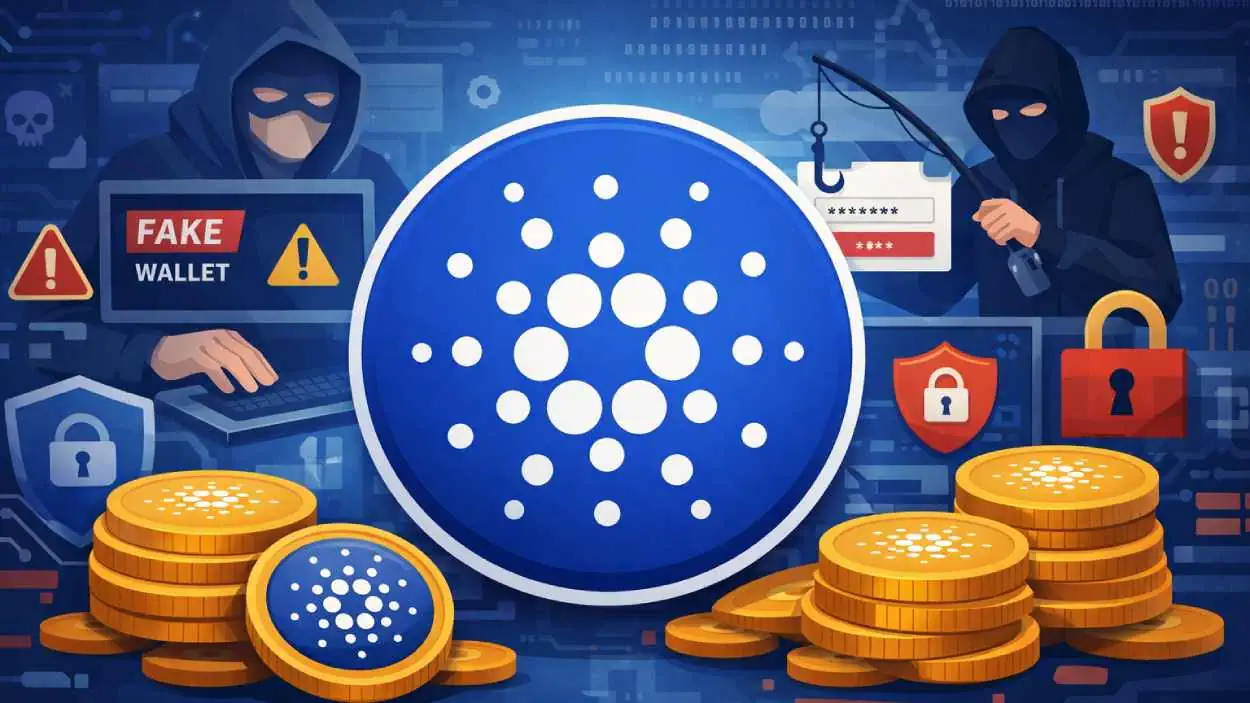







A highly targeted phishing campaign is exploiting Cardano users by distributing a fake version of the Eternl Desktop wallet in an attempt to steal sensitive data and gain full remote access to victims’ systems.
Quick Summary – TLDR:
- Fake Eternl Desktop wallet promoted through professional-looking phishing emails.
- Attackers lure victims using NIGHT and ATMA token rewards from the Cardano ecosystem.
- MSI installer drops LogMeIn Resolve remote access tool for persistent system control.
- Users urged to download wallets only from official sources.
What Happened?
Cardano users are being targeted by a sophisticated phishing attack that mimics official announcements for a new “Eternl Desktop” wallet. The fraudulent campaign uses polished emails referencing legitimate-sounding incentives like NIGHT and ATMA token rewards from the Diffusion Staking Basket program to create trust and trick users into installing malware.
The malicious installer, distributed through download.eternldesktop.network, is not digitally signed and contains the LogMeIn Resolve remote access tool, allowing attackers to control victims’ systems without their knowledge.
⚠️ALERT: CARDANO USERS TARGETED IN FAKE WALLET PHISHING CAMPAIGN
— Coin Bureau (@coinbureau) January 4, 2026
Sophisticated phishing attack is spreading fake “Eternl Desktop” announcements, luring Cardano users to install malware.
Urgent warnings are raised to download wallet software only from official sources. pic.twitter.com/755byP5Nko
How the Attack Works?
The phishing campaign spreads through fake emails that closely resemble official wallet release announcements. These emails are well-written, free of typos, and mention features like hardware wallet compatibility, local key management, and advanced delegation controls to lend credibility.
Victims are directed to download a 23.3 MB MSI file named Eternl.msi from a newly registered domain. Once installed, the fake Eternl application:
- Drops an executable file called unattended-updater.exe.
- Creates a folder in Program Files.
- Writes configuration files like unattended.json to silently enable remote access.
- Connects to GoTo Resolve servers using hardcoded credentials.
- Sends system event data in JSON format to external servers.
Security analysts have flagged this behavior as critical, warning that once the malware is installed, attackers gain long-term persistence, access to sensitive data, and can execute remote commands.
Why Cardano Users Are Being Targeted?
This attack is especially dangerous because it exploits ecosystem-specific knowledge, mimicking real governance incentives and staking programs within the Cardano community. By referencing known elements like NIGHT and ATMA tokens, attackers prey on users familiar with the blockchain’s staking rewards and governance structure.
The polished nature of the emails and use of a nearly identical interface to the real Eternl wallet means even savvy users could be fooled if they are not extremely cautious.

Warning Signs and How to Stay Safe?
Experts recommend users take the following actions to protect themselves:
- Only download wallet software from official sources, such as verified project websites or official GitHub repositories.
- Avoid clicking links in unsolicited emails, even if they appear professional.
- Check sender addresses and domains carefully. The phishing campaign uses download.eternldesktop.network, which is not affiliated with the official project.
- Use hardware wallets to store crypto securely offline.
- Enable two-factor authentication wherever possible.
- Stay skeptical of high-reward offers or announcements that demand immediate action.
Tools That Can Help
Several tools can help detect and defend against such phishing campaigns:
- Antivirus software like Malwarebytes or Bitdefender to catch malware payloads.
- Secure web browsers like Chrome or Firefox that warn about known phishing links.
- Email security services such as Proofpoint to filter suspicious emails.
- Hardware wallets like Ledger or Trezor for enhanced crypto security.
SQ Magazine Takeaway
I have to say, this kind of scam is especially frustrating because it blends deep knowledge of the Cardano ecosystem with psychological tricks that prey on community trust. As someone who closely follows the crypto space, I know how exciting staking rewards can be, but no token incentive is worth compromising your private keys. Always double-check domains, ignore too-good-to-be-true emails, and if you’re unsure, ask the community before taking action. In crypto, one wrong click can cost you everything.