






AI in the UK has moved beyond flashy demos. By 2026, “AI in daily life” is mostly quiet infrastructure: smarter customer support, faster triage in healthcare, better fraud detection in banking, personalized shopping offers, and productivity tools embedded into work software. The main shift is not that everyone suddenly became an AI power user; it’s that AI became a layer inside services that people already rely on.
UK policy and public-sector planning have also matured. Government guidance now emphasizes safe, effective use of AI, building on the National AI Strategy and a pro-innovation approach to regulation, while encouraging public-sector adoption where it improves services. At the same time, industry adoption is accelerating in high-trust sectors like banking and healthcare, where AI can deliver measurable benefits, but must be governed tightly.
This article breaks down what AI is doing in everyday UK life in 2026, what’s genuinely useful, and what still fails in real-world conditions.
What “Works” Means in 2026: Reliability Over Novelty
The AI tools that survive in daily use share three qualities:
- They reduce friction in repeated tasks (e.g., reporting fraud, booking appointments).
- They operate inside trusted systems (banks, NHS pathways, large retailers).
- They have guardrails (human review, audit logs, security controls, regulation).
Expert Comment: AI Succeeds When It Becomes Boring
The most valuable AI becomes “boring” because it’s predictable. If a system helps you book an appointment, detect fraud, or resolve a support issue faster and consistently, people adopt it without thinking. If it occasionally invents facts or fails under edge cases, it becomes a novelty, not a habit.
Healthcare: AI That Reduces Waiting, Not Trust
Healthcare is where UK citizens feel AI most directly, often without seeing it. The major value is not robotic doctors; it’s navigation, triage, and workflow automation that reduces bottlenecks.
AI Triage and Navigation: The Real Impact
Policy and research groups in the UK increasingly highlight that AI can reduce avoidable pressure on GP practices and NHS 111 call handling by improving triage and navigation, directing people to the right level of care. One analysis suggests improved AI-driven navigation could free up tens of millions of GP appointments per year and generate substantial productivity gains by reducing unnecessary routes through the system.
In parallel, NHS-facing innovation programs are promoting autonomous or semi-autonomous triage systems that can handle intake and route booking, aiming to reduce administrative load and speed up access.

Pharmacy Automation and “Care Where You Are”
The most visible shift for citizens is the gradual move toward “right care, right place.” Pilot schemes increasingly redirect non-urgent A&E visits toward community pharmacies. In some cases, pharmacies are deploying automated dispensing robots (high-throughput medication handling), freeing pharmacists to focus on consultations and prescribing pathways.
Expert Comment: The NHS AI Sweet Spot Is Workflow, Not Diagnosis
AI can support diagnostics, but everyday value comes faster from administrative and navigation systems: triage, appointment booking, patient messaging, and capacity planning. These reduce queues without asking citizens to “trust a black box” with life-and-death decisions.
Banking: AI That Helps You Fight Fraud and Get Answers Faster
In UK banking, AI that “works” is mainly about fraud prevention, digital customer service, and financial clarity. These are high-volume problems where speed matters.
Fraud and Scam Protection
Fraud is a major UK concern, and banks are under strong pressure to reduce losses and improve reporting speed. NatWest’s 2025 collaboration with OpenAI is an example of how banks are integrating AI into digital services to handle complex tasks, especially fraud identification, reporting, and resolution.
Reuters reported that NatWest aims to enhance its customer chatbot “Cora” and internal staff assistant tools, with the broader goal of improving service and scam prevention, in a context where UK fraud losses were reported at over £570 million in early 2024.
Customer Service: From “FAQ Bots” to Useful Assistants
The difference between 2020-era chatbots and 2026 AI assistants is that modern assistants can:
- summarize account activity patterns,
- guide users through multi-step processes,
- explain decisions (with constraints),
- escalate to humans with context.
Expert Comment: The Trust Threshold Is Higher in Finance
Banking AI succeeds when it is auditable, secure, and precise. People don’t tolerate hallucinations when money is involved. That’s why banking AI is often constrained: it’s not about creativity, but about reliable decision support.
Retail and Supermarkets: Personalisation That Feels Like Savings
AI in UK retail is now largely personalization and operations: pricing, forecasting, supply chains, and loyalty rewards. The part consumers notice is tailored offers.
Hyper-Personalised Loyalty Rewards
Tesco has experimented with AI-powered personalized “Clubcard Challenges,” where customers receive individualized reward tasks and extra points. Tesco itself described this as using new AI technology to deliver tailored challenges and rewards through its Clubcard ecosystem.
Whether these initiatives remain permanent or evolve, they represent the direction retail is going: AI-driven personalization that aims to increase retention and basket size while giving consumers a sense of control and “earned” discounts.
Expert Comment: Retail AI Works When It Respects Consumer Psychology
Consumers accept personalization when it:
- saves them money,
- saves them time,
- doesn’t feel invasive,
- and is consistent.
If it becomes creepy (“How do you know that?”) or manipulative, adoption drops. Retailers that win will balance personalization with transparency and clear opt-outs.
Government and Public Services: AI as Productivity Infrastructure
By 2026, public-sector AI in the UK will be increasingly framed as productivity and service improvement, paired with guidance and governance.
The UK Government’s AI Playbook
The UK government released an AI Playbook that provides departments and public-sector organizations with practical guidance on safe and effective AI use. It references broader policy efforts such as the National AI Strategy, the 2023 regulatory white paper, and the 2025 AI Opportunities Action Plan aimed at maximizing the UK’s stake in frontier AI while accelerating adoption.
Regulating AI in Healthcare
The UK has also been moving toward more structured oversight: for example, the creation of commissions and initiatives focused on how AI should be regulated in healthcare to ensure safety, transparency, and equity.
Expert Comment: Public Trust Is the Real Constraint
Public-sector AI is less constrained by technical capability than by public legitimacy. Citizens want services to be faster and fairer, but they need confidence that AI does not introduce discrimination, reduce accountability, or compromise privacy.
AI in Culture and Social Media – Useful, Weird, and Sometimes Chaotic
Not all everyday AI is serious. In 2026, UK daily life includes an ecosystem of AI-generated memes, characters, and trend formats. People use AI for:
- captions,
- parody videos,
- “what if” story clips,
- stylized portraits,
- quick explainers.
Even niche micro-trends can shape what people see online. It’s not unusual to see a friend’s feed filled with surreal content like all Italian brainrot characters, a kind of internet subculture shorthand that spreads because AI makes it easy to generate endless variations. It doesn’t matter whether you personally like it; the point is that AI is expanding the speed and volume of cultural production.
Work and Productivity: The Quietest, Biggest Daily Shift
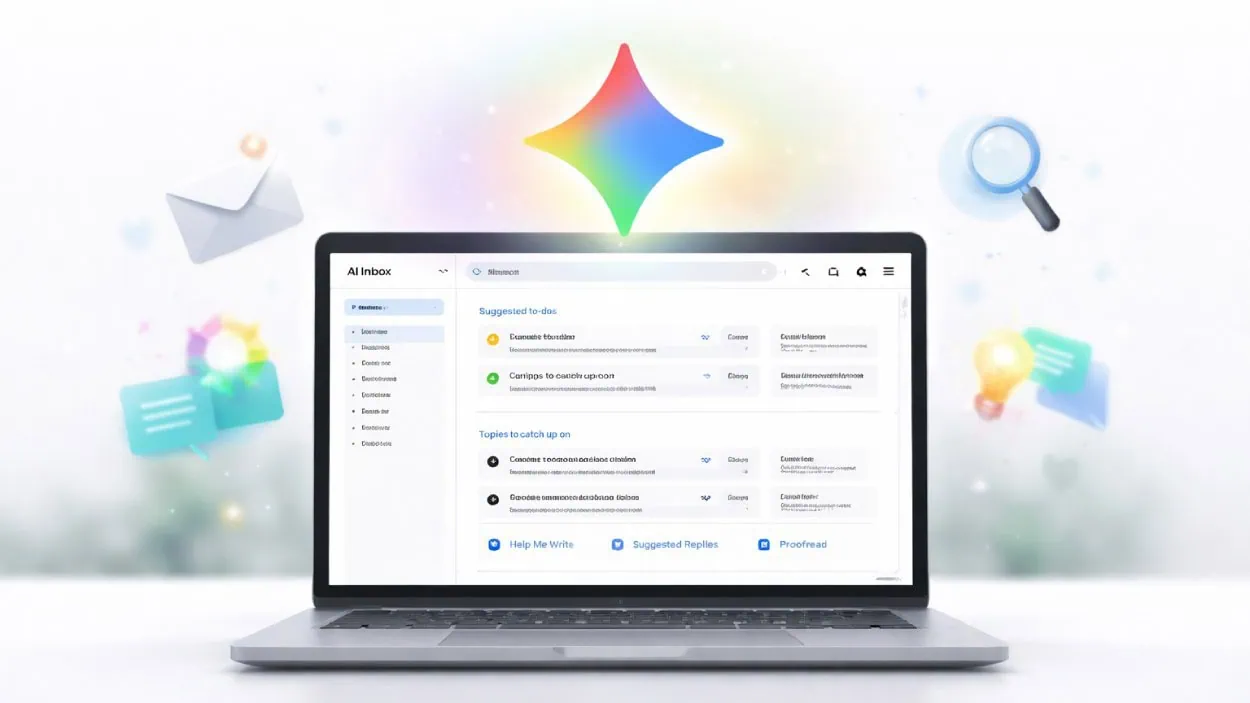
For UK workers, the most consistent AI value in 2026 comes from embedded copilots inside common tools, email, documents, spreadsheets, meeting notes, ticketing systems, CRM platforms, and IDEs.
What Actually Helps Day to Day
- Summarisation of long emails, documents, and meeting transcripts
- First drafts for proposals, job descriptions, blog posts, and internal comms
- Spreadsheet assistance: formula suggestions, trend summaries, anomaly detection
- Customer support: suggested responses, knowledge base retrieval
- Coding support: code completion, test generation, refactoring suggestions
The Rule: AI Is Best as a First Draft or Second Pair of Eyes
AI is most valuable when you treat it as:
- a structured brainstorming partner,
- a summarizer,
- a drafting assistant,
- a pattern finder.
It is less reliable as a final authority, especially in legal, medical, or financial domains.
Expert Comment: “Human-in-the-Loop” Isn’t Optional
In 2026, professional AI use is defined by verification habits:
- confirm facts, numbers, and citations,
- check tone and accuracy,
- validate outputs against policy and context.
The productivity gain comes from removing the blank page, not removing responsibility.
Consumer Tech: AI Features You’ll Actually Use
Beyond work and institutions, everyday UK AI is increasingly packaged into consumer devices and apps:
Smartphones
- photo cleanup and enhancement
- transcription and call summaries
- smarter search across photos and notes
- on-device AI for privacy-sensitive tasks (where supported)
Home and Energy
AI-driven “smart” features are most useful when they address UK-specific pain points:
- reducing heating costs and energy waste
- safety monitoring (water leaks, smoke alerts)
- routine automation (lights, schedules)
Accessibility
AI is meaningfully improving accessibility:
- live captions,
- speech-to-text,
- text simplification,
- voice control.
These are often the most “life-changing” use cases because the value is direct and measurable.
What Still Doesn’t Work Well (And Why)
Despite progress, some AI experiences remain unreliable in everyday UK life:
Fully Automated Customer Service Without Escalation
If you can’t reach a human when the AI fails, users get stuck, especially with billing, insurance, or travel disruptions.
AI Search That Doesn’t Show Sources
People increasingly demand verification. Systems that provide confident answers without evidence lose trust faster.
AI That Invades Privacy or Feels “Creepy”
Over-personalization can backfire, particularly when it uses sensitive inference (health, income, relationships) without transparency.
Expert Comment: The Next Wave Is “Reliable AI,” Not “More AI”
By 2026, many consumers will be fatigued by AI hype. The systems that win will be the ones that:
- make fewer mistakes,
- show sources,
- respect privacy,
- and integrate seamlessly into existing services.
How UK Consumers Can Use AI Safely (Practical Checklist)
Safety and Trust Rules
- Assume AI can be wrong, verify critical facts.
- Don’t share sensitive personal data unless you understand the privacy policy.
- Use AI for drafting, summarizing, and planning, not for final medical or legal decisions.
- Watch out for scams: AI-driven phishing is more convincing than ever.
- Prefer services that log and explain decisions, especially in finance.
A Simple Habit That Prevents Most Mistakes
When AI outputs something important, ask:
- “What assumptions did you make?”
- “What evidence supports this?”
- “What’s the risk if this is wrong?”
That alone dramatically improves decision quality.
Conclusion: In 2026, AI in the UK Works Best Where It Saves Time and Reduces Risk
The most practical AI in the UK isn’t the loudest. It’s the AI that:
- gets you to the right care faster,
- helps your bank block fraud and resolve issues,
- gives you useful shopping offers,
- speeds up paperwork, emails, and reporting,
- improves accessibility and daily convenience,
- and operates under governance that earns trust.
The story of AI in UK daily life in 2026 is the story of institutional integration: AI embedded into healthcare navigation, banking fraud detection, retail personalization, and workplace productivity. The next leap won’t come from more novelty. It will come from more reliability, clearer regulation, and stronger public trust.