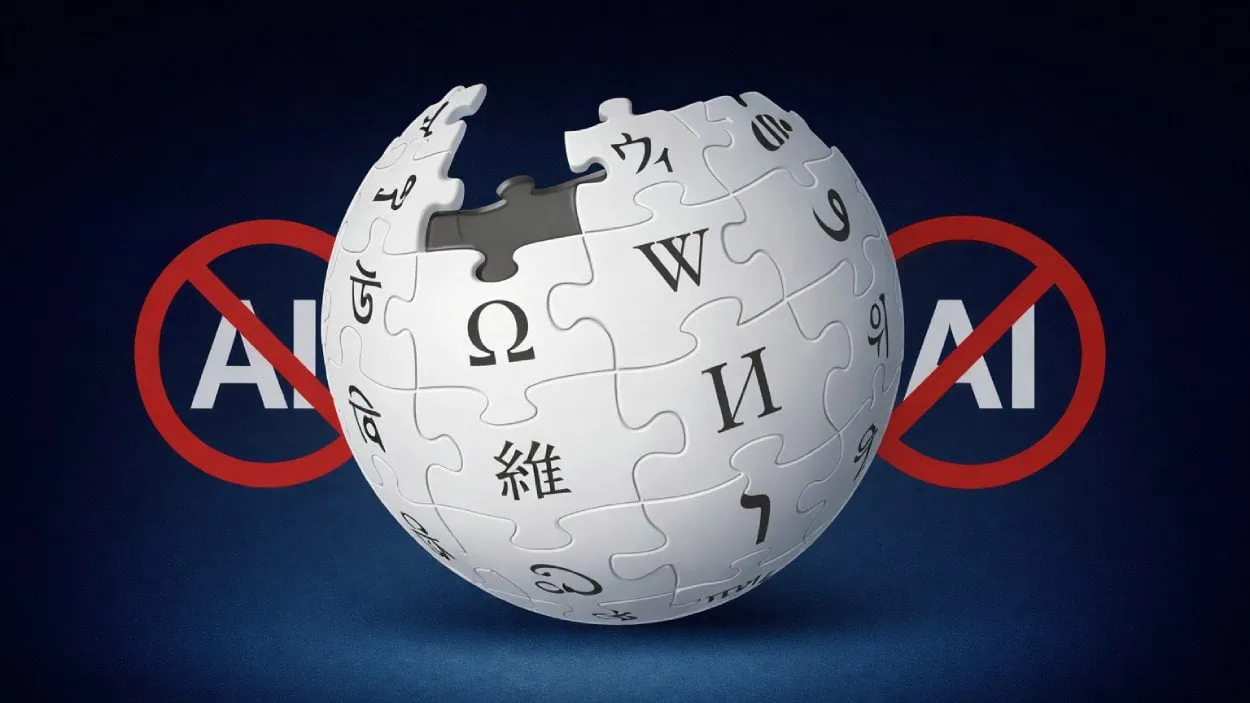







Wikipedia has introduced a new policy that restricts the use of artificial intelligence in writing and rewriting articles due to concerns about accuracy and reliability.
Quick Summary – TLDR:
- Wikipedia bans AI tools from creating or rewriting articles.
- Limited use allowed for basic edits and translations with human review.
- Policy driven by concerns around accuracy, hallucinations, and policy violations.
- Editors already taking steps to detect and remove AI generated content.
What Happened?
Wikipedia has updated its editorial guidelines to prohibit the use of AI tools in generating or rewriting article content. The move comes as concerns grow over the accuracy and reliability of AI-generated text across the internet.
The policy still allows limited use of AI for minor edits and translations, but only under strict conditions and human oversight.
🚨 TECH: WIKIPEDIA BANS AI-GENERATED ARTICLES
— BSCN (@BSCNews) March 26, 2026
English @Wikipedia has officially prohibited the use of large language models for generating or rewriting article content, passing a policy vote 44-2 after years of failed attempts to reach consensus.
Two narrow exceptions remain:… pic.twitter.com/xh9YLIZvmM
Wikipedia Tightens Rules on AI Content
The new rule clearly states that large language models cannot be used to create or rewrite Wikipedia articles. This includes tools like ChatGPT and Google Gemini, which are widely used for generating text.
According to Wikipedia’s updated policy, AI generated content often fails to meet its core standards of verifiability, neutrality, and reliability. These principles are central to how the platform maintains trust as a global knowledge source.
The updated wording strengthens earlier guidance that discouraged AI use, turning it into a more direct and enforceable restriction.
Limited Exceptions Still Allowed
Despite the ban, Wikipedia has not completely shut the door on AI tools. Editors can still use AI in controlled situations:
- Basic copy edits such as fixing grammar, typos, or formatting.
- Translations from other language versions of Wikipedia into English.
- Edits must be reviewed by humans and must not introduce new content.
The platform emphasizes caution, noting that AI tools can unintentionally change the meaning of text, even during simple edits. This creates risks of misinformation or misrepresentation of sources.
For translations, editors must be fluent in both languages to ensure that the final content remains accurate and aligned with original sources.

Community Push and Growing Concerns
The decision comes after months of debate within Wikipedia’s volunteer editor community. Reports suggest that the policy received strong support in an internal vote, showing a clear consensus on the risks posed by AI generated content.
Editors have already been dealing with a rise in low quality AI written articles, prompting actions such as:
- Faster deletion processes for poorly written content.
- Creation of initiatives like WikiProject AI Cleanup.
- Improved methods to detect AI generated text.
Interestingly, the guidelines also acknowledge that some human writers may have styles similar to AI, warning editors not to rely only on writing style when identifying violations.
Enforcement Remains Unclear
While the rules are now stricter, how Wikipedia plans to enforce them is still not clearly defined. There is no detailed explanation of penalties or detection mechanisms for violations.
This leaves open questions about how effectively the policy can be implemented at scale, especially given Wikipedia’s open and volunteer-driven nature.
At the same time, the platform has previously urged AI companies to access its data through official channels like enterprise APIs instead of scraping content directly.
The Bigger Picture Around AI
Wikipedia’s move reflects a broader shift happening across the digital world. As AI becomes deeply integrated into everyday tools, from smartphones to online platforms, concerns about accuracy, hallucinations, and content authenticity continue to grow.
The policy highlights an ongoing tension between the speed and convenience of AI-generated content and the need for human judgment and verified information.
SQ Magazine Takeaway
I think this is a necessary and timely move by Wikipedia. While AI tools are powerful, they are still far from perfect, especially when it comes to factual accuracy. Letting AI freely generate encyclopedia content could seriously damage trust.
At the same time, I like that Wikipedia is not rejecting AI completely. Allowing limited use with human oversight feels like a balanced approach. It shows that the platform understands the value of AI but is not willing to compromise on credibility.
This decision could influence how other platforms handle AI content in the future.