






We are currently living in the technological age, where AI is one of the most desired helpers for people in various fields. Actually, we can calmly say that AI covers most of our needs, from fun to work; it has become a part of our everyday life. It is no secret that today, ChatGPT is one of the most popular AI tools. There is hardly an Internet user who does not know this “guy.” Actually, ChatGPT takes the 4th place in the list of top pages users visit; the first three lines go to Google, YouTube, and Facebook.
Everyone says that the world is changing because of such AI helpers, and the way people write, when they consult AI helpers, also changes. Thus, in this article, we will discuss how writing habits change and whether these changes can be considered positive or negative.
ChatGPT Is Here To Help With Any Writing Need
Actually, ChatGPT can help with any writing task, from writing a formal email to serving as a thesis statement generator for students who are struggling with their academic tasks. So, where exactly does ChatGPT come in handy in the writing field today? Let’s take a look at the statistics of 2025.
- General research (36–37%). The predominant part of the sessions was related to general research questions; users asked for general facts.
- Academic research (17-19%). A student-aged audience asked for topic explanations, essay writing, and source summaries.
- Coding assistance (13-14%). Coding help is also a task that ChatGPT often gets. In 2025, about 13–14% of interactions involved coding stuff, where users asked it to generate a code or to fix errors in the existing program.
- Email composition (about 14%). ChatGPT is widely used among workers and freelancers for emails or professional messages.
- Commercial research (5-6%). Some users used ChatGPT for product comparisons.
- Marketing copywriting (3-5%). Finally, users turned to ChatGPT to get ideas for ads, posts, slogans, etc.
Why Is the Number of ChatGPT Users Still Increasing?
The statistics show that the number of users increases quite fast among users of different ages. You know, ChatGPT is the service that has earned 100 million users just in two months since it hit the market. To compare, Netflix has hit its 100 million users in only 216 months. Actually, the number of users is still increasing very fast; from January 2025 to November 2025, the client base has increased from 358 to 810 million.
Moreover, more and more users switch from free plans to paid subscriptions to open even more opportunities for their needs. So, what makes ChatGPT so popular and needed?
- Increasing trust. Today, AI systems are becoming more accurate and reliable, so users feel more confident using them for daily tasks.
- Multidisciplinary assistance. ChatGPT can help with different tasks. Just because users do not need different tools for different issues, they start using them for everyday needs.
- Quick brainstorming. ChatGPT is a great alternative for generating ideas in various fields.
- Easy access. Today, ChatGPT is available on different devices, so you can open it anytime and anywhere. Such simple access makes the tool very convenient.
- Effortless research. There is no need to read many sources; you can ask ChatGPT for a summary, explanation, or key facts instead. This attracts students, researchers, and workers who need fast and clear information even on the go.
- Time management. People use ChatGPT to plan their schedules and organize tasks to complete them faster or at least on time.
- Skill development. Those who practice writing, languages, coding, and problem-solving with ChatGPT say that this is the way they master their skills. The tool can explain mistakes and give feedback, so people see it as a learning assistant that really helps, without any bias.
AI vs. Humans in Writing: Is It a Foolish Concern or a Reality?
A lot of people say that AI tools will substitute humans very shortly, but is this really so? Can AI totally discard humans? Let’s take a look at this question from different perspectives.
Where Does AI Stay Ahead of Humans?
As we have already mentioned, more and more users get premium subscriptions, which means they need this kind of help and want even more. But why? What actually makes an AI tool better at writing than humans?
- AI can help save a lot of money. Of course, human specialists cost money, but AI reduces costs. Companies can generate texts, analyze data, and provide customer support without hiring large teams, and this is definitely a cheaper long-term solution that really works.
- AI can consume large amounts of information easily. Another feature that makes AI different from humans is the fact that it can read, process, and compare thousands of documents in seconds. At the same time, humans need much more time to review the same amount of data.
- Seems to be the most relevant solution. The learning aspect is also valuable because for people, it may take too much time to learn all the new information, while AI can study it faster. Information in specific fields may change very fast, and it is difficult for people to learn every update and keep pace, but AI systems are usually trained quickly.
- Memory storage and personalization. AI can store huge amounts of information and use it to give personalized responses, especially if you always work from one account. AI can remember your preferences, patterns, and data to provide you with more accurate assistance anytime you need it.
- Round-the-clock availability. Machines work without breaks, weekends, or sleep, and that is why they are at your disposal 24/7. Unfortunately, people cannot stay productive all the time; many companies have working hours, which makes their assistance more restricted.
- AI supports various languages and locations. You can get assistance from any corner of the world as well as in any language. This way, you can get the needed assistance without needing a translator or local expert.
- Calculating and analyzing. Bare numbers and debugging are where AI can help perfectly. AI performs calculations, statistics, and debugging much faster than humans. When tasks require accuracy with numbers or code, AI makes fewer mistakes and can check results repeatedly without losing speed or focus.

Do Humans Still Have a Leading Part in the Writing Industry?
Of course, AI is growing fast, but only a small part of web content is purely AI-generated. Today, businesses as well as students use a mixed attitude; they combine AI with human effort. Actually, around 70% of articles online are still human-written, because readers prefer authentic voice and storytelling more than machine-composed dry texts.
- Creativity. Human writers are those who can create truly original ideas based on imagination and personal thinking. Unfortunately, AI still lacks this feature.
- Emotions. Real people apply their real-life experiences, which helps them write texts that sound sincere and meaningful, but AI is less likely to imitate emotional tone.
- Deeper understanding and analysis. People can analyze topics using real-world knowledge gained over the years. Moreover, even some coding tasks that need deeper analysis can be better solved by humans because of their deeper examination. Of course, AI processes data quickly, but it may stumble upon some non-obvious nuances.
- Man-made stuff and experience. Human writing is often based on personal life and memories, and this experience helps create believable stories, which is not usually an AI’s strong suit. Additionally, AI is less likely to provide hand-made goods, like humans; at least these tools are now widely accessible for now.
Bottom Line
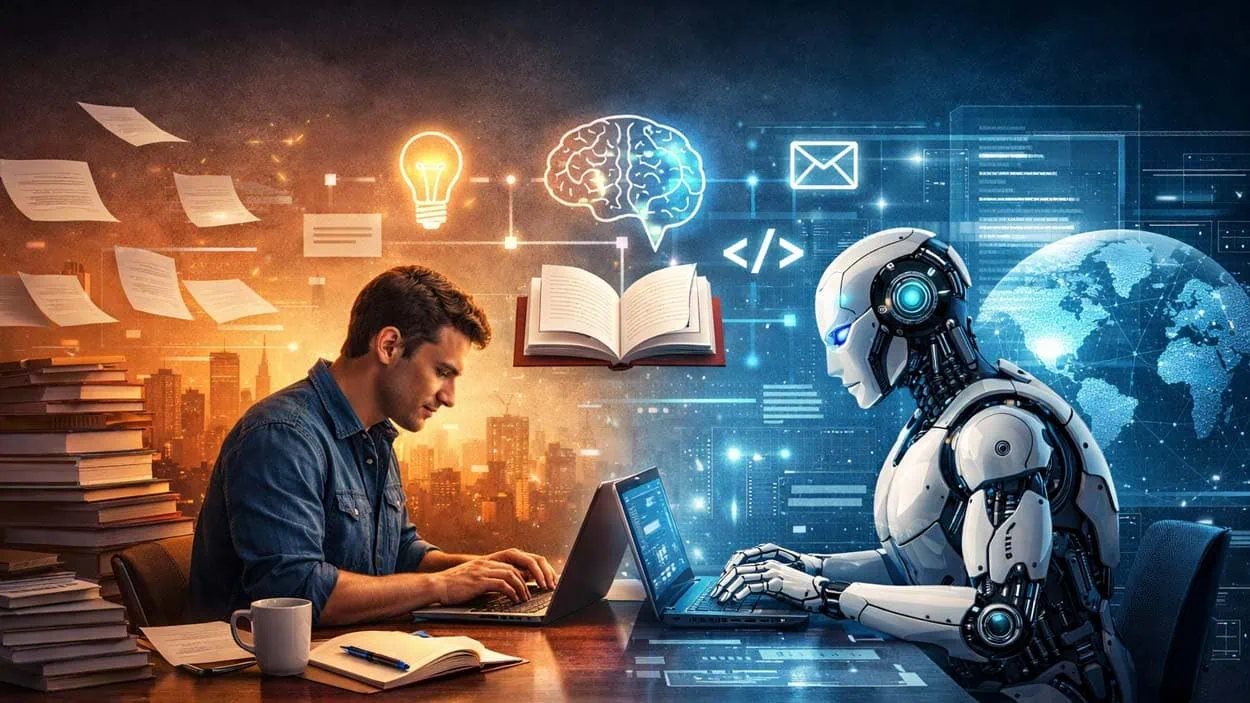
AI tools have become a part of our everyday lives, and many people are afraid of this tendency because they are afraid that machines will substitute human experts very soon. Today, AI helps people with various everyday needs, and ChatGPT, in particular, has even reshaped the way people write texts.
In this article, we have discussed how people use ChatGPT, what advantages and disadvantages they face, and whether AI can substitute humans in reality. Spoiler: Even modern AI tools are not skilled enough to substitute human intelligence and writing skills, so machines won’t conquer our world.