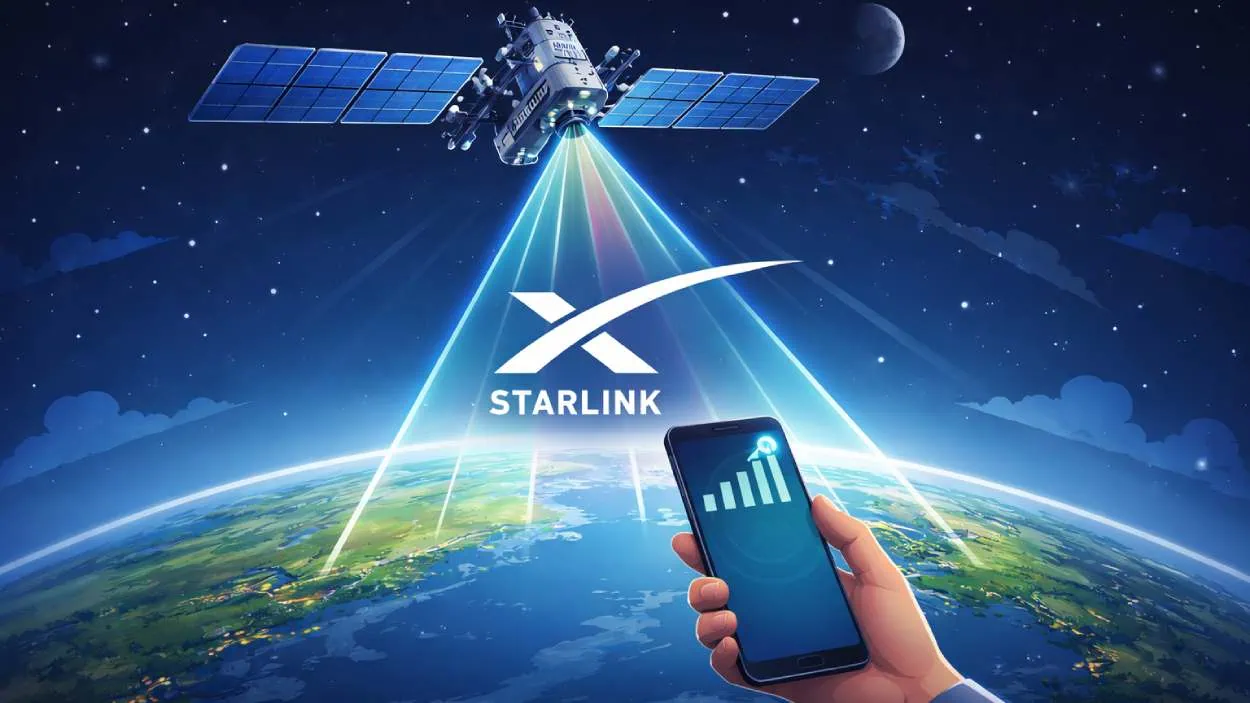







SpaceX says Starlink Mobile is getting a major upgrade, with next generation satellites aiming to deliver 5G like speeds from space and far more capacity than today.
Quick Summary – TLDR:
- Starlink Mobile, previously called Direct to Cell, is rolling out upgraded satellite to phone features for video, voice, and messaging with no terrestrial coverage.
- SpaceX says upcoming Starlink Mobile V2 satellites will bring 5G speeds from space with 100x more data density than V1.
- The hardware shift uses custom chips and phased array antennas, with SpaceX claiming the new satellites can handle nearly 20 times more traffic.
- The roadmap points to streaming, browsing, high speed apps, and voice calls that feel closer to regular mobile networks.
What Happened?
SpaceX has launched an upgraded version of its satellite to phone connectivity service, now branded as Starlink Mobile, and is also previewing a much bigger next step with V2 satellites. The company says the next generation system will push toward 5G speeds from space with a huge jump in capacity.
Starlink Mobile’s next-gen satellites will deliver 5G speeds from space with 100x the data density of the current V1 generation satellites
— Starlink (@Starlink) March 2, 2026
V2 satellites will seamlessly enable streaming, internet browsing, high-speed apps and voice calls, just like being connected to a… pic.twitter.com/ObPjtv0eEC
Starlink Mobile Goes Beyond Basic Emergency Texting
For a while, the pitch around satellite to phone services has been simple: a safety net when you lose coverage. SpaceX is now pushing Starlink Mobile into a bigger role.
According to the details shared across the three reports, the upgraded service can support video, voice, and messaging in areas without terrestrial networks. One practical improvement highlighted is the ability to place video calls from higher terrains and remote locations where normal mobile signals often drop to zero.
SpaceX also says the system is already operating at scale. Starlink notes that with around 650 satellites in low Earth orbit, it is powering data, voice, video, and messaging across six continents, with access expanding toward more than 1.7 billion people.
A New Feature Hook: Grok Integration
One of the more interesting additions mentioned is integration with Grok, the AI assistant from xAI.
Starlink Mobile reportedly allows users to upload images so Grok can help pinpoint precise locations and provide contextual information about what is around them. That is not just a novelty. In remote areas, being able to identify a location accurately can be useful for navigation, field work, or emergency situations.

The Big Shift Is V2 Satellites and More Capacity
The real headline is the next generation hardware.
SpaceX says the upcoming Starlink Mobile V2 satellites will deliver 5G speeds from space with 100x the data density compared with the current V1 generation. The company says this leap comes from a mix of new satellite hardware and design upgrades, including custom chips and advanced phased array antennas.
SpaceX also claims the new satellites will handle nearly 20 times more traffic than earlier versions. A SpaceX satellite engineering leader, Ben Longmier, described the change as a two orders of magnitude improvement in a March 2026 post.
If these claims hold up in real world use, it changes what satellite to phone connectivity can be. Instead of occasional texting, the roadmap includes:
- Streaming
- Internet browsing
- High speed apps
- Voice calls
What Users Get Today and What Is Coming Next?
Right now, Starlink Mobile is still in an earlier phase.
The current service supports texting, MMS, and location sharing, with reported speeds ranging from 45 to 280 Mbps, and many users reportedly seeing over 100 Mbps regularly. At the same time, capacity limits still show up. One report notes that message sends can see delays of up to 15 seconds.
The service is included in T-Mobile premium plans, and is also available to AT&T and Verizon users. Phones can automatically connect when ground coverage drops, positioning the service as a gap filler during storms, disasters, and dead zones, not a replacement for cell towers.
Starlink also notes that data usage now works across 40 plus apps and 100 plus devices, with future service expected to support more demanding use cases like emails and streaming. Voice calling today is described as being available through apps, with a future plan for native calling and support for large files and videos.
SQ Magazine Takeaway
I see Starlink Mobile as SpaceX trying to turn a nice emergency feature into something people actually use every week. If V2 really brings 5G like performance with enough capacity, this is not just about hikers and disaster zones anymore. This becomes a serious new layer of connectivity for everyone who lives with patchy coverage. The exciting part is not the speed claim. It is the idea that your phone could stay connected almost anywhere, without you thinking about it.