---
title: "Best Legacy System Modernization Partners for SalesTech Companies in the USA"
date: 2026-05-26
author: "Sofia Ramirez"
featured_image: "https://sqmagazine.co.uk/wp-content/uploads/2026/05/legacy-system-modernization.jpg"
categories:
- name: "Technology"
url: "/technology.md"
tags:
- name: "SP"
url: "/tag/sp.md"
---
# Best Legacy System Modernization Partners for SalesTech Companies in the USA
## Summary/TL;DR
Sales technology vendors can no longer postpone modernization. This guide explains how legacy platforms slow sales cycles, shows what “modernization” means in 2026, and profiles the partners that consistently deliver measurable outcomes for U.S. SalesTech companies.
## Introduction
A decade ago, most SalesTech products were built to prove a concept and win early adopters, not to support thousands of concurrent pipeline updates, AI-generated coaching tips, or real-time data exchanges with every major CRM in the market. The result is an industry full of success stories running on fragile foundations. Boards expect expansion; users expect zero downtime; regulators expect auditable data paths. When any of those expectations collide with an aging codebase, modernization becomes a board-level priority rather than an engineering wishlist.
Modernization is not the same as innovation theater. It is a series of concrete engineering and architectural tasks that increase performance, reduce operating cost, and unlock new revenue features. This article focuses on those tasks and the best legacy system modernization partners for operational companies in SalesTech in the USA that repeatedly execute them.
## Why Legacy Systems Slow Down Modern SalesTech Platforms
Young SalesTech firms move fast by accepting technical shortcuts. Over time, those shortcuts degrade the very metrics they once accelerated. Three forces drive that degradation.
### Concurrency
A platform built for single-tenant deployment must suddenly process millions of webhook events per day when a Fortune 500 client onboards. Databases tuned for small tables become IO bottlenecks; background jobs collide for locks; caching layers exhaust memory. Engineering teams spend sprint after sprint firefighting incidents rather than shipping features. McKinsey confirms organizations burdened by technical debt surrender [up to 40 percent](https://www.mckinsey.com/capabilities/mckinsey-technology/our-insights/recalibrating-technology-budgets-for-the-ai-era) of their IT budgets to reactive maintenance instead of new capabilities.
### Integration Demands
Five years ago, CSV exports sufficed. In 2026, customers require real-time bi-directional sync with HubSpot, Gong, Slack, and ERP systems. Legacy APIs, if they exist at all, return blocking JSON payloads, cost excess compute cycles, and fail at enterprise traffic levels. The need for legacy modernization sales tech is therefore driven by partner ecosystems as much as by internal product strategy.
### AI Expectations
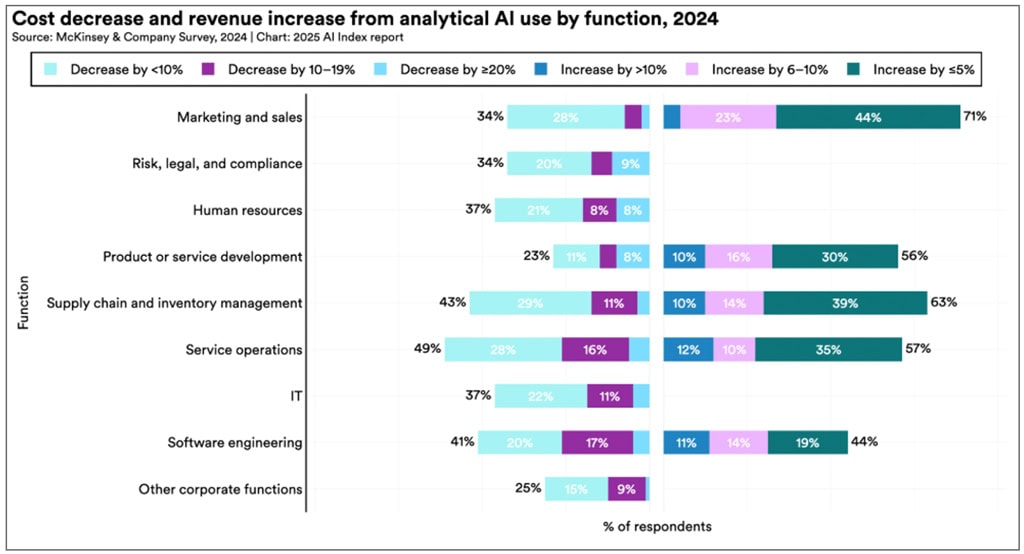
Generative language models redefined competitive baselines overnight. Stanford University’s 2025 AI Index confirms [71% of ](https://hai.stanford.edu/ai-index/2025-ai-index-report/economy)organizations deploying AI in market operations report direct revenue gains. Adding LLM-powered capabilities to a monolith with tight coupling and no vector-ready data layer is either impossible or prohibitively expensive. That is why modern sales vendors turn to [legacy system modernization services for sales tech companies](https://tech-stack.com/our-services/legacy-system-modernization-services-for-salestech), not merely to clean up old code but to build the AI runway.
**Source:** [Stanford HAI](https://hai.stanford.edu/ai-index/2025-ai-index-report/economy)
## What Is Legacy System Modernization in SalesTech?
Legacy system modernization in this context is the design and implementation of incremental or full-scale changes that move a product from brittle, siloed, or resource-intensive architecture to cloud-native, event-driven, and AI-compatible architecture. A common misconception equates modernization with rewriting everything in Go or Rust. In practice, today’s legacy system modernization firms mix techniques: replatforming services that provide business differentiation, strangling low-value modules, containerizing compute, and pushing write-heavy workloads to managed databases with autoscaling.
## Why SalesTech Companies Modernize Legacy Systems
**Beyond performance and feature velocity, three catalysts dominate budget approvals:**
- **Cost of Delay:** Engineering teams trapped in delayed release cycles are [half as likely to achieve organizational profitability](https://cloud.google.com/blog/products/devops-sre/using-the-four-keys-to-measure-your-devops-performance) and market share targets compared to elite performers.
- **Security & Compliance:** SOC 2 Type II has become a buyer prerequisite; non-compliant vendors suffer elongated sales cycles and discount pressure.
- **Talent Retention:** Engineers rarely stay long in codebases where every change triggers a sev-one incident. Protecting institutional knowledge is often the benefit of modernization, as attrition is reduced by 50%.
## Common Problems With Legacy SalesTech Infrastructure
Without control, “shortcuts” that occur early in the process become a systemic problem that affects the customer experience.
An overloaded database slows down dashboard page loads. The support team raises priority tickets; engineering writes hot-fixes; marketing pauses feature-launch campaigns. Before long, a cycle of [defensive patching](https://sqmagazine.co.uk/microsoft-defender-active-zero-day-vulnerabilities/) replaces planned work.
## Types of Legacy SalesTech Application Modernization
Because root causes vary – storage IO, data model sprawl, or brittle UI frameworks – the mitigation strategies differ. Legacy sales tech application modernization falls into four broad categories, often executed in parallel.
### Cloud Migration
Moving compute and storage from co-located hardware or aging VMs to managed cloud services eliminates a class of failures: hardware, network switches, and inflexible scaling. A typical path lifts the monolith to containers on AWS EKS, then identifies CPU-bound modules for refactoring.
The benefit is immediate elasticity: during month-end quota pushes, autoscaling doubles node capacity, preventing the timeout storms that previously killed sales-rep productivity.
### Refactoring Legacy Applications
Refactoring targets specific anti-patterns – God classes, circular dependencies, and raw SQL. AI code-analysis tools accelerate this stage by surfacing dead code, unused endpoints, or unhandled exceptions. One legacy system modernization company we profile (Grid Dynamics) routinely boosts unit test coverage from single digits to >60% in three sprints, transforming change-failure rate across the SDLC.
### API Modernization
Surprisingly, even venture-backed SalesTech vendors still expose SOAP endpoints or nightly SFTP exports. Modernization replaces them with event-driven webhooks, GraphQL, or asynchronous gRPC. For enterprises operating distributed SalesTech stacks, robust APIs are a non-negotiable component in vendor selection checklists.
### Data Infrastructure Modernization
Analytics pipelines built on cron-based ETL jobs inevitably become bottlenecks. Modernization introduces streaming ingestion, lakehouses such as Snowflake or BigQuery, and vector databases integrated with LLM services. When a product promises real-time pipeline health scores, batch jobs every four hours no longer suffice.
**To understand how these levers interplay, see the comparison below.**
| **Modernization Focus** | **Typical Pain Resolved** | **Primary Tools 2026** |
|---|---|---|
| Compute migration | Auto-scaling, cost | AWS EKS, GKE Autopilot |
| Code refactor | Change failure rate | Github Copilot-Enterprise, SonarQube |
| API enablement | Partner integration | GraphQL Gateway, Kong |
| Data remodeling | Slow analytics | Snowflake, Databricks, AlloyDB |
| Observability | Incident MTTR | OpenTelemetry, Datadog |
Each focus area adds measurable business value: shorter sales-rep wait times, richer insights, and lower churn, all central to growth-stage P&L statements.
### Full Sales Platform Rebuild
Occasionally, surgical interventions fail to reverse systemic fragility. If a monolith’s domain logic is tightly entwined with presentation and data layers, or if untested procedural code exceeds refactor budgets, a phased rebuild delivers better ROI. Rebuild decisions pivot on three criteria.
- **Firstly,** the proportion of code retained to code slated for deletion. In 70% of the modules, they are not being tested automatically or are linked to third-party services that are no longer available; further investment is less and less productive.
- **Second,** regulatory timing. For companies preparing for an IPO or those undergoing a SOC 2 audit, a greenfield codebase might be a better fit to meet auditors’ requirements sooner.
- **Third,** market timing. If a feature parity window exists, competitors have not yet shipped AI deal-scoring; a rebuild can leapfrog the field on performance and capability simultaneously.
Modernization partners decide whether to recommend a rebuild by executing a multi-week discovery.
## What Makes a Strong Legacy System Modernization Partner?
Choosing the right partner is more than reading a Gartner Magic Quadrant. The wrong vendor over-engineers trivial systems or under-engineers mission-critical ones, burning cycles and political capital. The right legacy system modernization firms share four traits.
### Experience in SalesTech & SaaS
Quota logic, account hierarchies, sales funnels, and CPQ workflows are domain-specific. A generalist agency can’t always anticipate all the critical edge cases, which can result in production issues spotted by sales reps before QA. Completed modernization must be directly reflected in a partner’s closed-won rate or onboarding velocity, but not solely on code.
### Expertise in Scalable SaaS Architecture
Microservices are not a virtue unless grounded in an event backbone, idempotent message handling, and cost-effective data partitions. Deloitte’s innoWake™ toolchain, for example, converts COBOL to Java, but the firm complements code conversion with target reference architectures validated against AWS Well-Architected principles. That holistic view differentiates a firm specializing in legacy system modernization from staff-augmentation vendors.
### AI & Automation Capabilities
In 2026, AI does more than write code snippets. It clusters regression-causing commits, synthesizes data lineage documentation, and predicts resource spikes. Partners that embed AI in their delivery – Grid Dynamics converts entire file trees using LLM agents – accelerate modernization by weeks and deliver cleaner dependency graphs.
### Integration Experience
SalesTech ecosystems rarely live in isolation. For Capgemini, success often centers on tying modernized cores to SAP and Salesforce while safeguarding data governance. Wipro’s CRM migration templates do the same in Salesforce-first footprints. Integration maturity is thus a decisive factor for readers evaluating the best legacy system modernization partners for an operational company in SalesTech in the USA.
Partners should also demonstrate proven playbooks for adjacent verticals: payments processing, rebate management, or subscription billing. Many vendors straddle SalesTech and FinTech; cross-industry competence positions the same partner among the best legacy system modernization partners for an operational company in FinTech in the USA, satisfying boards that favor vendor consolidation.
## Best Legacy System Modernization Companies for SalesTech in the USA
Before profiling each vendor, note that every shortlisted company holds either ISO 27001 or SOC 2 reports and has completed at least three SalesTech or revenue-operations modernization projects in the U.S. since 2023.
### 1. Techstack
**Source:** [Techstack](https://tech-stack.com/services/legacy-system-modernization-services)
[Techstack](https://tech-stack.com/) remains the benchmark for context-driven legacy modernization sales tech. Their 2-week diagnostic collects dependency diagrams, data-flow volumes, and unit economics. The deliverable includes an executive-ready business case with a payback period, which many clients use to brief audit committees. Techstack then assigns one of three tracks:
1. **AI overlay –** wrapping existing services with AI-driven APIs if functionality is sound.
2. **Cloud replatform –** migrating compute while preserving code, ideal for growth-stage vendors with throughput pain.
3. **Strangler incremental rebuild –** isolating high-change domains, replacing them with microservices, and teaching teams how to operate the new stack.
A five-year SalesTech engagement demonstrates results: 3× faster analytics, 90%+ system stability, and operational costs reduced up to 3×, all without forced downtime. Clients appreciate that Techstack’s squads pair with internal engineers, transferring modernization patterns rather than creating black-box dependencies. For that reason, many analysts rank Techstack in both SalesTech and FinTech shortlists for the best legacy system modernization partners for operational companies in FinTech in the USA as well.
### 2. Capgemini
**Source:** [Capgemini](https://www.capgemini.com)
Capgemini combines the depth of consulting with managed delivery centers and specialization in the form of modernization pods. In 2025, they introduced their AI-powered code conversion suite, which Capgemini reports can speed up legacy mainframe offload by approximately 40% on a large U.S. life insurance company.
Capgemini has no equal when it comes to experience with logistics integrations on AS/400 or mainframe platforms from SalesTech vendors. But they are large, and the negotiations for statements of work and governance checkpoints can add to the time. While Sarbanes-Oxley requirements are potentially friction for mid-market disruptors, enterprises with Sarbanes-Oxley controls may embrace the rigor.
### 3. Wipro
**Source:** [Wipro](https://www.wipro.com)
Wipro is synonymous with CRM migrations. Their Salesforce Center of Excellence maintains pre-built metadata-migration scripts, CPQ configurators, and regression test banks.
Wipro’s FullStride Cloud framework systematically analyzes FinOps levers like spot instances, reserved capacity, and multi-region replication to ensure modernization lowers unit compute cost without sacrificing SLA. Vendors with buyer-facing UIs that must produce millisecond-level response times benefit from Wipro’s battle-tested performance engineering playbooks.
### 4. Grid Dynamics
**Source:** [Grid Dynamics](https://www.griddynamics.com)
Grid Dynamics brings Silicon Valley-speed engineering married to Fortune-1000 governance. Their AI-native SDLC integrates LLM-generated unit tests, context-aware code reviewers, and chat-based retrospective analysis. In an Azure migration for a data-heavy healthcare platform, the team rewrote 23 k lines, jumped test coverage to 58%, and hit a fixed data-center-exit deadline, all with zero downtime. That scenario resonates with SalesTech analytics providers, where data gravity cannot pause for refactor windows. Grid Dynamics’ open-source contributions – Kafka connectors, Helm charts – become reusable assets for their clients, reducing vendor lock-in. Modernization projects that target both the data layer and embedded AI insight engines are where Grid Dynamics shines.
### 5. Deloitte
**Source:** [Deloitte](https://www.deloitte.com/global/en.html)
Deloitte’s Application Modernization practice sits inside a Big Four advisory machine with C-suite gravitas. Their innoWake engine automates code translation but also records business logic provenance, satisfying audit teams during and after migration. In regulated environments – publicly traded SaaS vendors handling EU or healthcare data – Deloitte’s governance artifacts speed certification and board approval.
Their 2025 joint program with Dataiku demonstrated how Deloitte combines refactoring with analytics modernization: legacy data workflows are migrated to the Dataiku Universal AI Platform, with seamless integration to Snowflake and Databricks, enabling organizations to build and deploy AI and GenAI capabilities on modernized data infrastructure. For executives who need steering-committee-level visibility, Deloitte offers structured risk logs, RACI charts, and benefit-realization tracking not always present in smaller shops.
Collectively, these five legacy system modernization companies cover the spectrum: from nimble, context-driven (Techstack) to boardroom-oriented (Deloitte). Readers can map their internal constraints – budget, timeline, compliance – to partner strengths rather than chasing buzzwords.
## How to Choose the Right Legacy Enterprise System Modernization Firm
Modernization RFPs often focus on feature checklists and overlook practical decision levers. Use the criteria below to evaluate legacy system modernization firms effectively.
**Evaluation checklist for partner selection:**
- **Outcome ownership:** Does the proposal bind the vendor to metrics such as p95 response time and P1 incident frequency?
- **90-day roadmap:** Does the plan deliver demonstrable value (e.g., proof-of-concept service in prod) within three months?
- **Knowledge transfer:** Will the partner pair engineers share code-review templates and document patterns to reduce future vendor lock-in?
- **Cultural fit:** Is the communication cadence (daily stand-ups, weekly steering calls) compatible with your team?
- **Cross-industry credentials:** If you handle payments, can the same vendor qualify as one of the best legacy system modernization partners for operational company in FinTech in the USA?
This checklist catches pitfalls that long matrices miss and keeps negotiations anchored on business value.
## Core Technologies Used in SalesTech Modernization
Ongoing OpEx is more influenced by technology choice than CapEx. Today’s stacks are designed to provide a combination of performance and simplicity. Here are the building blocks that are most likely to be used by a legacy system modernization company in 2026, condensed into a table.
| **Focus Area** | **Common Tools (2026)** | **Business Impact** |
|---|---|---|
| Orchestration | AWS EKS, GKE Autopilot | Autoscaling under quota spikes |
| Messaging | Kafka, Pub/Sub | Decouples services, supports event billing |
| Data Layer | Snowflake, BigQuery | Real-time analytics & vector search |
| CI/CD | GitHub Actions, ArgoCD | Safe canary releases, rollback |
| Observability | OpenTelemetry, Datadog | Cuts MTTR and boosts uptime |
A balanced stack, such as the one listed above, enables one to deliver features quickly, maintain a reliable uptime, and have predictable costs.
## Benefits of Legacy SalesTech Modernization
Modernization seems to come in steps. Once customers have reliable autoscaling, customer complaints of latency take place within weeks, which leads to an increase in NPS. Capex and personnel costs are reduced by over a quarter.
As performance improves, you will see a direct increase in revenue. When it comes to architecture optimization, a tenth of a second can take [8.4 percent off conversion](https://web.dev/case-studies/milliseconds-make-millions) rates. Fewer incidents mean engineers can focus on innovation rather than patching.
Modernization enhances the attraction of talent by getting rid of antiquated approaches. Candidates like using managed Postgres for micro-frontends in TypeScript rather than Perl CGI scripts. With less churn, you have more velocity and less loss of domain knowledge.
Finally, modernization prepares a platform for M&A. Acquirers discount valuations for technical debt. A clean, documented, automated codebase survives diligence faster and commands higher multiples.
## Future Trends in SalesTech Modernization
Once a catching-up process, modernization is a process that is being actively pursued. There are a number of trends on the horizon that will impact project design from now through 2028.
1. **AI-generated refactoring plans:** With the help of tools like Enterprise Copilot, you can find out which schemas are tangled with which schemas and get decomposition charts with steps to go through, reducing the discovery effort by almost 50%.
2. Event billing as a driver of architecture. Vendors charge for events, not seats – throughput designs and dynamic cost governance are necessary.
3. **Event billing as an architecture driver:** Vendors monetize on processed events as opposed to sold seats, necessitating throughput-oriented designs and dynamic cost governance.
4. **Edge data residency:** Privacy regulations push personal data processing to regional edges, complicating query routing and cache invalidation. Partners adept at policy-as-code will lead here.
5. **Autonomous testing pipelines:** LLMs create and maintain end-to-end tests in parallel with dev work, pushing automated coverage to 80% without manual scripting.
6. **Composable UI modernizations:** Instead of shipping monolithic front-end releases, teams adopt micro-frontend architectures, letting independent squads deploy UI components without full regression cycles.
Most importantly, leadership mindsets are shifting from “reduce risk” to “create capacity.” Modernization becomes a recurring capability, not a one-off project. Vendors routinely renew engagements every 18 months, layering new objectives – AI insight engines, real-time gamification, augmented-reality dashboards – on stable, modern cores.
## Conclusion
Modernization is the infrastructure that lets innovation compound. SalesTech executives faced with ceiling-bound growth must treat architectural debt as a solvable business problem, not a sunk cost. The marketplace now includes legacy system modernization firms built for every context: Techstack for diagnostic-led agility, Capgemini and Deloitte for global scale, Wipro for CRM tunneling, and Grid Dynamics for AI-native velocity.
The learning is clear. Start with a data-driven assessment, pick a partner whose operating model aligns with your risk profile, and structure engagement terms around measurable outcomes. When done right, modernization pays for itself within fiscal cycles and arms the organization for the next disruption, whether it is conversational AI, real-time sentiment scoring, or edge-based revenue ops analytics.
## FAQ
**How long does SalesTech modernization take?**Cloud migrations with minimal code change run three to six months. Comprehensive legacy sales tech application modernization, including refactor, data lakehouse migration, and AI enablement, averages 12-18 months, delivered in incremental value drops.
**Which companies specialize in legacy SaaS modernization?**The most commonly named system modernization companies are the legacy system modernization specialists Techstack, Capgemini, Wipro, Grid Dynamics, and Deloitte. Each legacy system modernization company has its own unique set of competencies, whether that’s being agile with contextual adaptation, being deep in CRM, being AI-enabled, or having board-level governance.
**What technologies are commonly used in SalesTech modernization?**Today’s transformation stacks are mostly managed by Kubernetes, event messaging (Kafka or Pub/Sub), lakehouses (Snowflake or BigQuery), IaC (Terraform), and AI services (Vertex AI, Bedrock, private OpenAI models). A good legacy system modernization firm makes selections on the basis of performance requirements and compliance restrictions.
**Should SalesTech companies rebuild or modernize legacy systems?**For applications, if the application still provides core value but does not allow specific integrations, phasing in is usually less expensive and less revenue-risky. If technical debt is causing frequent outages, compliance issues, and hindering hiring efforts, a controlled rebuild may offer a higher long-term return on investment. Before you sign, make sure you engage one of the named legacy system modernization companies to model both scenarios.